

254
E.-S. E. Omran
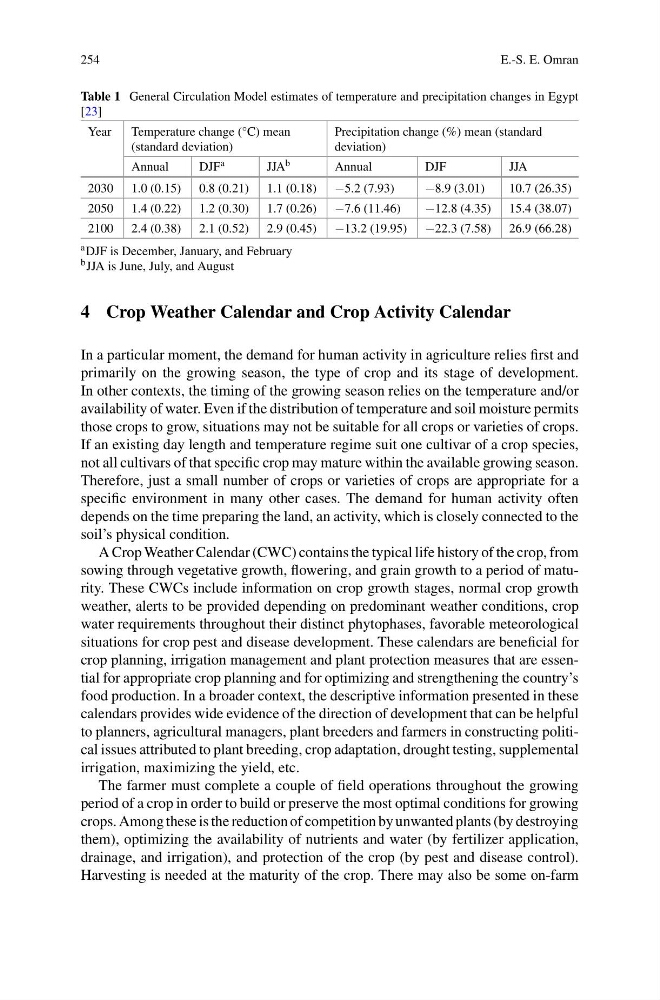
Table 1 General Circulation Model estimates of temperature and precipitation changes in Egypt
[23]
Year
Temperature change (°C) mean
(standard deviation)
Precipitation change (%) mean (standard
deviation)
Annual
DJF a
JJA b
Annual
DJF
JJA
2030 1.0 (0.15) 0.8 (0.21) 1.1 (0.18) −5.2 (7.93)
−8.9 (3.01)
10.7 (26.35)
2050 1.4 (0.22) 1.2 (0.30) 1.7 (0.26) −7.6 (11.46)
−12.8 (4.35) 15.4 (38.07)
2100 2.4 (0.38) 2.1 (0.52) 2.9 (0.45) −13.2 (19.95) −22.3 (7.58) 26.9 (66.28)
a DJF is December, January, and February
b JJA is June, July, and August
4 Crop Weather Calendar and Crop Activity Calendar
In a particular moment, the demand for human activity in agriculture relies first and
primarily on the growing season, the type of crop and its stage of development.
In other contexts, the timing of the growing season relies on the temperature and/or
availability of water. Even if the distribution of temperature and soil moisture permits
those crops to grow, situations may not be suitable for all crops or varieties of crops.
If an existing day length and temperature regime suit one cultivar of a crop species,
not all cultivars of that specific crop may mature within the available growing season.
Therefore, just a small number of crops or varieties of crops are appropriate for a
specific environment in many other cases. The demand for human activity often
depends on the time preparing the land, an activity, which is closely connected to the
soil’s physical condition.
A Crop Weather Calendar (CWC) contains the typical life history of the crop, from
sowing through vegetative growth, flowering, and grain growth to a period of maturity. These CWCs include information on crop growth stages, normal crop growth
weather, alerts to be provided depending on predominant weather conditions, crop
water requirements throughout their distinct phytophases, favorable meteorological
situations for crop pest and disease development. These calendars are beneficial for
crop planning, irrigation management and plant protection measures that are essential for appropriate crop planning and for optimizing and strengthening the country’s
food production. In a broader context, the descriptive information presented in these
calendars provides wide evidence of the direction of development that can be helpful
to planners, agricultural managers, plant breeders and farmers in constructing political issues attributed to plant breeding, crop adaptation, drought testing, supplemental
irrigation, maximizing the yield, etc.
The farmer must complete a couple of field operations throughout the growing
period of a crop in order to build or preserve the most optimal conditions for growing
crops. Among these is the reduction of competition by unwanted plants (by destroying
them), optimizing the availability of nutrients and water (by fertilizer application,
drainage, and irrigation), and protection of the crop (by pest and disease control).
Harvesting is needed at the maturity of the crop. There may also be some on-farm
E.-S. E. Omran
Table 1 General Circulation Model estimates of temperature and precipitation changes in Egypt
[23]
Year
Temperature change (°C) mean
(standard deviation)
Precipitation change (%) mean (standard
deviation)
Annual
DJF a
JJA b
Annual
DJF
JJA
2030 1.0 (0.15) 0.8 (0.21) 1.1 (0.18) −5.2 (7.93)
−8.9 (3.01)
10.7 (26.35)
2050 1.4 (0.22) 1.2 (0.30) 1.7 (0.26) −7.6 (11.46)
−12.8 (4.35) 15.4 (38.07)
2100 2.4 (0.38) 2.1 (0.52) 2.9 (0.45) −13.2 (19.95) −22.3 (7.58) 26.9 (66.28)
a DJF is December, January, and February
b JJA is June, July, and August
4 Crop Weather Calendar and Crop Activity Calendar
In a particular moment, the demand for human activity in agriculture relies first and
primarily on the growing season, the type of crop and its stage of development.
In other contexts, the timing of the growing season relies on the temperature and/or
availability of water. Even if the distribution of temperature and soil moisture permits
those crops to grow, situations may not be suitable for all crops or varieties of crops.
If an existing day length and temperature regime suit one cultivar of a crop species,
not all cultivars of that specific crop may mature within the available growing season.
Therefore, just a small number of crops or varieties of crops are appropriate for a
specific environment in many other cases. The demand for human activity often
depends on the time preparing the land, an activity, which is closely connected to the
soil’s physical condition.
A Crop Weather Calendar (CWC) contains the typical life history of the crop, from
sowing through vegetative growth, flowering, and grain growth to a period of maturity. These CWCs include information on crop growth stages, normal crop growth
weather, alerts to be provided depending on predominant weather conditions, crop
water requirements throughout their distinct phytophases, favorable meteorological
situations for crop pest and disease development. These calendars are beneficial for
crop planning, irrigation management and plant protection measures that are essential for appropriate crop planning and for optimizing and strengthening the country’s
food production. In a broader context, the descriptive information presented in these
calendars provides wide evidence of the direction of development that can be helpful
to planners, agricultural managers, plant breeders and farmers in constructing political issues attributed to plant breeding, crop adaptation, drought testing, supplemental
irrigation, maximizing the yield, etc.
The farmer must complete a couple of field operations throughout the growing
period of a crop in order to build or preserve the most optimal conditions for growing
crops. Among these is the reduction of competition by unwanted plants (by destroying
them), optimizing the availability of nutrients and water (by fertilizer application,
drainage, and irrigation), and protection of the crop (by pest and disease control).
Harvesting is needed at the maturity of the crop. There may also be some on-farm