

Vulnerability of Crop Pollination Ecosystem Services to Climate …
227
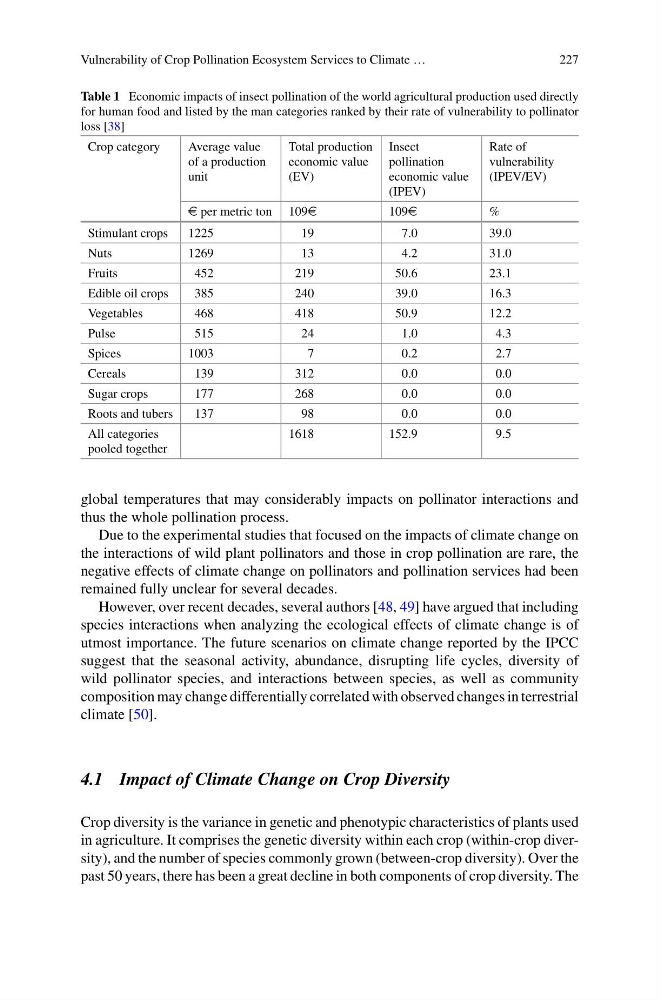
Table 1 Economic impacts of insect pollination of the world agricultural production used directly
for human food and listed by the man categories ranked by their rate of vulnerability to pollinator
loss [38]
Crop category
Average value
of a production
unit
Total production
economic value
(EV)
Insect
pollination
economic value
(IPEV)
Rate of
vulnerability
(IPEV/EV)
e per metric ton 109e
109e
%
Stimulant crops
1225
19
7.0
39.0
Nuts
1269
13
4.2
31.0
Fruits
452
219
50.6
23.1
Edible oil crops
385
240
39.0
16.3
Vegetables
468
418
50.9
12.2
Pulse
515
24
1.0
4.3
Spices
1003
7
0.2
2.7
Cereals
139
312
0.0
0.0
Sugar crops
177
268
0.0
0.0
Roots and tubers
137
98
0.0
0.0
All categories
pooled together
1618
152.9
9.5
global temperatures that may considerably impacts on pollinator interactions and
thus the whole pollination process.
Due to the experimental studies that focused on the impacts of climate change on
the interactions of wild plant pollinators and those in crop pollination are rare, the
negative effects of climate change on pollinators and pollination services had been
remained fully unclear for several decades.
However, over recent decades, several authors [48, 49] have argued that including
species interactions when analyzing the ecological effects of climate change is of
utmost importance. The future scenarios on climate change reported by the IPCC
suggest that the seasonal activity, abundance, disrupting life cycles, diversity of
wild pollinator species, and interactions between species, as well as community
composition may change differentially correlated with observed changes in terrestrial
climate [50].
4.1 Impact of Climate Change on Crop Diversity
Crop diversity is the variance in genetic and phenotypic characteristics of plants used
in agriculture. It comprises the genetic diversity within each crop (within-crop diversity), and the number of species commonly grown (between-crop diversity). Over the
past 50 years, there has been a great decline in both components of crop diversity. The
227
Table 1 Economic impacts of insect pollination of the world agricultural production used directly
for human food and listed by the man categories ranked by their rate of vulnerability to pollinator
loss [38]
Crop category
Average value
of a production
unit
Total production
economic value
(EV)
Insect
pollination
economic value
(IPEV)
Rate of
vulnerability
(IPEV/EV)
e per metric ton 109e
109e
%
Stimulant crops
1225
19
7.0
39.0
Nuts
1269
13
4.2
31.0
Fruits
452
219
50.6
23.1
Edible oil crops
385
240
39.0
16.3
Vegetables
468
418
50.9
12.2
Pulse
515
24
1.0
4.3
Spices
1003
7
0.2
2.7
Cereals
139
312
0.0
0.0
Sugar crops
177
268
0.0
0.0
Roots and tubers
137
98
0.0
0.0
All categories
pooled together
1618
152.9
9.5
global temperatures that may considerably impacts on pollinator interactions and
thus the whole pollination process.
Due to the experimental studies that focused on the impacts of climate change on
the interactions of wild plant pollinators and those in crop pollination are rare, the
negative effects of climate change on pollinators and pollination services had been
remained fully unclear for several decades.
However, over recent decades, several authors [48, 49] have argued that including
species interactions when analyzing the ecological effects of climate change is of
utmost importance. The future scenarios on climate change reported by the IPCC
suggest that the seasonal activity, abundance, disrupting life cycles, diversity of
wild pollinator species, and interactions between species, as well as community
composition may change differentially correlated with observed changes in terrestrial
climate [50].
4.1 Impact of Climate Change on Crop Diversity
Crop diversity is the variance in genetic and phenotypic characteristics of plants used
in agriculture. It comprises the genetic diversity within each crop (within-crop diversity), and the number of species commonly grown (between-crop diversity). Over the
past 50 years, there has been a great decline in both components of crop diversity. The