

136
R. R. Shahin
0
500
1000
1500
2000
2040
2065
2090
Submerged Area (1000 acres)
Sea Level Rise (m)
0.1 0.5 1
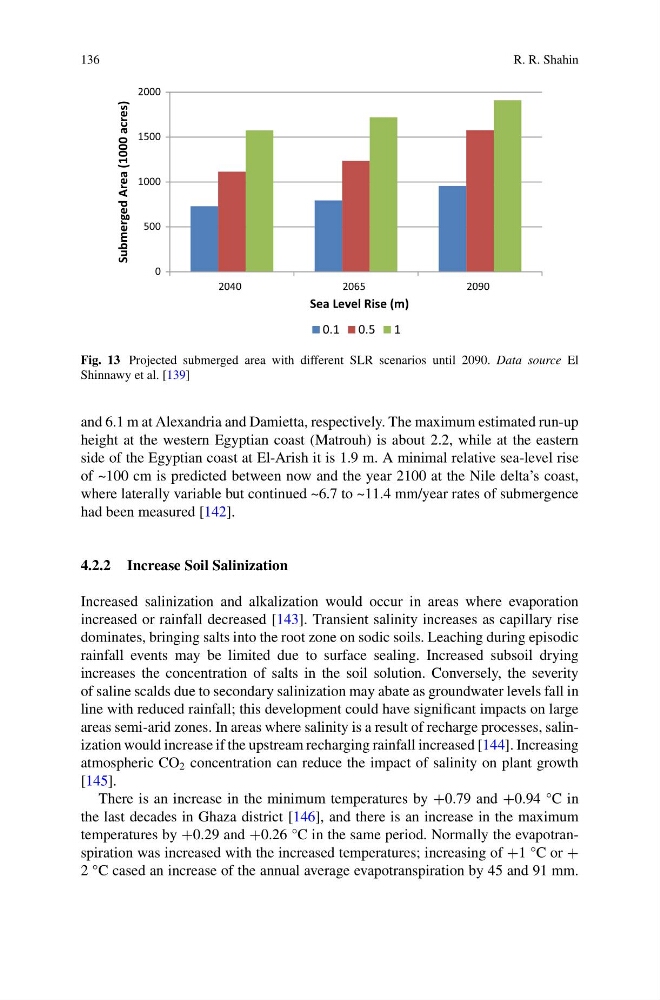
Fig. 13 Projected submerged area with different SLR scenarios until 2090. Data source El
Shinnawy et al. [139]
and 6.1 m at Alexandria and Damietta, respectively. The maximum estimated run-up
height at the western Egyptian coast (Matrouh) is about 2.2, while at the eastern
side of the Egyptian coast at El-Arish it is 1.9 m. A minimal relative sea-level rise
of ~100 cm is predicted between now and the year 2100 at the Nile delta’s coast,
where laterally variable but continued ~6.7 to ~11.4 mm/year rates of submergence
had been measured [142].
4.2.2 Increase Soil Salinization
Increased salinization and alkalization would occur in areas where evaporation
increased or rainfall decreased [143]. Transient salinity increases as capillary rise
dominates, bringing salts into the root zone on sodic soils. Leaching during episodic
rainfall events may be limited due to surface sealing. Increased subsoil drying
increases the concentration of salts in the soil solution. Conversely, the severity
of saline scalds due to secondary salinization may abate as groundwater levels fall in
line with reduced rainfall; this development could have significant impacts on large
areas semi-arid zones. In areas where salinity is a result of recharge processes, salinization would increase if the upstream recharging rainfall increased [144]. Increasing
atmospheric CO 2 concentration can reduce the impact of salinity on plant growth
[145].
There is an increase in the minimum temperatures by +0.79 and +0.94 °C in
the last decades in Ghaza district [146], and there is an increase in the maximum
temperatures by +0.29 and +0.26 °C in the same period. Normally the evapotranspiration was increased with the increased temperatures; increasing of +1 °C or +
2 °C cased an increase of the annual average evapotranspiration by 45 and 91 mm.
R. R. Shahin
0
500
1000
1500
2000
2040
2065
2090
Submerged Area (1000 acres)
Sea Level Rise (m)
0.1 0.5 1
Fig. 13 Projected submerged area with different SLR scenarios until 2090. Data source El
Shinnawy et al. [139]
and 6.1 m at Alexandria and Damietta, respectively. The maximum estimated run-up
height at the western Egyptian coast (Matrouh) is about 2.2, while at the eastern
side of the Egyptian coast at El-Arish it is 1.9 m. A minimal relative sea-level rise
of ~100 cm is predicted between now and the year 2100 at the Nile delta’s coast,
where laterally variable but continued ~6.7 to ~11.4 mm/year rates of submergence
had been measured [142].
4.2.2 Increase Soil Salinization
Increased salinization and alkalization would occur in areas where evaporation
increased or rainfall decreased [143]. Transient salinity increases as capillary rise
dominates, bringing salts into the root zone on sodic soils. Leaching during episodic
rainfall events may be limited due to surface sealing. Increased subsoil drying
increases the concentration of salts in the soil solution. Conversely, the severity
of saline scalds due to secondary salinization may abate as groundwater levels fall in
line with reduced rainfall; this development could have significant impacts on large
areas semi-arid zones. In areas where salinity is a result of recharge processes, salinization would increase if the upstream recharging rainfall increased [144]. Increasing
atmospheric CO 2 concentration can reduce the impact of salinity on plant growth
[145].
There is an increase in the minimum temperatures by +0.79 and +0.94 °C in
the last decades in Ghaza district [146], and there is an increase in the maximum
temperatures by +0.29 and +0.26 °C in the same period. Normally the evapotranspiration was increased with the increased temperatures; increasing of +1 °C or +
2 °C cased an increase of the annual average evapotranspiration by 45 and 91 mm.