

Soils as Driver and Victim of Climate Change in Egypt
123
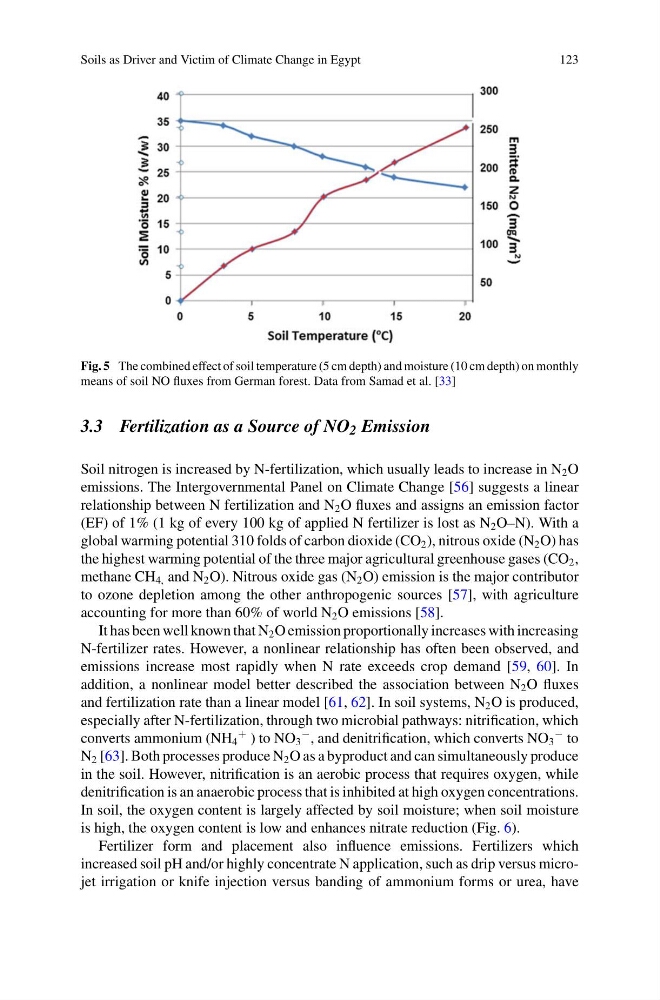
Fig. 5 The combined effect of soil temperature (5 cm depth) and moisture (10 cm depth) on monthly
means of soil NO fluxes from German forest. Data from Samad et al. [33]
3.3 Fertilization as a Source of NO 2 Emission
Soil nitrogen is increased by N-fertilization, which usually leads to increase in N 2 O
emissions. The Intergovernmental Panel on Climate Change [56] suggests a linear
relationship between N fertilization and N 2 O fluxes and assigns an emission factor
(EF) of 1% (1 kg of every 100 kg of applied N fertilizer is lost as N 2 O–N). With a
global warming potential 310 folds of carbon dioxide (CO 2 ), nitrous oxide (N 2 O) has
the highest warming potential of the three major agricultural greenhouse gases (CO 2 ,
methane CH 4, and N 2 O). Nitrous oxide gas (N 2 O) emission is the major contributor
to ozone depletion among the other anthropogenic sources [57], with agriculture
accounting for more than 60% of world N 2 O emissions [58].
It has been well known that N 2 O emission proportionally increases with increasing
N-fertilizer rates. However, a nonlinear relationship has often been observed, and
emissions increase most rapidly when N rate exceeds crop demand [59, 60]. In
addition, a nonlinear model better described the association between N 2 O fluxes
and fertilization rate than a linear model [61, 62]. In soil systems, N 2 O is produced,
especially after N-fertilization, through two microbial pathways: nitrification, which
converts ammonium (NH 4
+ ) to NO 3
− , and denitrification, which converts NO 3
− to
N 2 [63]. Both processes produce N 2 O as a byproduct and can simultaneously produce
in the soil. However, nitrification is an aerobic process that requires oxygen, while
denitrification is an anaerobic process that is inhibited at high oxygen concentrations.
In soil, the oxygen content is largely affected by soil moisture; when soil moisture
is high, the oxygen content is low and enhances nitrate reduction (Fig. 6).
Fertilizer form and placement also influence emissions. Fertilizers which
increased soil pH and/or highly concentrate N application, such as drip versus microjet irrigation or knife injection versus banding of ammonium forms or urea, have
123
Fig. 5 The combined effect of soil temperature (5 cm depth) and moisture (10 cm depth) on monthly
means of soil NO fluxes from German forest. Data from Samad et al. [33]
3.3 Fertilization as a Source of NO 2 Emission
Soil nitrogen is increased by N-fertilization, which usually leads to increase in N 2 O
emissions. The Intergovernmental Panel on Climate Change [56] suggests a linear
relationship between N fertilization and N 2 O fluxes and assigns an emission factor
(EF) of 1% (1 kg of every 100 kg of applied N fertilizer is lost as N 2 O–N). With a
global warming potential 310 folds of carbon dioxide (CO 2 ), nitrous oxide (N 2 O) has
the highest warming potential of the three major agricultural greenhouse gases (CO 2 ,
methane CH 4, and N 2 O). Nitrous oxide gas (N 2 O) emission is the major contributor
to ozone depletion among the other anthropogenic sources [57], with agriculture
accounting for more than 60% of world N 2 O emissions [58].
It has been well known that N 2 O emission proportionally increases with increasing
N-fertilizer rates. However, a nonlinear relationship has often been observed, and
emissions increase most rapidly when N rate exceeds crop demand [59, 60]. In
addition, a nonlinear model better described the association between N 2 O fluxes
and fertilization rate than a linear model [61, 62]. In soil systems, N 2 O is produced,
especially after N-fertilization, through two microbial pathways: nitrification, which
converts ammonium (NH 4
+ ) to NO 3
− , and denitrification, which converts NO 3
− to
N 2 [63]. Both processes produce N 2 O as a byproduct and can simultaneously produce
in the soil. However, nitrification is an aerobic process that requires oxygen, while
denitrification is an anaerobic process that is inhibited at high oxygen concentrations.
In soil, the oxygen content is largely affected by soil moisture; when soil moisture
is high, the oxygen content is low and enhances nitrate reduction (Fig. 6).
Fertilizer form and placement also influence emissions. Fertilizers which
increased soil pH and/or highly concentrate N application, such as drip versus microjet irrigation or knife injection versus banding of ammonium forms or urea, have