

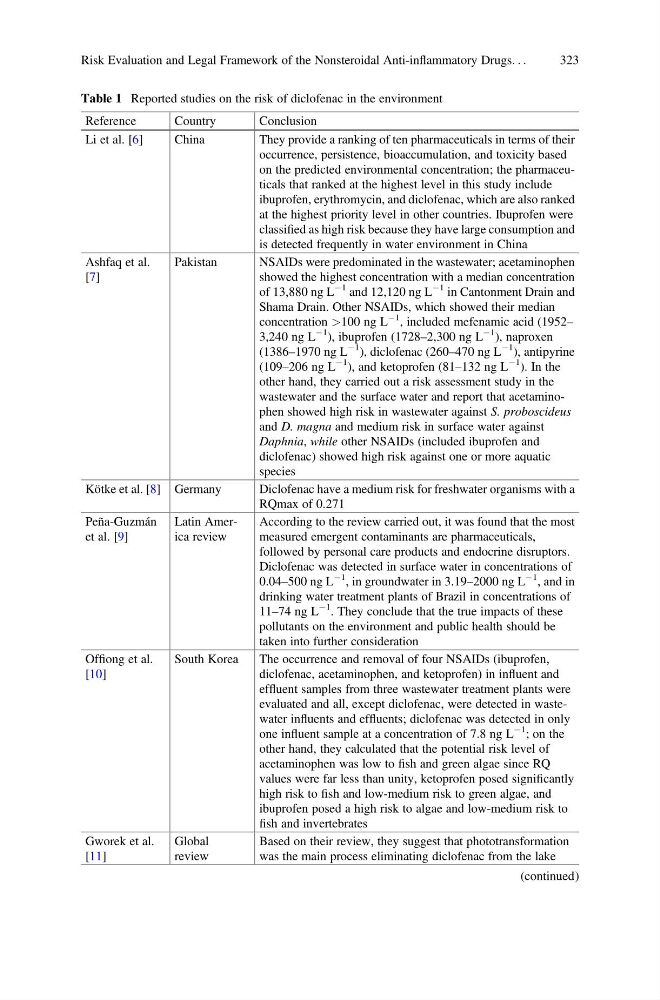
Table 1 Reported studies on the risk of diclofenac in the environment
Reference
Country
Conclusion
Li et al. [6]
China
They provide a ranking of ten pharmaceuticals in terms of their
occurrence, persistence, bioaccumulation, and toxicity based
on the predicted environmental concentration; the pharmaceuticals that ranked at the highest level in this study include
ibuprofen, erythromycin, and diclofenac, which are also ranked
at the highest priority level in other countries. Ibuprofen were
classified as high risk because they have large consumption and
is detected frequently in water environment in China
Ashfaq et al.
[7]
Pakistan
NSAIDs were predominated in the wastewater; acetaminophen
showed the highest concentration with a median concentration
of 13,880 ng L
À1 and 12,120 ng L
À1 in Cantonment Drain and
Shama Drain. Other NSAIDs, which showed their median
concentration >100 ng L
À1
, included mefenamic acid (1952–
3,240 ng L
À1
), ibuprofen (1728–2,300 ng L
À1
), naproxen
(1386–1970 ng L
À1
), diclofenac (260–470 ng L
À1
), antipyrine
(109–206 ng L
À1
), and ketoprofen (81–132 ng L
À1
). In the
other hand, they carried out a risk assessment study in the
wastewater and the surface water and report that acetaminophen showed high risk in wastewater against S. proboscideus
and D. magna and medium risk in surface water against
Daphnia, while other NSAIDs (included ibuprofen and
diclofenac) showed high risk against one or more aquatic
species
Kötke et al. [8] Germany
Diclofenac have a medium risk for freshwater organisms with a
RQmax of 0.271
Peña-Guzmán
et al. [9]
Latin America review
According to the review carried out, it was found that the most
measured emergent contaminants are pharmaceuticals,
followed by personal care products and endocrine disruptors.
Diclofenac was detected in surface water in concentrations of
0.04–500 ng L
À1
, in groundwater in 3.19–2000 ng L
À1
, and in
drinking water treatment plants of Brazil in concentrations of
11–74 ng L
À1
. They conclude that the true impacts of these
pollutants on the environment and public health should be
taken into further consideration
Offiong et al.
[10]
South Korea
The occurrence and removal of four NSAIDs (ibuprofen,
diclofenac, acetaminophen, and ketoprofen) in influent and
effluent samples from three wastewater treatment plants were
evaluated and all, except diclofenac, were detected in wastewater influents and effluents; diclofenac was detected in only
one influent sample at a concentration of 7.8 ng L
À1
; on the
other hand, they calculated that the potential risk level of
acetaminophen was low to fish and green algae since RQ
values were far less than unity, ketoprofen posed significantly
high risk to fish and low-medium risk to green algae, and
ibuprofen posed a high risk to algae and low-medium risk to
fish and invertebrates
Gworek et al.
[11]
Global
review
Based on their review, they suggest that phototransformation
was the main process eliminating diclofenac from the lake
(continued)
Risk Evaluation and Legal Framework of the Nonsteroidal Anti-inflammatory Drugs. . .
323
Reference
Country
Conclusion
Li et al. [6]
China
They provide a ranking of ten pharmaceuticals in terms of their
occurrence, persistence, bioaccumulation, and toxicity based
on the predicted environmental concentration; the pharmaceuticals that ranked at the highest level in this study include
ibuprofen, erythromycin, and diclofenac, which are also ranked
at the highest priority level in other countries. Ibuprofen were
classified as high risk because they have large consumption and
is detected frequently in water environment in China
Ashfaq et al.
[7]
Pakistan
NSAIDs were predominated in the wastewater; acetaminophen
showed the highest concentration with a median concentration
of 13,880 ng L
À1 and 12,120 ng L
À1 in Cantonment Drain and
Shama Drain. Other NSAIDs, which showed their median
concentration >100 ng L
À1
, included mefenamic acid (1952–
3,240 ng L
À1
), ibuprofen (1728–2,300 ng L
À1
), naproxen
(1386–1970 ng L
À1
), diclofenac (260–470 ng L
À1
), antipyrine
(109–206 ng L
À1
), and ketoprofen (81–132 ng L
À1
). In the
other hand, they carried out a risk assessment study in the
wastewater and the surface water and report that acetaminophen showed high risk in wastewater against S. proboscideus
and D. magna and medium risk in surface water against
Daphnia, while other NSAIDs (included ibuprofen and
diclofenac) showed high risk against one or more aquatic
species
Kötke et al. [8] Germany
Diclofenac have a medium risk for freshwater organisms with a
RQmax of 0.271
Peña-Guzmán
et al. [9]
Latin America review
According to the review carried out, it was found that the most
measured emergent contaminants are pharmaceuticals,
followed by personal care products and endocrine disruptors.
Diclofenac was detected in surface water in concentrations of
0.04–500 ng L
À1
, in groundwater in 3.19–2000 ng L
À1
, and in
drinking water treatment plants of Brazil in concentrations of
11–74 ng L
À1
. They conclude that the true impacts of these
pollutants on the environment and public health should be
taken into further consideration
Offiong et al.
[10]
South Korea
The occurrence and removal of four NSAIDs (ibuprofen,
diclofenac, acetaminophen, and ketoprofen) in influent and
effluent samples from three wastewater treatment plants were
evaluated and all, except diclofenac, were detected in wastewater influents and effluents; diclofenac was detected in only
one influent sample at a concentration of 7.8 ng L
À1
; on the
other hand, they calculated that the potential risk level of
acetaminophen was low to fish and green algae since RQ
values were far less than unity, ketoprofen posed significantly
high risk to fish and low-medium risk to green algae, and
ibuprofen posed a high risk to algae and low-medium risk to
fish and invertebrates
Gworek et al.
[11]
Global
review
Based on their review, they suggest that phototransformation
was the main process eliminating diclofenac from the lake
(continued)
Risk Evaluation and Legal Framework of the Nonsteroidal Anti-inflammatory Drugs. . .
323