

38
2 Environmental Conditions in the Mine
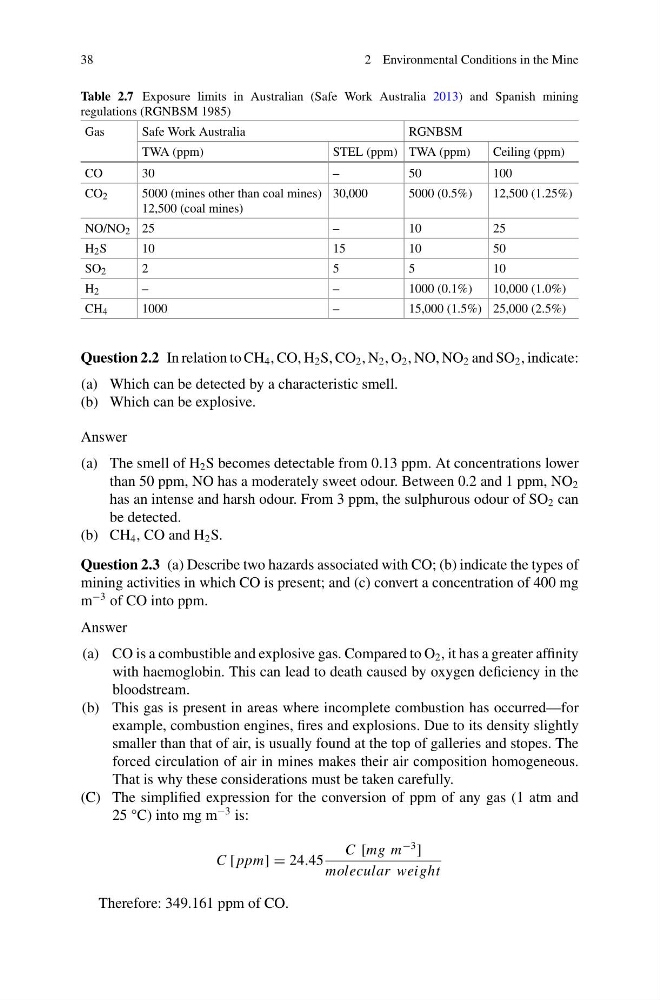
Table 2.7 Exposure limits in Australian (Safe Work Australia 2013) and Spanish mining
regulations (RGNBSM 1985)
Gas
Safe Work Australia
RGNBSM
TWA (ppm)
STEL (ppm) TWA (ppm)
Ceiling (ppm)
CO
30
–
50
100
CO 2
5000 (mines other than coal mines)
12,500 (coal mines)
30,000
5000 (0.5%)
12,500 (1.25%)
NO/NO 2 25
–
10
25
H 2 S
10
15
10
50
SO 2
2
5
5
10
H 2
–
–
1000 (0.1%)
10,000 (1.0%)
CH 4
1000
–
15,000 (1.5%) 25,000 (2.5%)
Question 2.2 In relation to CH 4 , CO, H 2 S, CO 2 , N 2 , O 2 , NO, NO 2 and SO 2 , indicate:
(a) Which can be detected by a characteristic smell.
(b) Which can be explosive.
Answer
(a) The smell of H 2 S becomes detectable from 0.13 ppm. At concentrations lower
than 50 ppm, NO has a moderately sweet odour. Between 0.2 and 1 ppm, NO 2
has an intense and harsh odour. From 3 ppm, the sulphurous odour of SO 2 can
be detected.
(b) CH 4 , CO and H 2 S.
Question 2.3 (a) Describe two hazards associated with CO; (b) indicate the types of
mining activities in which CO is present; and (c) convert a concentration of 400 mg
m
−3 of CO into ppm.
Answer
(a) CO is a combustible and explosive gas. Compared to O 2 , it has a greater affinity
with haemoglobin. This can lead to death caused by oxygen deficiency in the
bloodstream.
(b) This gas is present in areas where incomplete combustion has occurred—for
example, combustion engines, fires and explosions. Due to its density slightly
smaller than that of air, is usually found at the top of galleries and stopes. The
forced circulation of air in mines makes their air composition homogeneous.
That is why these considerations must be taken carefully.
(C) The simplified expression for the conversion of ppm of any gas (1 atm and
25 °C) into mg m
−3 is:
C [ ppm] = 24.45
C [mg m
−3
]
molecular weight
Therefore: 349.161 ppm of CO.
2 Environmental Conditions in the Mine
Table 2.7 Exposure limits in Australian (Safe Work Australia 2013) and Spanish mining
regulations (RGNBSM 1985)
Gas
Safe Work Australia
RGNBSM
TWA (ppm)
STEL (ppm) TWA (ppm)
Ceiling (ppm)
CO
30
–
50
100
CO 2
5000 (mines other than coal mines)
12,500 (coal mines)
30,000
5000 (0.5%)
12,500 (1.25%)
NO/NO 2 25
–
10
25
H 2 S
10
15
10
50
SO 2
2
5
5
10
H 2
–
–
1000 (0.1%)
10,000 (1.0%)
CH 4
1000
–
15,000 (1.5%) 25,000 (2.5%)
Question 2.2 In relation to CH 4 , CO, H 2 S, CO 2 , N 2 , O 2 , NO, NO 2 and SO 2 , indicate:
(a) Which can be detected by a characteristic smell.
(b) Which can be explosive.
Answer
(a) The smell of H 2 S becomes detectable from 0.13 ppm. At concentrations lower
than 50 ppm, NO has a moderately sweet odour. Between 0.2 and 1 ppm, NO 2
has an intense and harsh odour. From 3 ppm, the sulphurous odour of SO 2 can
be detected.
(b) CH 4 , CO and H 2 S.
Question 2.3 (a) Describe two hazards associated with CO; (b) indicate the types of
mining activities in which CO is present; and (c) convert a concentration of 400 mg
m
−3 of CO into ppm.
Answer
(a) CO is a combustible and explosive gas. Compared to O 2 , it has a greater affinity
with haemoglobin. This can lead to death caused by oxygen deficiency in the
bloodstream.
(b) This gas is present in areas where incomplete combustion has occurred—for
example, combustion engines, fires and explosions. Due to its density slightly
smaller than that of air, is usually found at the top of galleries and stopes. The
forced circulation of air in mines makes their air composition homogeneous.
That is why these considerations must be taken carefully.
(C) The simplified expression for the conversion of ppm of any gas (1 atm and
25 °C) into mg m
−3 is:
C [ ppm] = 24.45
C [mg m
−3
]
molecular weight
Therefore: 349.161 ppm of CO.