

5.3 Natural Ventilation
163
5.3 Natural Ventilation
Natural ventilation or natural draught
2 is the phenomenon by which the air moves
without the help of any machinery providing an extrinsic drive. This movement is
based mostly on the heating owing to the geothermal gradient that the gases undergo
when crossing the mine, which results in a pressure difference between downcast and upcast shafts. Other factors, such as surface winds, air self-compression,
heat released by processes of oxidation, hydration and solution/dissociation, and
waterfalls –mainly present in the shafts–, can also be added to the above.
Hot air column
Cold air column
Hot air column
Cold air column
Surface
Surface
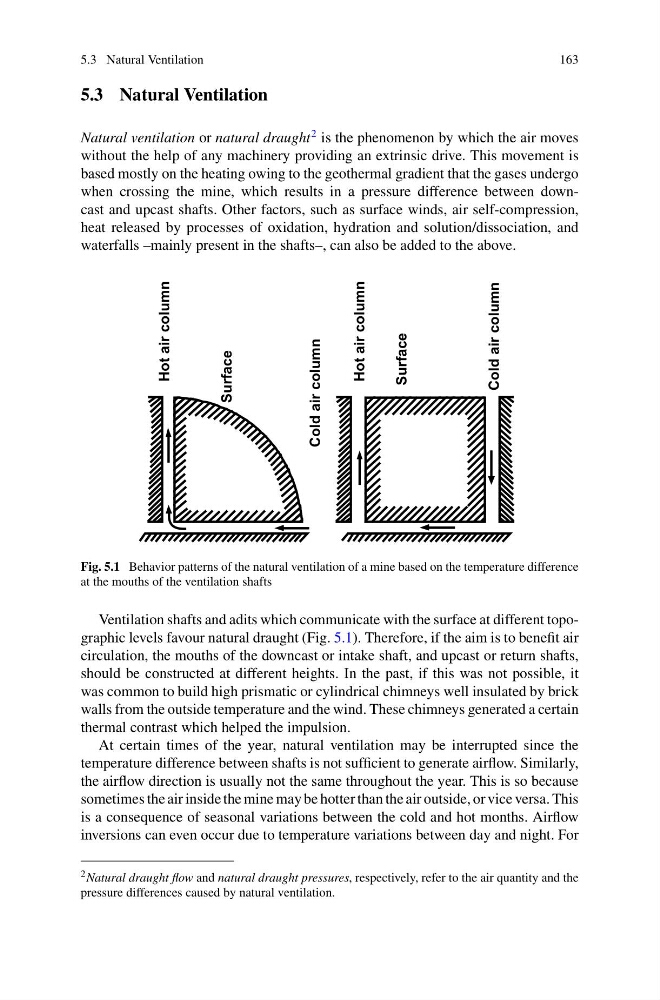
Fig. 5.1 Behavior patterns of the natural ventilation of a mine based on the temperature difference
at the mouths of the ventilation shafts
Ventilation shafts and adits which communicate with the surface at different topographic levels favour natural draught (Fig. 5.1). Therefore, if the aim is to benefit air
circulation, the mouths of the downcast or intake shaft, and upcast or return shafts,
should be constructed at different heights. In the past, if this was not possible, it
was common to build high prismatic or cylindrical chimneys well insulated by brick
walls from the outside temperature and the wind. These chimneys generated a certain
thermal contrast which helped the impulsion.
At certain times of the year, natural ventilation may be interrupted since the
temperature difference between shafts is not sufficient to generate airflow. Similarly,
the airflow direction is usually not the same throughout the year. This is so because
sometimes the air inside the mine may be hotter than the air outside, or vice versa. This
is a consequence of seasonal variations between the cold and hot months. Airflow
inversions can even occur due to temperature variations between day and night. For
2 Natural draught flow and natural draught pressures, respectively, refer to the air quantity and the
pressure differences caused by natural ventilation.
163
5.3 Natural Ventilation
Natural ventilation or natural draught
2 is the phenomenon by which the air moves
without the help of any machinery providing an extrinsic drive. This movement is
based mostly on the heating owing to the geothermal gradient that the gases undergo
when crossing the mine, which results in a pressure difference between downcast and upcast shafts. Other factors, such as surface winds, air self-compression,
heat released by processes of oxidation, hydration and solution/dissociation, and
waterfalls –mainly present in the shafts–, can also be added to the above.
Hot air column
Cold air column
Hot air column
Cold air column
Surface
Surface
Fig. 5.1 Behavior patterns of the natural ventilation of a mine based on the temperature difference
at the mouths of the ventilation shafts
Ventilation shafts and adits which communicate with the surface at different topographic levels favour natural draught (Fig. 5.1). Therefore, if the aim is to benefit air
circulation, the mouths of the downcast or intake shaft, and upcast or return shafts,
should be constructed at different heights. In the past, if this was not possible, it
was common to build high prismatic or cylindrical chimneys well insulated by brick
walls from the outside temperature and the wind. These chimneys generated a certain
thermal contrast which helped the impulsion.
At certain times of the year, natural ventilation may be interrupted since the
temperature difference between shafts is not sufficient to generate airflow. Similarly,
the airflow direction is usually not the same throughout the year. This is so because
sometimes the air inside the mine may be hotter than the air outside, or vice versa. This
is a consequence of seasonal variations between the cold and hot months. Airflow
inversions can even occur due to temperature variations between day and night. For
2 Natural draught flow and natural draught pressures, respectively, refer to the air quantity and the
pressure differences caused by natural ventilation.