

451
12.6 Technological Aspects of the Turbofan Engine
12.6 Technological Aspects of the Turbofan Engine
12.6.1 Discs and Shafts
In Fig. 12.9 it is visible that rotor drums of compressor and turbine parts are
made from connected discs (welded or bolted together) with a large hole at the
centre. Figure 12.14 is a section of the turbine part of the Trent800. The rotor
discs are clearly visible. One of the discs in the LP turbine and the single discs
of the HP and IP turbines are connected to concentric hollow shafts. Discs in
the LP and IP compressors and in the LP turbine are typically forged from a titanium alloy (alloy with aluminium as most important second component), due
to the low weight of titanium. Discs of the HP compressor and the HP and IP
turbines are made from nickel-base super-alloys, because titanium alloys cannot withstand a temperature higher than about 540 °C. Shafts are mostly made
from steel.
12.6.2 Vanes and Blades
Fan blades are typically hollow structures produced from two titanium alloy sheets,
shaped by plastic deformation, and a corrugated plate or a honeycomb structure of
the same metal in between them. All parts are connected by diffusion bonding. A
very modern technology is fan blades in composite materials: graphite fibres and
epoxy resin. Vanes and blades in cold parts of the engine (LP and IP compressor,
LP turbine) are made from titanium alloys, while nickel-base alloys are used for the
hot parts (HP compressor, HP and IP turbines). HP turbine blades are normally cast
as a single crystal and IP blades are cast directionally solidified. Vanes and blades
in HP and IP turbines have a thermal barrier coating (TBC). Cooling of vanes and
blades is based on the same principles as with stationary gas turbines, but inserts are
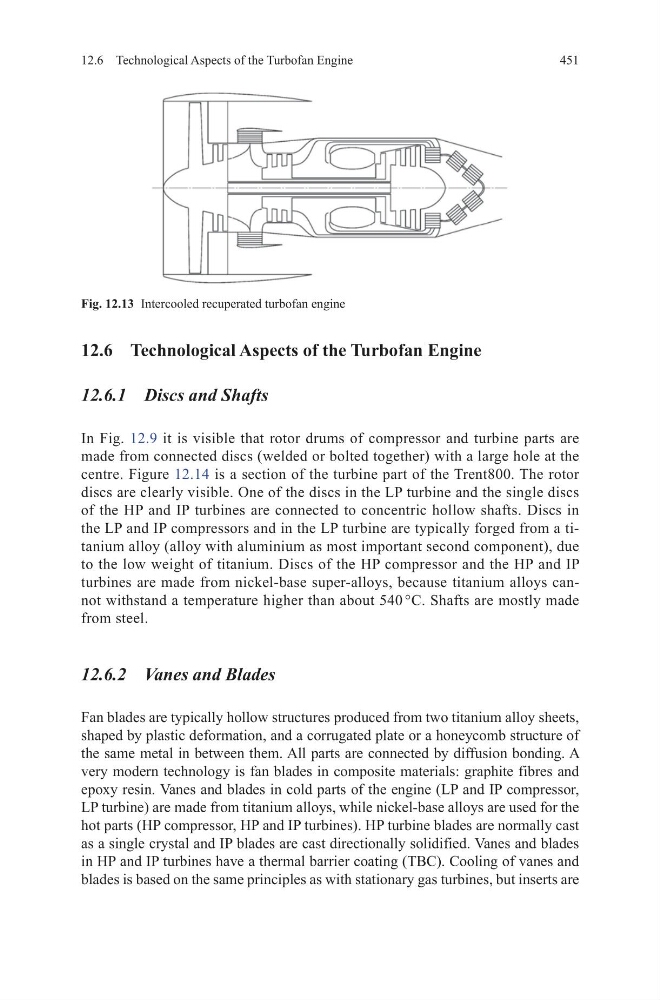
Fig. 12.13 Intercooled recuperated turbofan engine
12.6 Technological Aspects of the Turbofan Engine
12.6 Technological Aspects of the Turbofan Engine
12.6.1 Discs and Shafts
In Fig. 12.9 it is visible that rotor drums of compressor and turbine parts are
made from connected discs (welded or bolted together) with a large hole at the
centre. Figure 12.14 is a section of the turbine part of the Trent800. The rotor
discs are clearly visible. One of the discs in the LP turbine and the single discs
of the HP and IP turbines are connected to concentric hollow shafts. Discs in
the LP and IP compressors and in the LP turbine are typically forged from a titanium alloy (alloy with aluminium as most important second component), due
to the low weight of titanium. Discs of the HP compressor and the HP and IP
turbines are made from nickel-base super-alloys, because titanium alloys cannot withstand a temperature higher than about 540 °C. Shafts are mostly made
from steel.
12.6.2 Vanes and Blades
Fan blades are typically hollow structures produced from two titanium alloy sheets,
shaped by plastic deformation, and a corrugated plate or a honeycomb structure of
the same metal in between them. All parts are connected by diffusion bonding. A
very modern technology is fan blades in composite materials: graphite fibres and
epoxy resin. Vanes and blades in cold parts of the engine (LP and IP compressor,
LP turbine) are made from titanium alloys, while nickel-base alloys are used for the
hot parts (HP compressor, HP and IP turbines). HP turbine blades are normally cast
as a single crystal and IP blades are cast directionally solidified. Vanes and blades
in HP and IP turbines have a thermal barrier coating (TBC). Cooling of vanes and
blades is based on the same principles as with stationary gas turbines, but inserts are
Fig. 12.13 Intercooled recuperated turbofan engine