

373
11.1 General Concept and Components
inserted in slots (see also further Fig. 11.4). The discs are connected to each other
by teethed annular zones and tightened with bolts. The construction of the turbine is
similar, but the fixing of the blades is with fir tree roots (multiple contact surfaces).
The shaft is realised by adding hollow tubes to the connected discs.
A second category of machines meant for electricity production is the
aero-derivative type. These machines are derived from aero gas turbines for thrust
generation, by replacing the fan (front of the machine) by a compressor stage and
by replacing the end part of the low-pressure turbine (rear of the machine) by adapted turbine stages. Such machines are offered by aero gas turbine manufacturers
as a second product line. The machines are light (required for aero use) and have
a pressure ratio typically around 40, so much higher than with a typical heavy
duty gas turbine (see Chap. 12). They also have multiple shafts (two or three).
The compressor is split into a low-pressure (LP) and a high-pressure (HP) part. In
two-shaft machines, the turbine is split into two parts, with the HP turbine driving
the HP compressor and the LP turbine driving the LP compressor and the external
load on the cold end side of the machine (compressor side). In three-shaft machines, the turbine is split into three parts: the HP part drives the HP compressor,
the intermediate-pressure part (IP) drives the LP compressor and the LP part drives
the external load, either at the cold end side or at the hot end side of the machine.
Typical manufacturers are Rolls Royce and General Electric (see websites; search
for the name of the manufacturer combined with the term aero-derivative). Aeroderivative machines have limited power (range from about 5 MW to about 50 MW;
there is one type with 100 MW). They are used for electricity generation, but typically not in large power stations, but very often in industrial plants requiring large
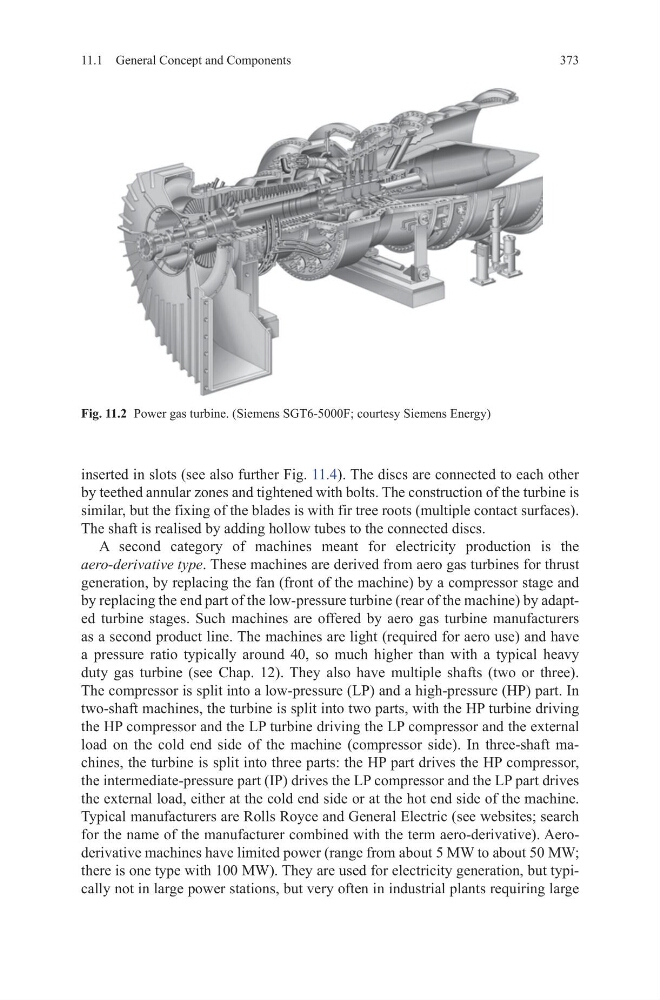
Fig. 11.2 Power gas turbine. (Siemens SGT6-5000F; courtesy Siemens Energy)
11.1 General Concept and Components
inserted in slots (see also further Fig. 11.4). The discs are connected to each other
by teethed annular zones and tightened with bolts. The construction of the turbine is
similar, but the fixing of the blades is with fir tree roots (multiple contact surfaces).
The shaft is realised by adding hollow tubes to the connected discs.
A second category of machines meant for electricity production is the
aero-derivative type. These machines are derived from aero gas turbines for thrust
generation, by replacing the fan (front of the machine) by a compressor stage and
by replacing the end part of the low-pressure turbine (rear of the machine) by adapted turbine stages. Such machines are offered by aero gas turbine manufacturers
as a second product line. The machines are light (required for aero use) and have
a pressure ratio typically around 40, so much higher than with a typical heavy
duty gas turbine (see Chap. 12). They also have multiple shafts (two or three).
The compressor is split into a low-pressure (LP) and a high-pressure (HP) part. In
two-shaft machines, the turbine is split into two parts, with the HP turbine driving
the HP compressor and the LP turbine driving the LP compressor and the external
load on the cold end side of the machine (compressor side). In three-shaft machines, the turbine is split into three parts: the HP part drives the HP compressor,
the intermediate-pressure part (IP) drives the LP compressor and the LP part drives
the external load, either at the cold end side or at the hot end side of the machine.
Typical manufacturers are Rolls Royce and General Electric (see websites; search
for the name of the manufacturer combined with the term aero-derivative). Aeroderivative machines have limited power (range from about 5 MW to about 50 MW;
there is one type with 100 MW). They are used for electricity generation, but typically not in large power stations, but very often in industrial plants requiring large
Fig. 11.2 Power gas turbine. (Siemens SGT6-5000F; courtesy Siemens Energy)