

7.1 Principles of Dynamic Similitude
249
The mass unit may be determined by choosing the fluid density as the density unit:
e ρ = ρ. As
/ ,
3
m
e
e e
r =
a mass unit follows with a consistent unit system.
The flow equations are
The pressure unit is adopted because of consistency as
.
2
2
p
v
v
e
e e
e
r
r
=
=
The dimensionless equations follow from
with quantities between brackets being dimensionless.
The momentum equation becomes:
Dimensional factors within the left-hand term are all /
/ .
2
2
v
e e V L
=
By multiplication with L/V
2
we obtain a dimensionless equation with the right-hand term:
Two dimensionless groups are formed, that must have the same value for both flows
considered. Note that the continuity equation does not cause similitude conditions
because of its homogeneity. Similitude conditions are expressed by
The similitude conditions may be interpreted as conditions that forces of different
origins must have a fixed ratio. We distinguish (acceleration is interpreted as inertia
force):
2
z
v
1
.v 0,
v. v
p
g 1
v.
t


r
∇ =
+ ∇ + ∇ = −
+ ∇
v
[ ]
[ ]
[ ]
v
t
1
v v e ,
t t e ,
,
,
e
=
=
∇ = ∇
[ ]
2
p
2
v
v
v
z
2
t
e
e
e
e
v
1
v. v
p
g 1
v
.
t e
e
e
e


r
r
+ ∇
+
∇
= −
+ ∇
v
2
z
2
gL 1
v .
VL
V
−
+
∇
v
Re
constant(Reynolds),
constant(Froude).
VL
V
Fr
gL
=
=
=
=
v
2
z
v
1
v. v
p
g 1
v
t
inertia force pressure force gravity force viscous force.


r
+ ∇
+
∇ = −
+
∇
v
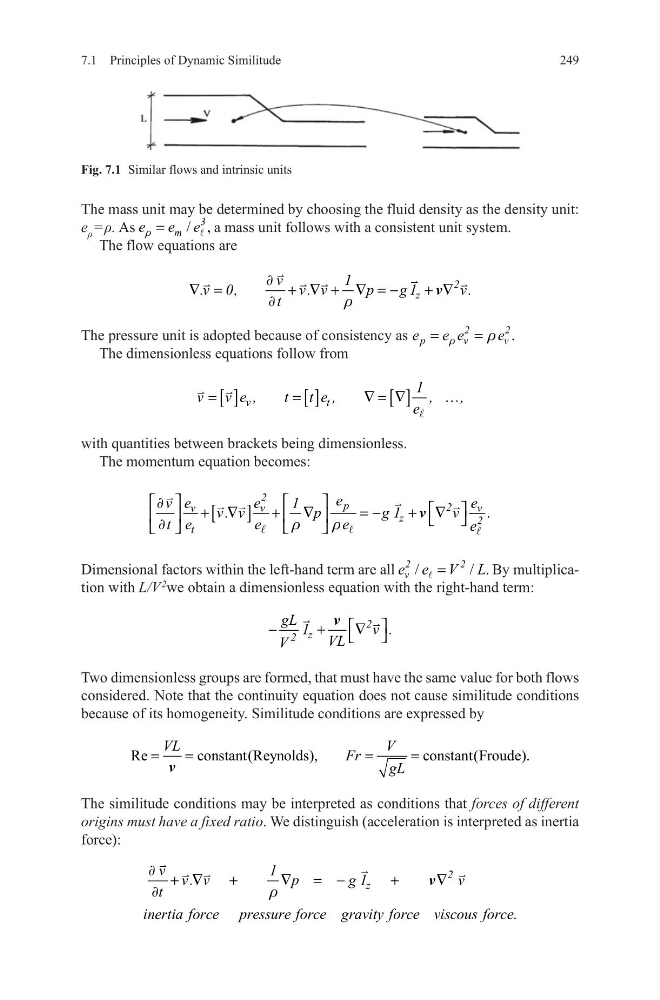
Fig. 7.1 Similar flows and intrinsic units
249
The mass unit may be determined by choosing the fluid density as the density unit:
e ρ = ρ. As
/ ,
3
m
e
e e
r =
a mass unit follows with a consistent unit system.
The flow equations are
The pressure unit is adopted because of consistency as
.
2
2
p
v
v
e
e e
e
r
r
=
=
The dimensionless equations follow from
with quantities between brackets being dimensionless.
The momentum equation becomes:
Dimensional factors within the left-hand term are all /
/ .
2
2
v
e e V L
=
By multiplication with L/V
2
we obtain a dimensionless equation with the right-hand term:
Two dimensionless groups are formed, that must have the same value for both flows
considered. Note that the continuity equation does not cause similitude conditions
because of its homogeneity. Similitude conditions are expressed by
The similitude conditions may be interpreted as conditions that forces of different
origins must have a fixed ratio. We distinguish (acceleration is interpreted as inertia
force):
2
z
v
1
.v 0,
v. v
p
g 1
v.
t


r
∇ =
+ ∇ + ∇ = −
+ ∇
v
[ ]
[ ]
[ ]
v
t
1
v v e ,
t t e ,
,
,
e
=
=
∇ = ∇
[ ]
2
p
2
v
v
v
z
2
t
e
e
e
e
v
1
v. v
p
g 1
v
.
t e
e
e
e


r
r
+ ∇
+
∇
= −
+ ∇
v
2
z
2
gL 1
v .
VL
V
−
+
∇
v
Re
constant(Reynolds),
constant(Froude).
VL
V
Fr
gL
=
=
=
=
v
2
z
v
1
v. v
p
g 1
v
t
inertia force pressure force gravity force viscous force.


r
+ ∇
+
∇ = −
+
∇
v
Fig. 7.1 Similar flows and intrinsic units