

136
3 Fans
3.5.4 Overall Efficiency with Power Delivering Machines
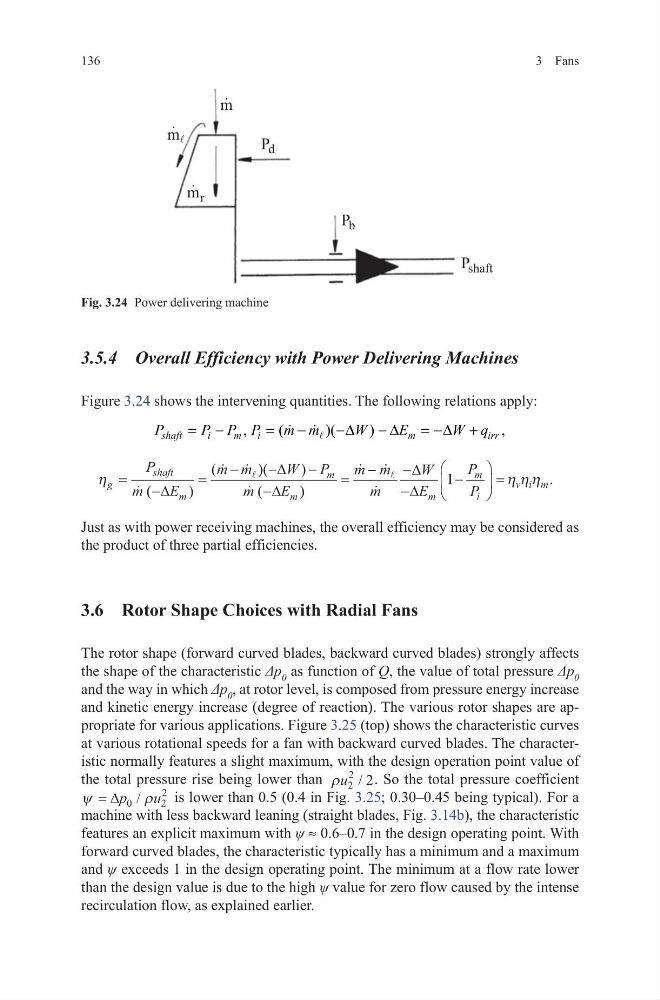
Figure 3.24 shows the intervening quantities. The following relations apply:
Just as with power receiving machines, the overall efficiency may be considered as
the product of three partial efficiencies.
3.6 Rotor Shape Choices with Radial Fans
The rotor shape (forward curved blades, backward curved blades) strongly affects
the shape of the characteristic Δp 0 as function of Q, the value of total pressure Δp 0
and the way in which Δp 0 , at rotor level, is composed from pressure energy increase
and kinetic energy increase (degree of reaction). The various rotor shapes are appropriate for various applications. Figure 3.25 (top) shows the characteristic curves
at various rotational speeds for a fan with backward curved blades. The characteristic normally features a slight maximum, with the design operation point value of
the total pressure rise being lower than ρu 2
2
2
/ . So the total pressure coefficient
ψ
ρ
= ∆p
u
0
2
2
/
is lower than 0.5 (0.4 in Fig. 3.25; 0.30–0.45 being typical). For a
machine with less backward leaning (straight blades, Fig. 3.14b), the characteristic
features an explicit maximum with ψ ≈ 0.6–0.7 in the design operating point. With
forward curved blades, the characteristic typically has a minimum and a maximum
and ψ exceeds 1 in the design operating point. The minimum at a flow rate lower
than the design value is due to the high ψ value for zero flow caused by the intense
recirculation flow, as explained earlier.
,
(
)(
)
,
shaft
i
m
i
m
irr
P
P P P
m m
W
E
W q
= −
=
−
−∆
− ∆ = −∆ +
η g
shaft
m
m
m
m
P
m
E
m m
W P
m
E
m m
m
W
E
=
−
=
−
−
−
−
=
−
−
−
(
)
(
)(
)
(
)
∆
∆
∆
∆
∆
1 1−
=
P
P
m
i
v i m
η η η .
d
P
b
P
r
m
m
m
shaft
P
.
.
.
Fig. 3.24 Power delivering machine
3 Fans
3.5.4 Overall Efficiency with Power Delivering Machines
Figure 3.24 shows the intervening quantities. The following relations apply:
Just as with power receiving machines, the overall efficiency may be considered as
the product of three partial efficiencies.
3.6 Rotor Shape Choices with Radial Fans
The rotor shape (forward curved blades, backward curved blades) strongly affects
the shape of the characteristic Δp 0 as function of Q, the value of total pressure Δp 0
and the way in which Δp 0 , at rotor level, is composed from pressure energy increase
and kinetic energy increase (degree of reaction). The various rotor shapes are appropriate for various applications. Figure 3.25 (top) shows the characteristic curves
at various rotational speeds for a fan with backward curved blades. The characteristic normally features a slight maximum, with the design operation point value of
the total pressure rise being lower than ρu 2
2
2
/ . So the total pressure coefficient
ψ
ρ
= ∆p
u
0
2
2
/
is lower than 0.5 (0.4 in Fig. 3.25; 0.30–0.45 being typical). For a
machine with less backward leaning (straight blades, Fig. 3.14b), the characteristic
features an explicit maximum with ψ ≈ 0.6–0.7 in the design operating point. With
forward curved blades, the characteristic typically has a minimum and a maximum
and ψ exceeds 1 in the design operating point. The minimum at a flow rate lower
than the design value is due to the high ψ value for zero flow caused by the intense
recirculation flow, as explained earlier.
,
(
)(
)
,
shaft
i
m
i
m
irr
P
P P P
m m
W
E
W q
= −
=
−
−∆
− ∆ = −∆ +
η g
shaft
m
m
m
m
P
m
E
m m
W P
m
E
m m
m
W
E
=
−
=
−
−
−
−
=
−
−
−
(
)
(
)(
)
(
)
∆
∆
∆
∆
∆
1 1−
=
P
P
m
i
v i m
η η η .
d
P
b
P
r
m
m
m
shaft
P
.
.
.
Fig. 3.24 Power delivering machine