

3.1 Fan Aplications and Fan Types
99
machines sometimes have inlet guide vanes in the suction eye in order to influence
the characteristic, as is the case with the fan in Fig. 3.1.
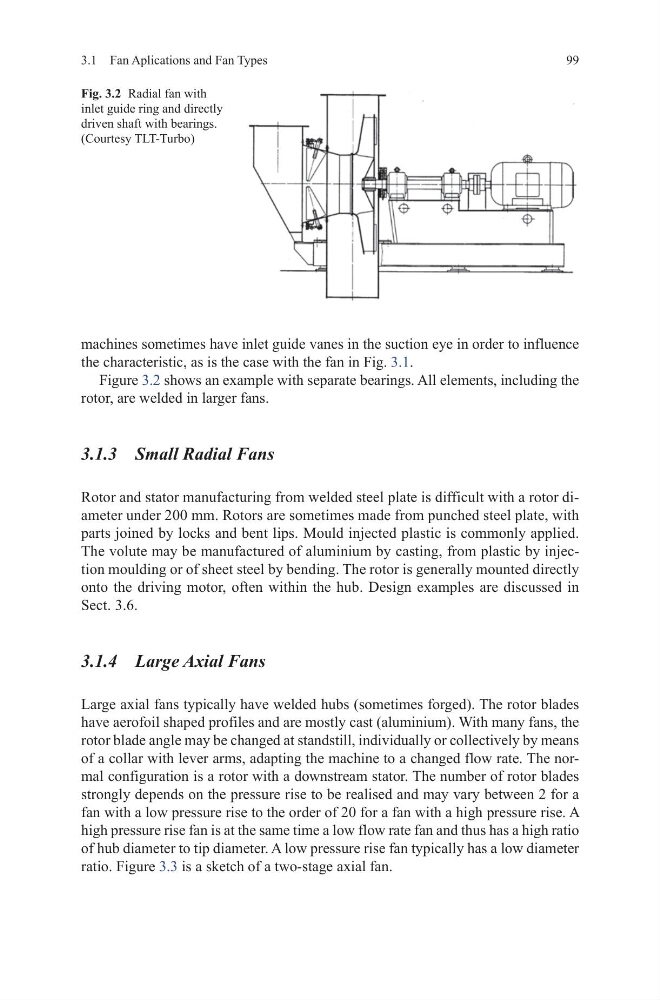
Figure 3.2 shows an example with separate bearings. All elements, including the
rotor, are welded in larger fans.
3.1.3 Small Radial Fans
Rotor and stator manufacturing from welded steel plate is difficult with a rotor diameter under 200 mm. Rotors are sometimes made from punched steel plate, with
parts joined by locks and bent lips. Mould injected plastic is commonly applied.
The volute may be manufactured of aluminium by casting, from plastic by injection moulding or of sheet steel by bending. The rotor is generally mounted directly
onto the driving motor, often within the hub. Design examples are discussed in
Sect. 3.6.
3.1.4 Large Axial Fans
Large axial fans typically have welded hubs (sometimes forged). The rotor blades
have aerofoil shaped profiles and are mostly cast (aluminium). With many fans, the
rotor blade angle may be changed at standstill, individually or collectively by means
of a collar with lever arms, adapting the machine to a changed flow rate. The normal configuration is a rotor with a downstream stator. The number of rotor blades
strongly depends on the pressure rise to be realised and may vary between 2 for a
fan with a low pressure rise to the order of 20 for a fan with a high pressure rise. A
high pressure rise fan is at the same time a low flow rate fan and thus has a high ratio
of hub diameter to tip diameter. A low pressure rise fan typically has a low diameter
ratio. Figure 3.3 is a sketch of a two-stage axial fan.
Fig. 3.2 Radial fan with
inlet guide ring and directly
driven shaft with bearings.
(Courtesy TLT-Turbo)
99
machines sometimes have inlet guide vanes in the suction eye in order to influence
the characteristic, as is the case with the fan in Fig. 3.1.
Figure 3.2 shows an example with separate bearings. All elements, including the
rotor, are welded in larger fans.
3.1.3 Small Radial Fans
Rotor and stator manufacturing from welded steel plate is difficult with a rotor diameter under 200 mm. Rotors are sometimes made from punched steel plate, with
parts joined by locks and bent lips. Mould injected plastic is commonly applied.
The volute may be manufactured of aluminium by casting, from plastic by injection moulding or of sheet steel by bending. The rotor is generally mounted directly
onto the driving motor, often within the hub. Design examples are discussed in
Sect. 3.6.
3.1.4 Large Axial Fans
Large axial fans typically have welded hubs (sometimes forged). The rotor blades
have aerofoil shaped profiles and are mostly cast (aluminium). With many fans, the
rotor blade angle may be changed at standstill, individually or collectively by means
of a collar with lever arms, adapting the machine to a changed flow rate. The normal configuration is a rotor with a downstream stator. The number of rotor blades
strongly depends on the pressure rise to be realised and may vary between 2 for a
fan with a low pressure rise to the order of 20 for a fan with a high pressure rise. A
high pressure rise fan is at the same time a low flow rate fan and thus has a high ratio
of hub diameter to tip diameter. A low pressure rise fan typically has a low diameter
ratio. Figure 3.3 is a sketch of a two-stage axial fan.
Fig. 3.2 Radial fan with
inlet guide ring and directly
driven shaft with bearings.
(Courtesy TLT-Turbo)