

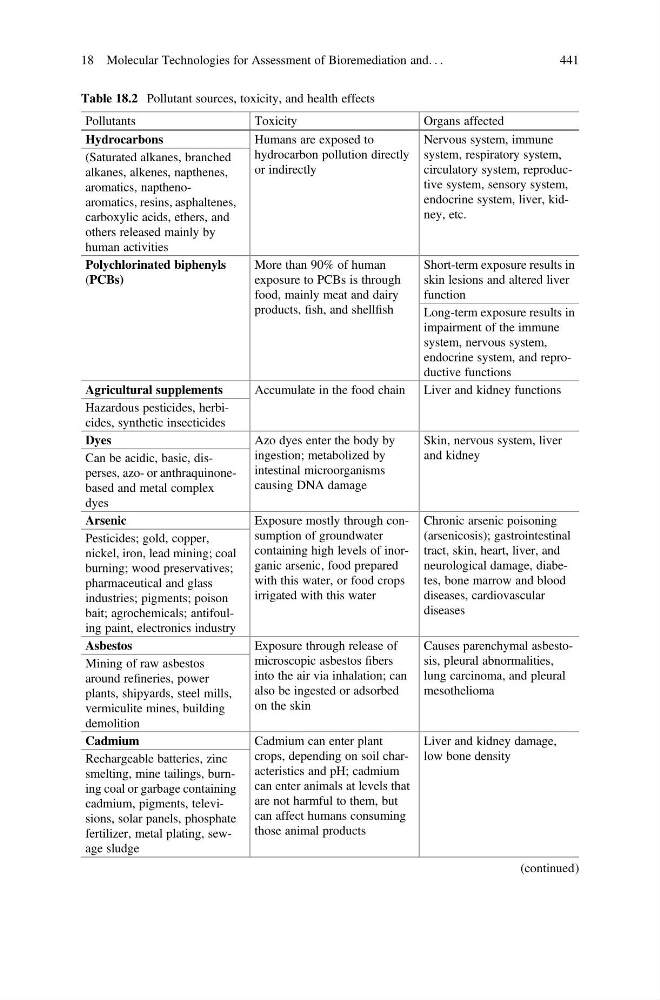
Table 18.2 Pollutant sources, toxicity, and health effects
Pollutants
Toxicity
Organs affected
Hydrocarbons
Humans are exposed to
hydrocarbon pollution directly
or indirectly
Nervous system, immune
system, respiratory system,
circulatory system, reproductive system, sensory system,
endocrine system, liver, kidney, etc.
(Saturated alkanes, branched
alkanes, alkenes, napthenes,
aromatics, napthenoaromatics, resins, asphaltenes,
carboxylic acids, ethers, and
others released mainly by
human activities
Polychlorinated biphenyls
(PCBs)
More than 90% of human
exposure to PCBs is through
food, mainly meat and dairy
products, fish, and shellfish
Short-term exposure results in
skin lesions and altered liver
function
Long-term exposure results in
impairment of the immune
system, nervous system,
endocrine system, and reproductive functions
Agricultural supplements
Accumulate in the food chain Liver and kidney functions
Hazardous pesticides, herbicides, synthetic insecticides
Dyes
Azo dyes enter the body by
ingestion; metabolized by
intestinal microorganisms
causing DNA damage
Skin, nervous system, liver
and kidney
Can be acidic, basic, disperses, azo- or anthraquinonebased and metal complex
dyes
Arsenic
Exposure mostly through consumption of groundwater
containing high levels of inorganic arsenic, food prepared
with this water, or food crops
irrigated with this water
Chronic arsenic poisoning
(arsenicosis); gastrointestinal
tract, skin, heart, liver, and
neurological damage, diabetes, bone marrow and blood
diseases, cardiovascular
diseases
Pesticides; gold, copper,
nickel, iron, lead mining; coal
burning; wood preservatives;
pharmaceutical and glass
industries; pigments; poison
bait; agrochemicals; antifouling paint, electronics industry
Asbestos
Exposure through release of
microscopic asbestos fibers
into the air via inhalation; can
also be ingested or adsorbed
on the skin
Causes parenchymal asbestosis, pleural abnormalities,
lung carcinoma, and pleural
mesothelioma
Mining of raw asbestos
around refineries, power
plants, shipyards, steel mills,
vermiculite mines, building
demolition
Cadmium
Cadmium can enter plant
crops, depending on soil characteristics and pH; cadmium
can enter animals at levels that
are not harmful to them, but
can affect humans consuming
those animal products
Liver and kidney damage,
low bone density
Rechargeable batteries, zinc
smelting, mine tailings, burning coal or garbage containing
cadmium, pigments, televisions, solar panels, phosphate
fertilizer, metal plating, sewage sludge
(continued)
18 Molecular Technologies for Assessment of Bioremediation and. . .
441
Pollutants
Toxicity
Organs affected
Hydrocarbons
Humans are exposed to
hydrocarbon pollution directly
or indirectly
Nervous system, immune
system, respiratory system,
circulatory system, reproductive system, sensory system,
endocrine system, liver, kidney, etc.
(Saturated alkanes, branched
alkanes, alkenes, napthenes,
aromatics, napthenoaromatics, resins, asphaltenes,
carboxylic acids, ethers, and
others released mainly by
human activities
Polychlorinated biphenyls
(PCBs)
More than 90% of human
exposure to PCBs is through
food, mainly meat and dairy
products, fish, and shellfish
Short-term exposure results in
skin lesions and altered liver
function
Long-term exposure results in
impairment of the immune
system, nervous system,
endocrine system, and reproductive functions
Agricultural supplements
Accumulate in the food chain Liver and kidney functions
Hazardous pesticides, herbicides, synthetic insecticides
Dyes
Azo dyes enter the body by
ingestion; metabolized by
intestinal microorganisms
causing DNA damage
Skin, nervous system, liver
and kidney
Can be acidic, basic, disperses, azo- or anthraquinonebased and metal complex
dyes
Arsenic
Exposure mostly through consumption of groundwater
containing high levels of inorganic arsenic, food prepared
with this water, or food crops
irrigated with this water
Chronic arsenic poisoning
(arsenicosis); gastrointestinal
tract, skin, heart, liver, and
neurological damage, diabetes, bone marrow and blood
diseases, cardiovascular
diseases
Pesticides; gold, copper,
nickel, iron, lead mining; coal
burning; wood preservatives;
pharmaceutical and glass
industries; pigments; poison
bait; agrochemicals; antifouling paint, electronics industry
Asbestos
Exposure through release of
microscopic asbestos fibers
into the air via inhalation; can
also be ingested or adsorbed
on the skin
Causes parenchymal asbestosis, pleural abnormalities,
lung carcinoma, and pleural
mesothelioma
Mining of raw asbestos
around refineries, power
plants, shipyards, steel mills,
vermiculite mines, building
demolition
Cadmium
Cadmium can enter plant
crops, depending on soil characteristics and pH; cadmium
can enter animals at levels that
are not harmful to them, but
can affect humans consuming
those animal products
Liver and kidney damage,
low bone density
Rechargeable batteries, zinc
smelting, mine tailings, burning coal or garbage containing
cadmium, pigments, televisions, solar panels, phosphate
fertilizer, metal plating, sewage sludge
(continued)
18 Molecular Technologies for Assessment of Bioremediation and. . .
441