

composition which highly depended on topography, climate, and mineralogical
composition of the of the bedrock. The most important natural influences on surface
water are geology, hydrology, and climate, since these affect the quantity and quality
of available water and their influence is generally greatest when the available water
quantities are low (Singh et al. 2004). Temperature is the main factor affecting
almost all physicochemical equilibrium and biological reaction and also increases
water temperature which will enhance dissolution, solubility, degradation, and
evaporation.
2.2 Anthropogenic Sources of Water Pollution
The rapid urbanization, industrialization, intensive agriculture, and growing demand
for energy have adversely affected the physiochemical parameters of surface water
(Avtar et al. 2011). The anthropogenic sources contributing to water pollution
involve, organic and inorganic wastewater discharge from industrial plants and
municipal sources (point as well as nonpoint sources of pollution) as presented in
Fig. 11.1.
(a) Industrial Wastes
The rapid industrial development and global growth have led us to recognize the
interrelationship between environment and pollution. About two million tons of
waste materials constitute the world’s water part on daily basis. In developing
countries, 90% of sewage waste and 70% of industrial wastes are becoming the
part of water bodies. Almost every industry has a role in water contamination the
major contributors being manufacturing, mining, power generating, food processing,
and construction industries (McKinney et al. 2013). While almost all industrial
activities produce waste that causes some pollution, rather few industries produce
pollution in bulk. Industrial pollution caused by generation of wastewater effluent is
one of biggest problems being faced by surface water resources. Industries release
pollutants like nitrates, nitrites, cations (K
+
, Ag
2+ , Na
+ , Mg
2+ , Ca
2+ ) and anions
(Cl
À , CO
3À
, HCO
3À , Cl
À ), and toxic metalloids such as arsenic, chromium, copper,
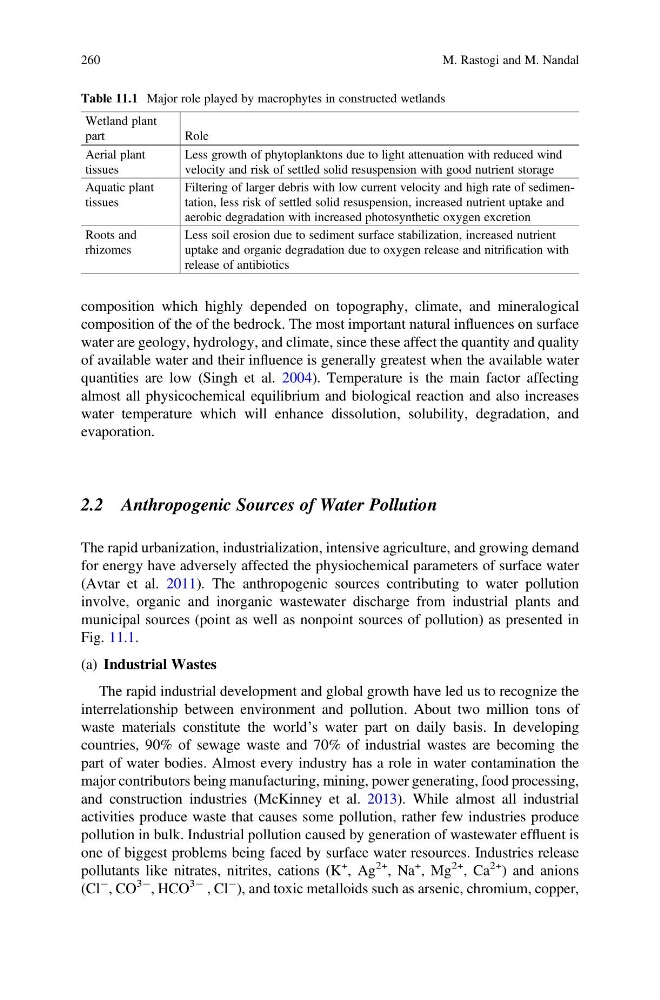
Table 11.1 Major role played by macrophytes in constructed wetlands
Wetland plant
part
Role
Aerial plant
tissues
Less growth of phytoplanktons due to light attenuation with reduced wind
velocity and risk of settled solid resuspension with good nutrient storage
Aquatic plant
tissues
Filtering of larger debris with low current velocity and high rate of sedimentation, less risk of settled solid resuspension, increased nutrient uptake and
aerobic degradation with increased photosynthetic oxygen excretion
Roots and
rhizomes
Less soil erosion due to sediment surface stabilization, increased nutrient
uptake and organic degradation due to oxygen release and nitrification with
release of antibiotics
260
M. Rastogi and M. Nandal
composition of the of the bedrock. The most important natural influences on surface
water are geology, hydrology, and climate, since these affect the quantity and quality
of available water and their influence is generally greatest when the available water
quantities are low (Singh et al. 2004). Temperature is the main factor affecting
almost all physicochemical equilibrium and biological reaction and also increases
water temperature which will enhance dissolution, solubility, degradation, and
evaporation.
2.2 Anthropogenic Sources of Water Pollution
The rapid urbanization, industrialization, intensive agriculture, and growing demand
for energy have adversely affected the physiochemical parameters of surface water
(Avtar et al. 2011). The anthropogenic sources contributing to water pollution
involve, organic and inorganic wastewater discharge from industrial plants and
municipal sources (point as well as nonpoint sources of pollution) as presented in
Fig. 11.1.
(a) Industrial Wastes
The rapid industrial development and global growth have led us to recognize the
interrelationship between environment and pollution. About two million tons of
waste materials constitute the world’s water part on daily basis. In developing
countries, 90% of sewage waste and 70% of industrial wastes are becoming the
part of water bodies. Almost every industry has a role in water contamination the
major contributors being manufacturing, mining, power generating, food processing,
and construction industries (McKinney et al. 2013). While almost all industrial
activities produce waste that causes some pollution, rather few industries produce
pollution in bulk. Industrial pollution caused by generation of wastewater effluent is
one of biggest problems being faced by surface water resources. Industries release
pollutants like nitrates, nitrites, cations (K
+
, Ag
2+ , Na
+ , Mg
2+ , Ca
2+ ) and anions
(Cl
À , CO
3À
, HCO
3À , Cl
À ), and toxic metalloids such as arsenic, chromium, copper,
Table 11.1 Major role played by macrophytes in constructed wetlands
Wetland plant
part
Role
Aerial plant
tissues
Less growth of phytoplanktons due to light attenuation with reduced wind
velocity and risk of settled solid resuspension with good nutrient storage
Aquatic plant
tissues
Filtering of larger debris with low current velocity and high rate of sedimentation, less risk of settled solid resuspension, increased nutrient uptake and
aerobic degradation with increased photosynthetic oxygen excretion
Roots and
rhizomes
Less soil erosion due to sediment surface stabilization, increased nutrient
uptake and organic degradation due to oxygen release and nitrification with
release of antibiotics
260
M. Rastogi and M. Nandal