

process for removal of heavy metal ions in laboratory- and pilot-scale experiments.
Most commonly available heavy metals such as chromium (Cr) (Annamalai et al.
2014a, b; Reddy and Chinthamreddy 2003), lead (Pb) (Annamalai et al. 2014a, b;
Chung and Kang 1999; Lee and Yang 2000), zinc (Zn) (Annamalai et al. 2014a, b;
Wada 2002), arsenic (As) (O’Connor et al. 2003), copper (Cu) (O’Connor et al.
2003; Ottosen et al. 2001), mercury (Hg) (Rosestolato et al. 2015; Wuana and
Okieimen 2011), nickel (Ni) (Kim et al. 2009), and cadmium (Cd) (Micó et al.
2006) were also removed by the EK process.
2.2.1 Bench-Scale Process
Many factors are involved, including conditioning of the electrolyte, pretreatment of
contaminated soil, pH control, applied voltage, pulse, and alternating current. Kim
et al. (2009) significantly removed heavy metals such as Zn and Ni from field soil
using the EK remediation process. Gundersen and Steinnes (2003) reported that pH
is the major factor influencing the removal of heavy metal from the soil, because,
when soil pH is lowered, the formation of H
+ ions interacts with the metal ion
complex that dissolves the ligands (OH
À , CO 3
2À , SO 4
2À
, Cl
À , S
2À , PO 4
2À ), and free
metal ions form in the matrix. The reaction can be easily moved towards the opposite
direction by electromigration. The metal removal percentages (Zn and Ni) increased
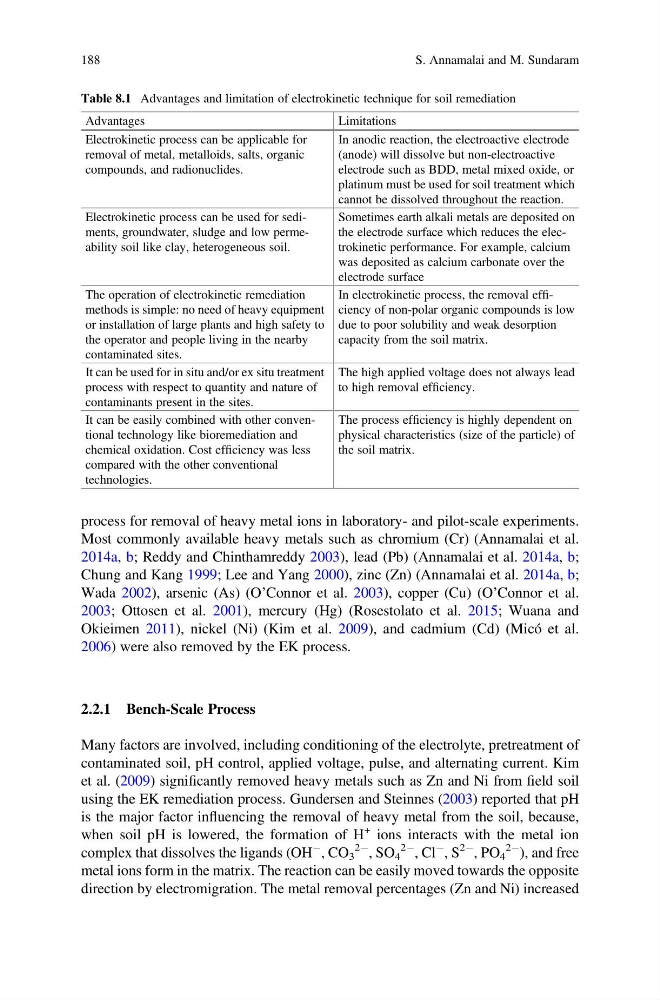
Table 8.1 Advantages and limitation of electrokinetic technique for soil remediation
Advantages
Limitations
Electrokinetic process can be applicable for
removal of metal, metalloids, salts, organic
compounds, and radionuclides.
In anodic reaction, the electroactive electrode
(anode) will dissolve but non-electroactive
electrode such as BDD, metal mixed oxide, or
platinum must be used for soil treatment which
cannot be dissolved throughout the reaction.
Electrokinetic process can be used for sediments, groundwater, sludge and low permeability soil like clay, heterogeneous soil.
Sometimes earth alkali metals are deposited on
the electrode surface which reduces the electrokinetic performance. For example, calcium
was deposited as calcium carbonate over the
electrode surface
The operation of electrokinetic remediation
methods is simple: no need of heavy equipment
or installation of large plants and high safety to
the operator and people living in the nearby
contaminated sites.
In electrokinetic process, the removal efficiency of non-polar organic compounds is low
due to poor solubility and weak desorption
capacity from the soil matrix.
It can be used for in situ and/or ex situ treatment
process with respect to quantity and nature of
contaminants present in the sites.
The high applied voltage does not always lead
to high removal efficiency.
It can be easily combined with other conventional technology like bioremediation and
chemical oxidation. Cost efficiency was less
compared with the other conventional
technologies.
The process efficiency is highly dependent on
physical characteristics (size of the particle) of
the soil matrix.
188
S. Annamalai and M. Sundaram
Most commonly available heavy metals such as chromium (Cr) (Annamalai et al.
2014a, b; Reddy and Chinthamreddy 2003), lead (Pb) (Annamalai et al. 2014a, b;
Chung and Kang 1999; Lee and Yang 2000), zinc (Zn) (Annamalai et al. 2014a, b;
Wada 2002), arsenic (As) (O’Connor et al. 2003), copper (Cu) (O’Connor et al.
2003; Ottosen et al. 2001), mercury (Hg) (Rosestolato et al. 2015; Wuana and
Okieimen 2011), nickel (Ni) (Kim et al. 2009), and cadmium (Cd) (Micó et al.
2006) were also removed by the EK process.
2.2.1 Bench-Scale Process
Many factors are involved, including conditioning of the electrolyte, pretreatment of
contaminated soil, pH control, applied voltage, pulse, and alternating current. Kim
et al. (2009) significantly removed heavy metals such as Zn and Ni from field soil
using the EK remediation process. Gundersen and Steinnes (2003) reported that pH
is the major factor influencing the removal of heavy metal from the soil, because,
when soil pH is lowered, the formation of H
+ ions interacts with the metal ion
complex that dissolves the ligands (OH
À , CO 3
2À , SO 4
2À
, Cl
À , S
2À , PO 4
2À ), and free
metal ions form in the matrix. The reaction can be easily moved towards the opposite
direction by electromigration. The metal removal percentages (Zn and Ni) increased
Table 8.1 Advantages and limitation of electrokinetic technique for soil remediation
Advantages
Limitations
Electrokinetic process can be applicable for
removal of metal, metalloids, salts, organic
compounds, and radionuclides.
In anodic reaction, the electroactive electrode
(anode) will dissolve but non-electroactive
electrode such as BDD, metal mixed oxide, or
platinum must be used for soil treatment which
cannot be dissolved throughout the reaction.
Electrokinetic process can be used for sediments, groundwater, sludge and low permeability soil like clay, heterogeneous soil.
Sometimes earth alkali metals are deposited on
the electrode surface which reduces the electrokinetic performance. For example, calcium
was deposited as calcium carbonate over the
electrode surface
The operation of electrokinetic remediation
methods is simple: no need of heavy equipment
or installation of large plants and high safety to
the operator and people living in the nearby
contaminated sites.
In electrokinetic process, the removal efficiency of non-polar organic compounds is low
due to poor solubility and weak desorption
capacity from the soil matrix.
It can be used for in situ and/or ex situ treatment
process with respect to quantity and nature of
contaminants present in the sites.
The high applied voltage does not always lead
to high removal efficiency.
It can be easily combined with other conventional technology like bioremediation and
chemical oxidation. Cost efficiency was less
compared with the other conventional
technologies.
The process efficiency is highly dependent on
physical characteristics (size of the particle) of
the soil matrix.
188
S. Annamalai and M. Sundaram