

70
R. Kumar and P. Saikia
Saw Mills
Sal Leaves Plate
making units
Lac industry
Bamboo-based
cottage industries
Oil
Extraction
Bidi
Industry
Herbal
Industry
Sericulture
FOREST
RESOURCE
BASED
INDUSTRY IN
JHARKHAND
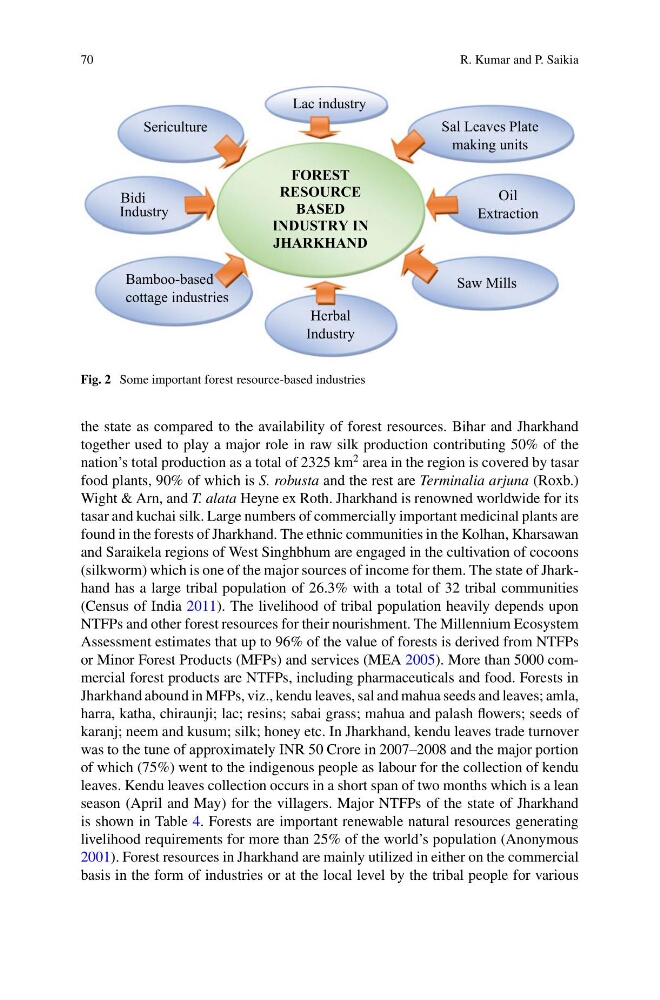
Fig. 2 Some important forest resource-based industries
the state as compared to the availability of forest resources. Bihar and Jharkhand
together used to play a major role in raw silk production contributing 50% of the
nation’s total production as a total of 2325 km
2 area in the region is covered by tasar
food plants, 90% of which is S. robusta and the rest are Terminalia arjuna (Roxb.)
Wight & Arn, and T. alata Heyne ex Roth. Jharkhand is renowned worldwide for its
tasar and kuchai silk. Large numbers of commercially important medicinal plants are
found in the forests of Jharkhand. The ethnic communities in the Kolhan, Kharsawan
and Saraikela regions of West Singhbhum are engaged in the cultivation of cocoons
(silkworm) which is one of the major sources of income for them. The state of Jharkhand has a large tribal population of 26.3% with a total of 32 tribal communities
(Census of India 2011). The livelihood of tribal population heavily depends upon
NTFPs and other forest resources for their nourishment. The Millennium Ecosystem
Assessment estimates that up to 96% of the value of forests is derived from NTFPs
or Minor Forest Products (MFPs) and services (MEA 2005). More than 5000 commercial forest products are NTFPs, including pharmaceuticals and food. Forests in
Jharkhand abound in MFPs, viz., kendu leaves, sal and mahua seeds and leaves; amla,
harra, katha, chiraunji; lac; resins; sabai grass; mahua and palash flowers; seeds of
karanj; neem and kusum; silk; honey etc. In Jharkhand, kendu leaves trade turnover
was to the tune of approximately INR 50 Crore in 2007–2008 and the major portion
of which (75%) went to the indigenous people as labour for the collection of kendu
leaves. Kendu leaves collection occurs in a short span of two months which is a lean
season (April and May) for the villagers. Major NTFPs of the state of Jharkhand
is shown in Table 4. Forests are important renewable natural resources generating
livelihood requirements for more than 25% of the world’s population (Anonymous
2001). Forest resources in Jharkhand are mainly utilized in either on the commercial
basis in the form of industries or at the local level by the tribal people for various
R. Kumar and P. Saikia
Saw Mills
Sal Leaves Plate
making units
Lac industry
Bamboo-based
cottage industries
Oil
Extraction
Bidi
Industry
Herbal
Industry
Sericulture
FOREST
RESOURCE
BASED
INDUSTRY IN
JHARKHAND
Fig. 2 Some important forest resource-based industries
the state as compared to the availability of forest resources. Bihar and Jharkhand
together used to play a major role in raw silk production contributing 50% of the
nation’s total production as a total of 2325 km
2 area in the region is covered by tasar
food plants, 90% of which is S. robusta and the rest are Terminalia arjuna (Roxb.)
Wight & Arn, and T. alata Heyne ex Roth. Jharkhand is renowned worldwide for its
tasar and kuchai silk. Large numbers of commercially important medicinal plants are
found in the forests of Jharkhand. The ethnic communities in the Kolhan, Kharsawan
and Saraikela regions of West Singhbhum are engaged in the cultivation of cocoons
(silkworm) which is one of the major sources of income for them. The state of Jharkhand has a large tribal population of 26.3% with a total of 32 tribal communities
(Census of India 2011). The livelihood of tribal population heavily depends upon
NTFPs and other forest resources for their nourishment. The Millennium Ecosystem
Assessment estimates that up to 96% of the value of forests is derived from NTFPs
or Minor Forest Products (MFPs) and services (MEA 2005). More than 5000 commercial forest products are NTFPs, including pharmaceuticals and food. Forests in
Jharkhand abound in MFPs, viz., kendu leaves, sal and mahua seeds and leaves; amla,
harra, katha, chiraunji; lac; resins; sabai grass; mahua and palash flowers; seeds of
karanj; neem and kusum; silk; honey etc. In Jharkhand, kendu leaves trade turnover
was to the tune of approximately INR 50 Crore in 2007–2008 and the major portion
of which (75%) went to the indigenous people as labour for the collection of kendu
leaves. Kendu leaves collection occurs in a short span of two months which is a lean
season (April and May) for the villagers. Major NTFPs of the state of Jharkhand
is shown in Table 4. Forests are important renewable natural resources generating
livelihood requirements for more than 25% of the world’s population (Anonymous
2001). Forest resources in Jharkhand are mainly utilized in either on the commercial
basis in the form of industries or at the local level by the tribal people for various