

Transitional Peri-urban Landscape …
453
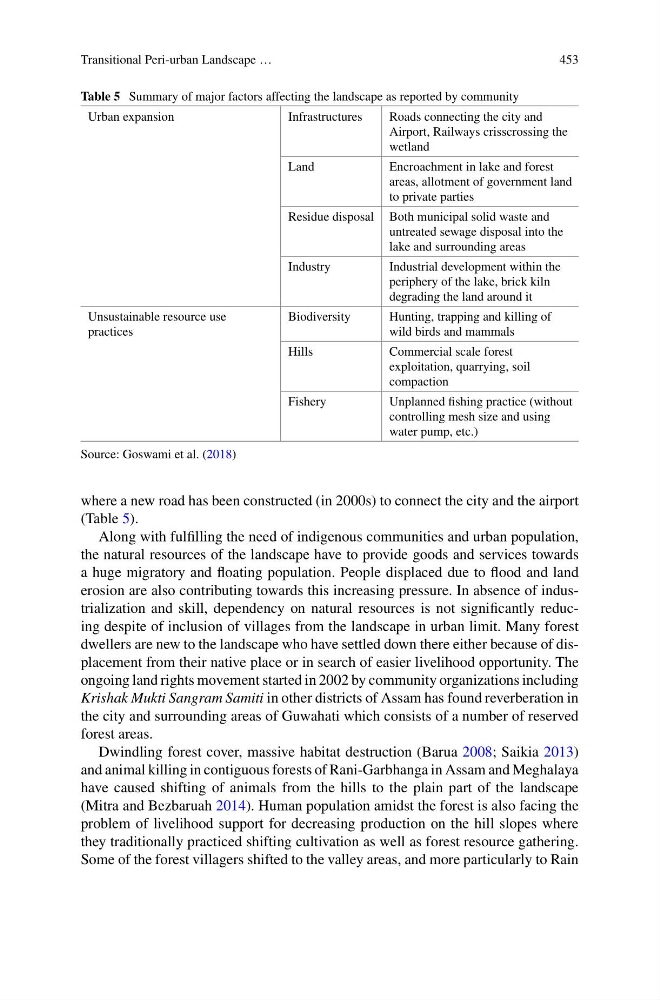
Table 5 Summary of major factors affecting the landscape as reported by community
Urban expansion
Infrastructures
Roads connecting the city and
Airport, Railways crisscrossing the
wetland
Land
Encroachment in lake and forest
areas, allotment of government land
to private parties
Residue disposal Both municipal solid waste and
untreated sewage disposal into the
lake and surrounding areas
Industry
Industrial development within the
periphery of the lake, brick kiln
degrading the land around it
Unsustainable resource use
practices
Biodiversity
Hunting, trapping and killing of
wild birds and mammals
Hills
Commercial scale forest
exploitation, quarrying, soil
compaction
Fishery
Unplanned fishing practice (without
controlling mesh size and using
water pump, etc.)
Source: Goswami et al. (2018)
where a new road has been constructed (in 2000s) to connect the city and the airport
(Table 5).
Along with fulfilling the need of indigenous communities and urban population,
the natural resources of the landscape have to provide goods and services towards
a huge migratory and floating population. People displaced due to flood and land
erosion are also contributing towards this increasing pressure. In absence of industrialization and skill, dependency on natural resources is not significantly reducing despite of inclusion of villages from the landscape in urban limit. Many forest
dwellers are new to the landscape who have settled down there either because of displacement from their native place or in search of easier livelihood opportunity. The
ongoing land rights movement started in 2002 by community organizations including
Krishak Mukti Sangram Samiti in other districts of Assam has found reverberation in
the city and surrounding areas of Guwahati which consists of a number of reserved
forest areas.
Dwindling forest cover, massive habitat destruction (Barua 2008; Saikia 2013)
and animal killing in contiguous forests of Rani-Garbhanga in Assam and Meghalaya
have caused shifting of animals from the hills to the plain part of the landscape
(Mitra and Bezbaruah 2014). Human population amidst the forest is also facing the
problem of livelihood support for decreasing production on the hill slopes where
they traditionally practiced shifting cultivation as well as forest resource gathering.
Some of the forest villagers shifted to the valley areas, and more particularly to Rain
453
Table 5 Summary of major factors affecting the landscape as reported by community
Urban expansion
Infrastructures
Roads connecting the city and
Airport, Railways crisscrossing the
wetland
Land
Encroachment in lake and forest
areas, allotment of government land
to private parties
Residue disposal Both municipal solid waste and
untreated sewage disposal into the
lake and surrounding areas
Industry
Industrial development within the
periphery of the lake, brick kiln
degrading the land around it
Unsustainable resource use
practices
Biodiversity
Hunting, trapping and killing of
wild birds and mammals
Hills
Commercial scale forest
exploitation, quarrying, soil
compaction
Fishery
Unplanned fishing practice (without
controlling mesh size and using
water pump, etc.)
Source: Goswami et al. (2018)
where a new road has been constructed (in 2000s) to connect the city and the airport
(Table 5).
Along with fulfilling the need of indigenous communities and urban population,
the natural resources of the landscape have to provide goods and services towards
a huge migratory and floating population. People displaced due to flood and land
erosion are also contributing towards this increasing pressure. In absence of industrialization and skill, dependency on natural resources is not significantly reducing despite of inclusion of villages from the landscape in urban limit. Many forest
dwellers are new to the landscape who have settled down there either because of displacement from their native place or in search of easier livelihood opportunity. The
ongoing land rights movement started in 2002 by community organizations including
Krishak Mukti Sangram Samiti in other districts of Assam has found reverberation in
the city and surrounding areas of Guwahati which consists of a number of reserved
forest areas.
Dwindling forest cover, massive habitat destruction (Barua 2008; Saikia 2013)
and animal killing in contiguous forests of Rani-Garbhanga in Assam and Meghalaya
have caused shifting of animals from the hills to the plain part of the landscape
(Mitra and Bezbaruah 2014). Human population amidst the forest is also facing the
problem of livelihood support for decreasing production on the hill slopes where
they traditionally practiced shifting cultivation as well as forest resource gathering.
Some of the forest villagers shifted to the valley areas, and more particularly to Rain