

422
B. Abirami and P. Kumar
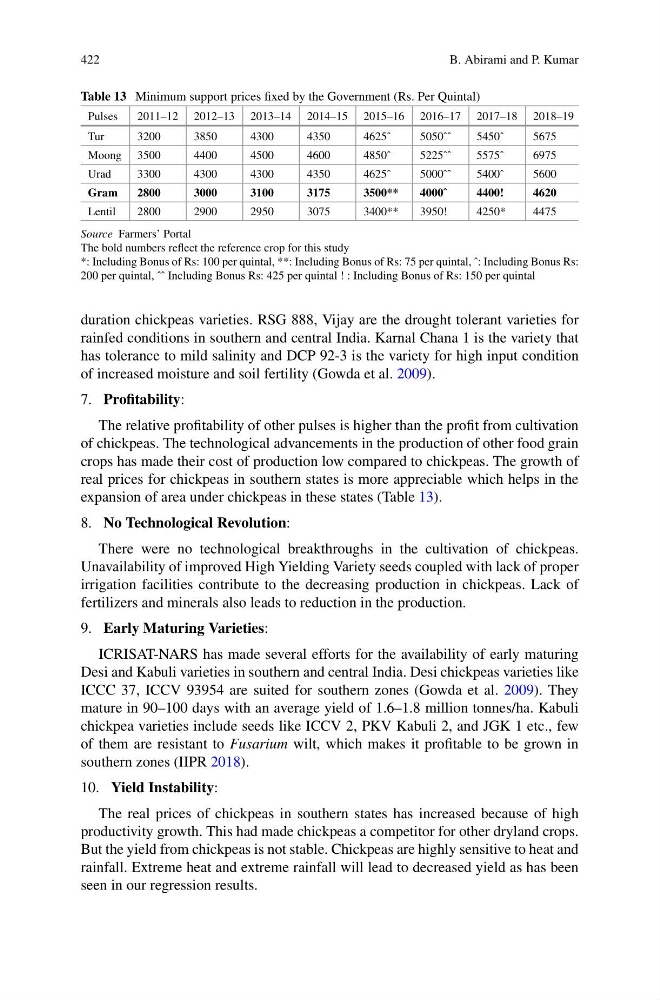
Table 13 Minimum support prices fixed by the Government (Rs. Per Quintal)
Pulses
2011–12 2012–13 2013–14 2014–15 2015–16 2016–17 2017–18 2018–19
Tur
3200
3850
4300
4350
4625ˆ
5050ˆˆ
5450ˆ
5675
Moong 3500
4400
4500
4600
4850ˆ
5225ˆˆ
5575ˆ
6975
Urad
3300
4300
4300
4350
4625ˆ
5000ˆˆ
5400ˆ
5600
Gram
2800
3000
3100
3175
3500**
4000ˆ
4400!
4620
Lentil
2800
2900
2950
3075
3400**
3950!
4250*
4475
Source Farmers’ Portal
The bold numbers reflect the reference crop for this study
*: Including Bonus of Rs: 100 per quintal, **: Including Bonus of Rs: 75 per quintal, ˆ: Including Bonus Rs:
200 per quintal, ˆˆ Including Bonus Rs: 425 per quintal ! : Including Bonus of Rs: 150 per quintal
duration chickpeas varieties. RSG 888, Vijay are the drought tolerant varieties for
rainfed conditions in southern and central India. Karnal Chana 1 is the variety that
has tolerance to mild salinity and DCP 92-3 is the variety for high input condition
of increased moisture and soil fertility (Gowda et al. 2009).
7. Profitability:
The relative profitability of other pulses is higher than the profit from cultivation
of chickpeas. The technological advancements in the production of other food grain
crops has made their cost of production low compared to chickpeas. The growth of
real prices for chickpeas in southern states is more appreciable which helps in the
expansion of area under chickpeas in these states (Table 13).
8. No Technological Revolution:
There were no technological breakthroughs in the cultivation of chickpeas.
Unavailability of improved High Yielding Variety seeds coupled with lack of proper
irrigation facilities contribute to the decreasing production in chickpeas. Lack of
fertilizers and minerals also leads to reduction in the production.
9. Early Maturing Varieties:
ICRISAT-NARS has made several efforts for the availability of early maturing
Desi and Kabuli varieties in southern and central India. Desi chickpeas varieties like
ICCC 37, ICCV 93954 are suited for southern zones (Gowda et al. 2009). They
mature in 90–100 days with an average yield of 1.6–1.8 million tonnes/ha. Kabuli
chickpea varieties include seeds like ICCV 2, PKV Kabuli 2, and JGK 1 etc., few
of them are resistant to Fusarium wilt, which makes it profitable to be grown in
southern zones (IIPR 2018).
10. Yield Instability:
The real prices of chickpeas in southern states has increased because of high
productivity growth. This had made chickpeas a competitor for other dryland crops.
But the yield from chickpeas is not stable. Chickpeas are highly sensitive to heat and
rainfall. Extreme heat and extreme rainfall will lead to decreased yield as has been
seen in our regression results.
B. Abirami and P. Kumar
Table 13 Minimum support prices fixed by the Government (Rs. Per Quintal)
Pulses
2011–12 2012–13 2013–14 2014–15 2015–16 2016–17 2017–18 2018–19
Tur
3200
3850
4300
4350
4625ˆ
5050ˆˆ
5450ˆ
5675
Moong 3500
4400
4500
4600
4850ˆ
5225ˆˆ
5575ˆ
6975
Urad
3300
4300
4300
4350
4625ˆ
5000ˆˆ
5400ˆ
5600
Gram
2800
3000
3100
3175
3500**
4000ˆ
4400!
4620
Lentil
2800
2900
2950
3075
3400**
3950!
4250*
4475
Source Farmers’ Portal
The bold numbers reflect the reference crop for this study
*: Including Bonus of Rs: 100 per quintal, **: Including Bonus of Rs: 75 per quintal, ˆ: Including Bonus Rs:
200 per quintal, ˆˆ Including Bonus Rs: 425 per quintal ! : Including Bonus of Rs: 150 per quintal
duration chickpeas varieties. RSG 888, Vijay are the drought tolerant varieties for
rainfed conditions in southern and central India. Karnal Chana 1 is the variety that
has tolerance to mild salinity and DCP 92-3 is the variety for high input condition
of increased moisture and soil fertility (Gowda et al. 2009).
7. Profitability:
The relative profitability of other pulses is higher than the profit from cultivation
of chickpeas. The technological advancements in the production of other food grain
crops has made their cost of production low compared to chickpeas. The growth of
real prices for chickpeas in southern states is more appreciable which helps in the
expansion of area under chickpeas in these states (Table 13).
8. No Technological Revolution:
There were no technological breakthroughs in the cultivation of chickpeas.
Unavailability of improved High Yielding Variety seeds coupled with lack of proper
irrigation facilities contribute to the decreasing production in chickpeas. Lack of
fertilizers and minerals also leads to reduction in the production.
9. Early Maturing Varieties:
ICRISAT-NARS has made several efforts for the availability of early maturing
Desi and Kabuli varieties in southern and central India. Desi chickpeas varieties like
ICCC 37, ICCV 93954 are suited for southern zones (Gowda et al. 2009). They
mature in 90–100 days with an average yield of 1.6–1.8 million tonnes/ha. Kabuli
chickpea varieties include seeds like ICCV 2, PKV Kabuli 2, and JGK 1 etc., few
of them are resistant to Fusarium wilt, which makes it profitable to be grown in
southern zones (IIPR 2018).
10. Yield Instability:
The real prices of chickpeas in southern states has increased because of high
productivity growth. This had made chickpeas a competitor for other dryland crops.
But the yield from chickpeas is not stable. Chickpeas are highly sensitive to heat and
rainfall. Extreme heat and extreme rainfall will lead to decreased yield as has been
seen in our regression results.