

Spatial Shift in Chickpeas in India
409
6.1.2 Eastern Zone
Eastern Zone of India was considered to be the most prosperous region till 1950s.
Success of Green Revolution in northern and western zone in India led this zone lose
its position as the leading producer. In the eastern zones, there were many issues like
fragmented and small land holdings, technological, socio-economic, institutional,
organizational, and developmental problems. Area under chickpeas cultivation in
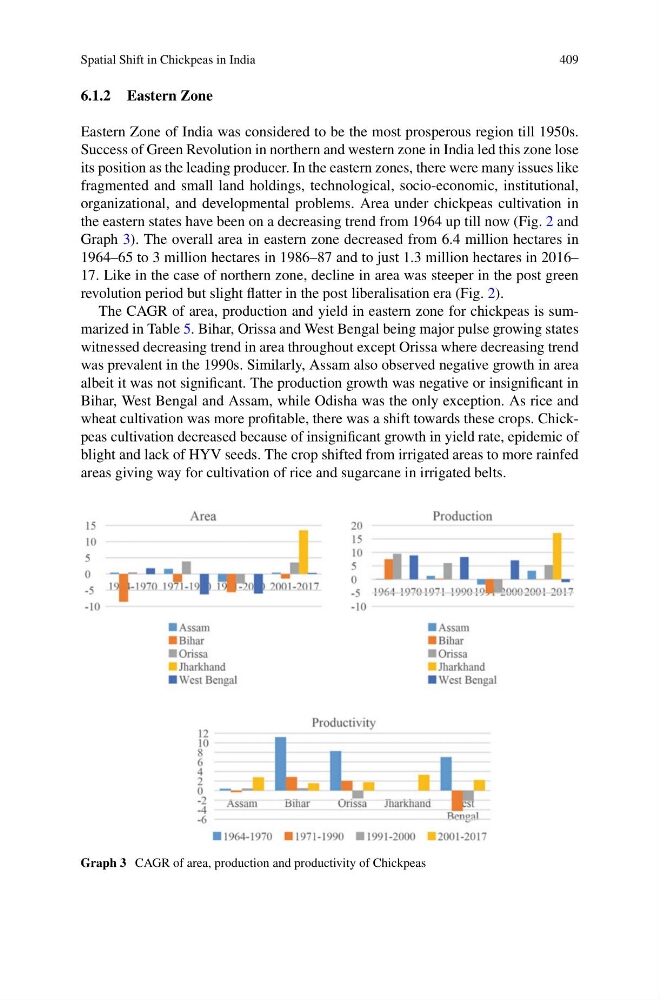
the eastern states have been on a decreasing trend from 1964 up till now (Fig. 2 and
Graph 3). The overall area in eastern zone decreased from 6.4 million hectares in
1964–65 to 3 million hectares in 1986–87 and to just 1.3 million hectares in 2016–
17. Like in the case of northern zone, decline in area was steeper in the post green
revolution period but slight flatter in the post liberalisation era (Fig. 2).
The CAGR of area, production and yield in eastern zone for chickpeas is summarized in Table 5. Bihar, Orissa and West Bengal being major pulse growing states
witnessed decreasing trend in area throughout except Orissa where decreasing trend
was prevalent in the 1990s. Similarly, Assam also observed negative growth in area
albeit it was not significant. The production growth was negative or insignificant in
Bihar, West Bengal and Assam, while Odisha was the only exception. As rice and
wheat cultivation was more profitable, there was a shift towards these crops. Chickpeas cultivation decreased because of insignificant growth in yield rate, epidemic of
blight and lack of HYV seeds. The crop shifted from irrigated areas to more rainfed
areas giving way for cultivation of rice and sugarcane in irrigated belts.
Graph 3 CAGR of area, production and productivity of Chickpeas
409
6.1.2 Eastern Zone
Eastern Zone of India was considered to be the most prosperous region till 1950s.
Success of Green Revolution in northern and western zone in India led this zone lose
its position as the leading producer. In the eastern zones, there were many issues like
fragmented and small land holdings, technological, socio-economic, institutional,
organizational, and developmental problems. Area under chickpeas cultivation in
the eastern states have been on a decreasing trend from 1964 up till now (Fig. 2 and
Graph 3). The overall area in eastern zone decreased from 6.4 million hectares in
1964–65 to 3 million hectares in 1986–87 and to just 1.3 million hectares in 2016–
17. Like in the case of northern zone, decline in area was steeper in the post green
revolution period but slight flatter in the post liberalisation era (Fig. 2).
The CAGR of area, production and yield in eastern zone for chickpeas is summarized in Table 5. Bihar, Orissa and West Bengal being major pulse growing states
witnessed decreasing trend in area throughout except Orissa where decreasing trend
was prevalent in the 1990s. Similarly, Assam also observed negative growth in area
albeit it was not significant. The production growth was negative or insignificant in
Bihar, West Bengal and Assam, while Odisha was the only exception. As rice and
wheat cultivation was more profitable, there was a shift towards these crops. Chickpeas cultivation decreased because of insignificant growth in yield rate, epidemic of
blight and lack of HYV seeds. The crop shifted from irrigated areas to more rainfed
areas giving way for cultivation of rice and sugarcane in irrigated belts.
Graph 3 CAGR of area, production and productivity of Chickpeas