

43
cal precipitates. Fig. 13 (2a and 2b) show deep grooves, linear features distributed
in parallel fashion and produced by attrition and chemical precipitation etc. Crushing
of the edges and particles adhered to the surface are discernible in Fig. 13 (2a, 2b
and 3b). The position of some pits cutting across the two cleavages of broken surface of the grain, clearly signifying the sequence of erosional event is shown in
Fig. 13 (2a). A deep groove running from one end of the grain to the other end
shows effect of the movement of a harder grain over the top surface.
Two sets of samples were collected from glacial surface T-3 and these have been
designated as ST3a and ST3b. SEM pictures of samples from ST3a as displayed at
Fig. 14 (1a) exhibit flat cleavage surfaces which form portions of sharp edged deep
breakage blocks. The edges are formed of cleavage planes.
Such micro-structures are generally formed by intense grinding. The large breakage patterns exposed on the flat surface, in Fig. 14 (1b, 2a and 2b), were studied
under X550 and X1600 magnifications respectively to note the character of marginal cracks. The surfaces appear as different scales, sub-parallel and closely spaced
cleavages given rise to by Shearing. This is especially noted in the form of small
fragments of breakages all along the major curved and sheared plane boundary.
Figure 14 (1c and 3b) show the deep entrenched longitudinal groove along with
chemical precipitates.
A second set of samples was collected from ST-3 at a distance and at a higher
topographical level from earlier sample (ST3a). Numbered as ST3b the photomicrographs from this surface, are shown in Fig. 15.
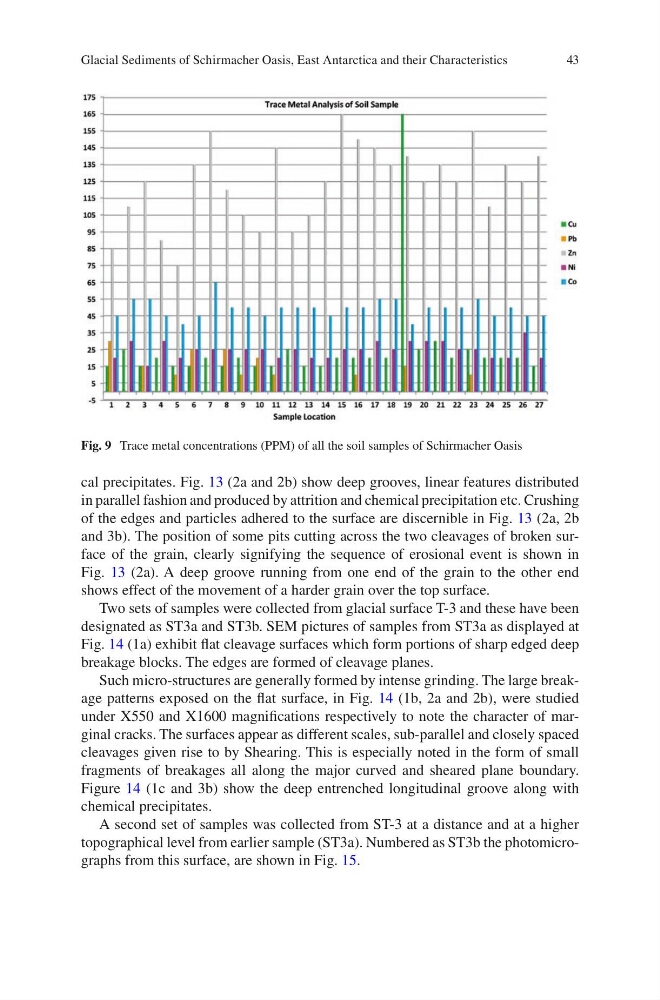
Fig. 9 Trace metal concentrations (PPM) of all the soil samples of Schirmacher Oasis
Glacial Sediments of Schirmacher Oasis, East Antarctica and their Characteristics
cal precipitates. Fig. 13 (2a and 2b) show deep grooves, linear features distributed
in parallel fashion and produced by attrition and chemical precipitation etc. Crushing
of the edges and particles adhered to the surface are discernible in Fig. 13 (2a, 2b
and 3b). The position of some pits cutting across the two cleavages of broken surface of the grain, clearly signifying the sequence of erosional event is shown in
Fig. 13 (2a). A deep groove running from one end of the grain to the other end
shows effect of the movement of a harder grain over the top surface.
Two sets of samples were collected from glacial surface T-3 and these have been
designated as ST3a and ST3b. SEM pictures of samples from ST3a as displayed at
Fig. 14 (1a) exhibit flat cleavage surfaces which form portions of sharp edged deep
breakage blocks. The edges are formed of cleavage planes.
Such micro-structures are generally formed by intense grinding. The large breakage patterns exposed on the flat surface, in Fig. 14 (1b, 2a and 2b), were studied
under X550 and X1600 magnifications respectively to note the character of marginal cracks. The surfaces appear as different scales, sub-parallel and closely spaced
cleavages given rise to by Shearing. This is especially noted in the form of small
fragments of breakages all along the major curved and sheared plane boundary.
Figure 14 (1c and 3b) show the deep entrenched longitudinal groove along with
chemical precipitates.
A second set of samples was collected from ST-3 at a distance and at a higher
topographical level from earlier sample (ST3a). Numbered as ST3b the photomicrographs from this surface, are shown in Fig. 15.
Fig. 9 Trace metal concentrations (PPM) of all the soil samples of Schirmacher Oasis
Glacial Sediments of Schirmacher Oasis, East Antarctica and their Characteristics