

164
6 Action Plan
With fair degree of understanding of what is likely to befall with climate change,
there is a need to draw an action plan. We cannot afford to wait for long now and
take steps to mitigate the threat in near future. While reduction in greenhouse gases
will continue to be the priority area of all nations, the alternative measures should
also be implemented in priority area in Himalaya. The slew of measures on different
fronts can be summarised as follows:
(i) Roads & Communication Network:
With improved roads, the emissions from vehicles can be drastically reduced.
More small narrow gauge trains can drastically reduce the emissions that we are
getting from vehicles plying to and from hills. Small airstrips for quick hop flights
in the interior regions of the Himalaya will immensely benefit in bringing geopolitical stability in the sector.
(ii) Renewable Energy:
With declining hydropower, action on embracing other alternative renewable
energy sources for example solar, wind and geothermal should be taken up on war
footing. The decline in the cost of clean energy sources e.g.– the cost of solar
energy is down by 60% and wind energy by 15% since 2009 (Metz et al. 2017).
The geopolitical scenario of the region may see an opportunity to test and try nonconventional energy, which will have better impact on the wellbeing of the people
of the region. As such developing countries have emerged as market leaders, rapidly scaling up public and private investment in clean energy. In 2014, developing
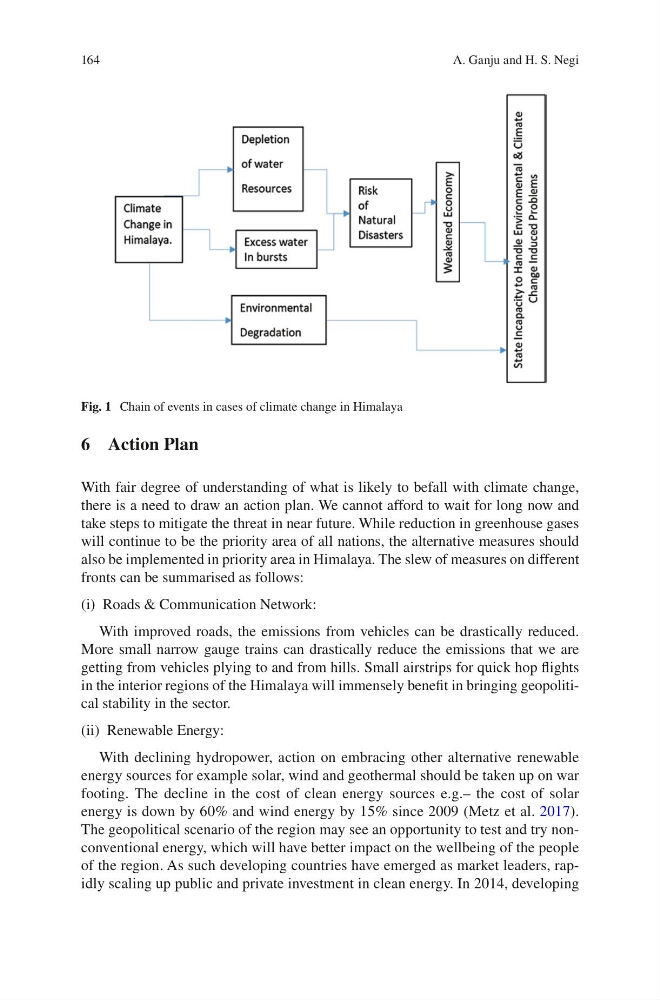
Fig. 1 Chain of events in cases of climate change in Himalaya
A. Ganju and H. S. Negi
6 Action Plan
With fair degree of understanding of what is likely to befall with climate change,
there is a need to draw an action plan. We cannot afford to wait for long now and
take steps to mitigate the threat in near future. While reduction in greenhouse gases
will continue to be the priority area of all nations, the alternative measures should
also be implemented in priority area in Himalaya. The slew of measures on different
fronts can be summarised as follows:
(i) Roads & Communication Network:
With improved roads, the emissions from vehicles can be drastically reduced.
More small narrow gauge trains can drastically reduce the emissions that we are
getting from vehicles plying to and from hills. Small airstrips for quick hop flights
in the interior regions of the Himalaya will immensely benefit in bringing geopolitical stability in the sector.
(ii) Renewable Energy:
With declining hydropower, action on embracing other alternative renewable
energy sources for example solar, wind and geothermal should be taken up on war
footing. The decline in the cost of clean energy sources e.g.– the cost of solar
energy is down by 60% and wind energy by 15% since 2009 (Metz et al. 2017).
The geopolitical scenario of the region may see an opportunity to test and try nonconventional energy, which will have better impact on the wellbeing of the people
of the region. As such developing countries have emerged as market leaders, rapidly scaling up public and private investment in clean energy. In 2014, developing
Fig. 1 Chain of events in cases of climate change in Himalaya
A. Ganju and H. S. Negi