

Wear tests were carried out by using the scratch capability of a nanoindenter. A normal load 50mN was applied over a
linear wear track of 500 μm and 1000 μm for 50 cycles. One cycle is defined as a pass and return over the track. A conical tip
with a 90
cone angle was used for these tests. The speed of the tip during wear tests was 50 μm/s. A total of 10 wear tests were
performed for each sample.
Creep test were performed with the nanoindenter also to evaluate the time dependent response of the manufactured
composites. On each sample 25 indents were performed on a 5 Â 5 grid with a Berkovich indenter. The indents were spaced
50 μm and 75 μm along the sides of the grid. The load was increased at a rate of 5 mN/s to the max load of 50 mN and kept at
the load for 500 s then unloaded. Modulus and nano hardness measured calculated during the unload stage of the creep test.
7.3 Results and Discussion
7.3.1 Microstructure and Mapping Analyses of the Compositions Produced by “Sintering
and Sinter+ Forging Process
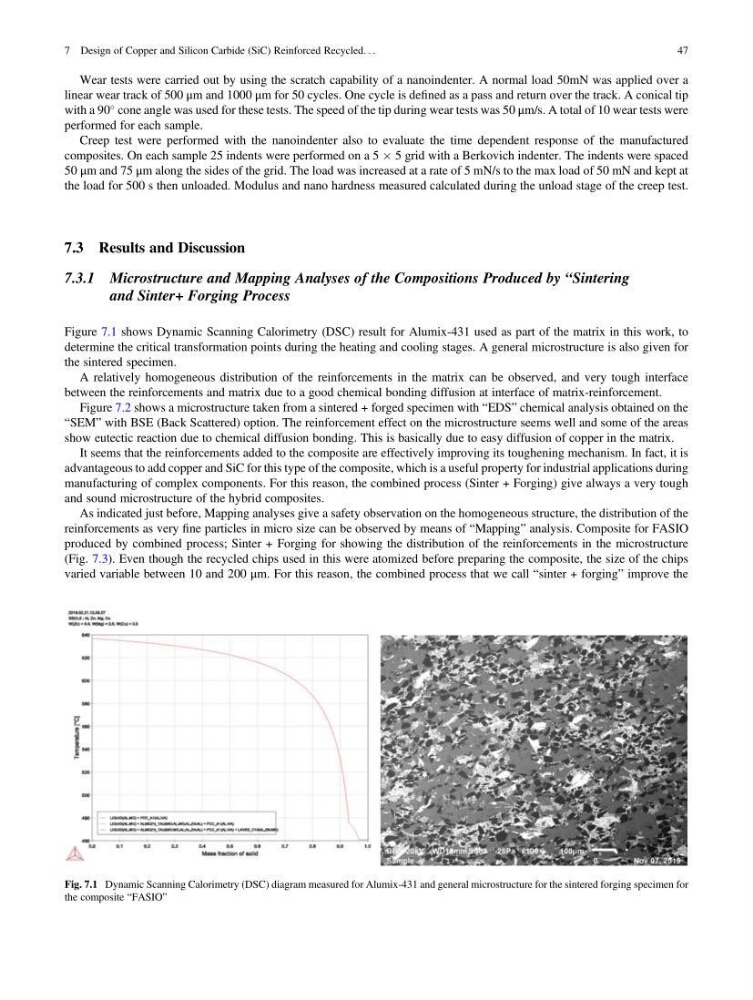
Figure 7.1 shows Dynamic Scanning Calorimetry (DSC) result for Alumix-431 used as part of the matrix in this work, to
determine the critical transformation points during the heating and cooling stages. A general microstructure is also given for
the sintered specimen.
A relatively homogeneous distribution of the reinforcements in the matrix can be observed, and very tough interface
between the reinforcements and matrix due to a good chemical bonding diffusion at interface of matrix-reinforcement.
Figure 7.2 shows a microstructure taken from a sintered + forged specimen with “EDS” chemical analysis obtained on the
“SEM” with BSE (Back Scattered) option. The reinforcement effect on the microstructure seems well and some of the areas
show eutectic reaction due to chemical diffusion bonding. This is basically due to easy diffusion of copper in the matrix.
It seems that the reinforcements added to the composite are effectively improving its toughening mechanism. In fact, it is
advantageous to add copper and SiC for this type of the composite, which is a useful property for industrial applications during
manufacturing of complex components. For this reason, the combined process (Sinter + Forging) give always a very tough
and sound microstructure of the hybrid composites.
As indicated just before, Mapping analyses give a safety observation on the homogeneous structure, the distribution of the
reinforcements as very fine particles in micro size can be observed by means of “Mapping” analysis. Composite for FASIO
produced by combined process; Sinter + Forging for showing the distribution of the reinforcements in the microstructure
(Fig. 7.3). Even though the recycled chips used in this were atomized before preparing the composite, the size of the chips
varied variable between 10 and 200 μm. For this reason, the combined process that we call “sinter + forging” improve the
Fig. 7.1 Dynamic Scanning Calorimetry (DSC) diagram measured for Alumix-431 and general microstructure for the sintered forging specimen for
the composite “FASIO”
7 Design of Copper and Silicon Carbide (SiC) Reinforced Recycled. . .
47
linear wear track of 500 μm and 1000 μm for 50 cycles. One cycle is defined as a pass and return over the track. A conical tip
with a 90
cone angle was used for these tests. The speed of the tip during wear tests was 50 μm/s. A total of 10 wear tests were
performed for each sample.
Creep test were performed with the nanoindenter also to evaluate the time dependent response of the manufactured
composites. On each sample 25 indents were performed on a 5 Â 5 grid with a Berkovich indenter. The indents were spaced
50 μm and 75 μm along the sides of the grid. The load was increased at a rate of 5 mN/s to the max load of 50 mN and kept at
the load for 500 s then unloaded. Modulus and nano hardness measured calculated during the unload stage of the creep test.
7.3 Results and Discussion
7.3.1 Microstructure and Mapping Analyses of the Compositions Produced by “Sintering
and Sinter+ Forging Process
Figure 7.1 shows Dynamic Scanning Calorimetry (DSC) result for Alumix-431 used as part of the matrix in this work, to
determine the critical transformation points during the heating and cooling stages. A general microstructure is also given for
the sintered specimen.
A relatively homogeneous distribution of the reinforcements in the matrix can be observed, and very tough interface
between the reinforcements and matrix due to a good chemical bonding diffusion at interface of matrix-reinforcement.
Figure 7.2 shows a microstructure taken from a sintered + forged specimen with “EDS” chemical analysis obtained on the
“SEM” with BSE (Back Scattered) option. The reinforcement effect on the microstructure seems well and some of the areas
show eutectic reaction due to chemical diffusion bonding. This is basically due to easy diffusion of copper in the matrix.
It seems that the reinforcements added to the composite are effectively improving its toughening mechanism. In fact, it is
advantageous to add copper and SiC for this type of the composite, which is a useful property for industrial applications during
manufacturing of complex components. For this reason, the combined process (Sinter + Forging) give always a very tough
and sound microstructure of the hybrid composites.
As indicated just before, Mapping analyses give a safety observation on the homogeneous structure, the distribution of the
reinforcements as very fine particles in micro size can be observed by means of “Mapping” analysis. Composite for FASIO
produced by combined process; Sinter + Forging for showing the distribution of the reinforcements in the microstructure
(Fig. 7.3). Even though the recycled chips used in this were atomized before preparing the composite, the size of the chips
varied variable between 10 and 200 μm. For this reason, the combined process that we call “sinter + forging” improve the
Fig. 7.1 Dynamic Scanning Calorimetry (DSC) diagram measured for Alumix-431 and general microstructure for the sintered forging specimen for
the composite “FASIO”
7 Design of Copper and Silicon Carbide (SiC) Reinforced Recycled. . .
47