

An additional inquiry on Fig. 15.8 observes the minor “jump” in tip displacement as the deflection shifts across the neutral
position. This behavior is a result of the multi-stable nature of a continuous wing section due to the complexity of its geometry.
The advent of this structure’s characteristic behavior evidently mutates the hysteresis profile from those found in literature [6–
8, 12–14].
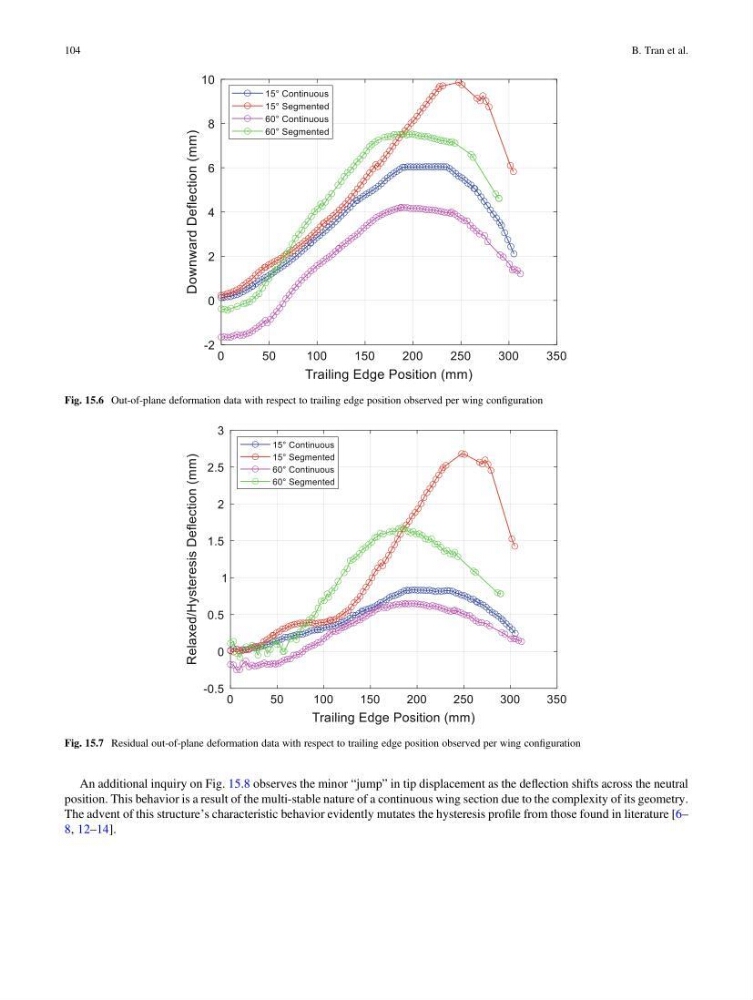
Fig. 15.6 Out-of-plane deformation data with respect to trailing edge position observed per wing configuration
Fig. 15.7 Residual out-of-plane deformation data with respect to trailing edge position observed per wing configuration
104
B. Tran et al.
position. This behavior is a result of the multi-stable nature of a continuous wing section due to the complexity of its geometry.
The advent of this structure’s characteristic behavior evidently mutates the hysteresis profile from those found in literature [6–
8, 12–14].
Fig. 15.6 Out-of-plane deformation data with respect to trailing edge position observed per wing configuration
Fig. 15.7 Residual out-of-plane deformation data with respect to trailing edge position observed per wing configuration
104
B. Tran et al.