

70
3 Dynamic Tensile Mechanical Properties of UHPCC
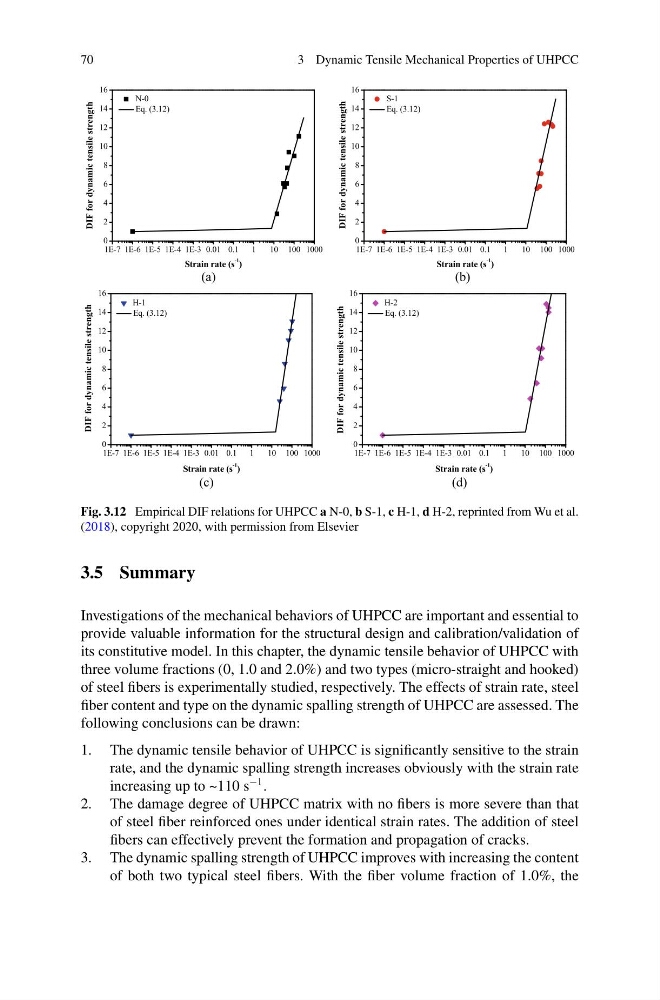
Fig. 3.12 Empirical DIF relations for UHPCC a N-0, b S-1, c H-1, d H-2, reprinted from Wu et al.
(2018), copyright 2020, with permission from Elsevier
3.5 Summary
Investigations of the mechanical behaviors of UHPCC are important and essential to
provide valuable information for the structural design and calibration/validation of
its constitutive model. In this chapter, the dynamic tensile behavior of UHPCC with
three volume fractions (0, 1.0 and 2.0%) and two types (micro-straight and hooked)
of steel fibers is experimentally studied, respectively. The effects of strain rate, steel
fiber content and type on the dynamic spalling strength of UHPCC are assessed. The
following conclusions can be drawn:
1. The dynamic tensile behavior of UHPCC is significantly sensitive to the strain
rate, and the dynamic spalling strength increases obviously with the strain rate
increasing up to ~110 s
−1 .
2. The damage degree of UHPCC matrix with no fibers is more severe than that
of steel fiber reinforced ones under identical strain rates. The addition of steel
fibers can effectively prevent the formation and propagation of cracks.
3. The dynamic spalling strength of UHPCC improves with increasing the content
of both two typical steel fibers. With the fiber volume fraction of 1.0%, the
3 Dynamic Tensile Mechanical Properties of UHPCC
Fig. 3.12 Empirical DIF relations for UHPCC a N-0, b S-1, c H-1, d H-2, reprinted from Wu et al.
(2018), copyright 2020, with permission from Elsevier
3.5 Summary
Investigations of the mechanical behaviors of UHPCC are important and essential to
provide valuable information for the structural design and calibration/validation of
its constitutive model. In this chapter, the dynamic tensile behavior of UHPCC with
three volume fractions (0, 1.0 and 2.0%) and two types (micro-straight and hooked)
of steel fibers is experimentally studied, respectively. The effects of strain rate, steel
fiber content and type on the dynamic spalling strength of UHPCC are assessed. The
following conclusions can be drawn:
1. The dynamic tensile behavior of UHPCC is significantly sensitive to the strain
rate, and the dynamic spalling strength increases obviously with the strain rate
increasing up to ~110 s
−1 .
2. The damage degree of UHPCC matrix with no fibers is more severe than that
of steel fiber reinforced ones under identical strain rates. The addition of steel
fibers can effectively prevent the formation and propagation of cracks.
3. The dynamic spalling strength of UHPCC improves with increasing the content
of both two typical steel fibers. With the fiber volume fraction of 1.0%, the