

1.4 Test Results and Discussion
11
former is more influential. For example, the cubic compressive strength of UHPCC
with 2.5% micro-straight steel fibers is 143.9 MPa, which has increased by 29.8%
and 5.1% compared to the plain UHPCC and UHPCC with 2.5% hooked steel fibers,
respectively.
The reason lies in that, increasing steel fiber content could make more fibers to
sustain the load and lead to multi-cracks. Meanwhile, the stress between fibers and
matrix is reduced with increasing the fiber volume fraction, which delays the formation and propagation of cracks, and thus results in the increase of cubic compressive
strengths. Besides, with the identical steel fiber content, due to the different size
of present two typical fibers, relatively larger amount of micro-straight steel fibers
endure the loading. Based on the compressive test on the UHPC specimens respectively reinforced by the straight and hooked steel fibers with the same length and
diameter, Wu et al. (2016) obtained the same conclusion about the effect of steel fiber
content on the cubic compressive strength, while the conclusion of the influence of
steel fiber type is on the contrary.
1.4.1.2 Axial Compression Test
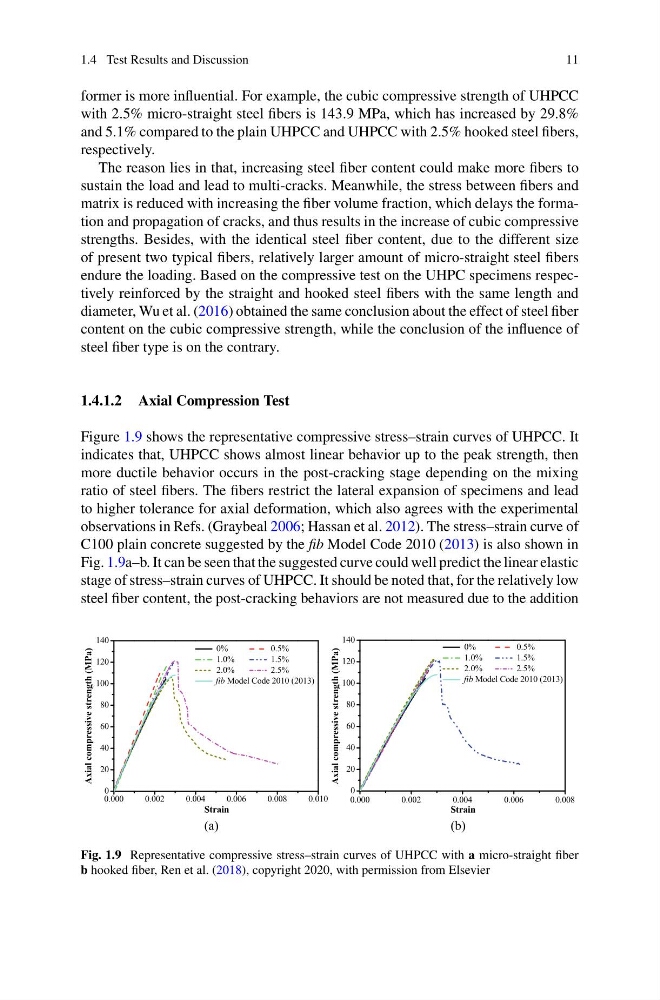
Figure 1.9 shows the representative compressive stress–strain curves of UHPCC. It
indicates that, UHPCC shows almost linear behavior up to the peak strength, then
more ductile behavior occurs in the post-cracking stage depending on the mixing
ratio of steel fibers. The fibers restrict the lateral expansion of specimens and lead
to higher tolerance for axial deformation, which also agrees with the experimental
observations in Refs. (Graybeal 2006; Hassan et al. 2012). The stress–strain curve of
C100 plain concrete suggested by the fib Model Code 2010 (2013) is also shown in
Fig. 1.9a–b. It can be seen that the suggested curve could well predict the linear elastic
stage of stress–strain curves of UHPCC. It should be noted that, for the relatively low
steel fiber content, the post-cracking behaviors are not measured due to the addition
Fig. 1.9 Representative compressive stress–strain curves of UHPCC with a micro-straight fiber
b hooked fiber, Ren et al. (2018), copyright 2020, with permission from Elsevier
11
former is more influential. For example, the cubic compressive strength of UHPCC
with 2.5% micro-straight steel fibers is 143.9 MPa, which has increased by 29.8%
and 5.1% compared to the plain UHPCC and UHPCC with 2.5% hooked steel fibers,
respectively.
The reason lies in that, increasing steel fiber content could make more fibers to
sustain the load and lead to multi-cracks. Meanwhile, the stress between fibers and
matrix is reduced with increasing the fiber volume fraction, which delays the formation and propagation of cracks, and thus results in the increase of cubic compressive
strengths. Besides, with the identical steel fiber content, due to the different size
of present two typical fibers, relatively larger amount of micro-straight steel fibers
endure the loading. Based on the compressive test on the UHPC specimens respectively reinforced by the straight and hooked steel fibers with the same length and
diameter, Wu et al. (2016) obtained the same conclusion about the effect of steel fiber
content on the cubic compressive strength, while the conclusion of the influence of
steel fiber type is on the contrary.
1.4.1.2 Axial Compression Test
Figure 1.9 shows the representative compressive stress–strain curves of UHPCC. It
indicates that, UHPCC shows almost linear behavior up to the peak strength, then
more ductile behavior occurs in the post-cracking stage depending on the mixing
ratio of steel fibers. The fibers restrict the lateral expansion of specimens and lead
to higher tolerance for axial deformation, which also agrees with the experimental
observations in Refs. (Graybeal 2006; Hassan et al. 2012). The stress–strain curve of
C100 plain concrete suggested by the fib Model Code 2010 (2013) is also shown in
Fig. 1.9a–b. It can be seen that the suggested curve could well predict the linear elastic
stage of stress–strain curves of UHPCC. It should be noted that, for the relatively low
steel fiber content, the post-cracking behaviors are not measured due to the addition
Fig. 1.9 Representative compressive stress–strain curves of UHPCC with a micro-straight fiber
b hooked fiber, Ren et al. (2018), copyright 2020, with permission from Elsevier