

156
5 Projectile Penetrations into Coarse Aggregated UHPCC Targets
Therefore, it should be a feasible choice that rising the coarse aggregates strength
(hardness) within the UHPC targets to improve the penetration resistance of targets.
5.4.3.2 Anti-perforation Performance
For investigating the influence of different aggregates on anti-perforation performance of UHPC targets, the numerical simulations of projectile perforating into
four targets with V 0 = 800, 1000, 1200 and 1400 m/s are performed, respectively.
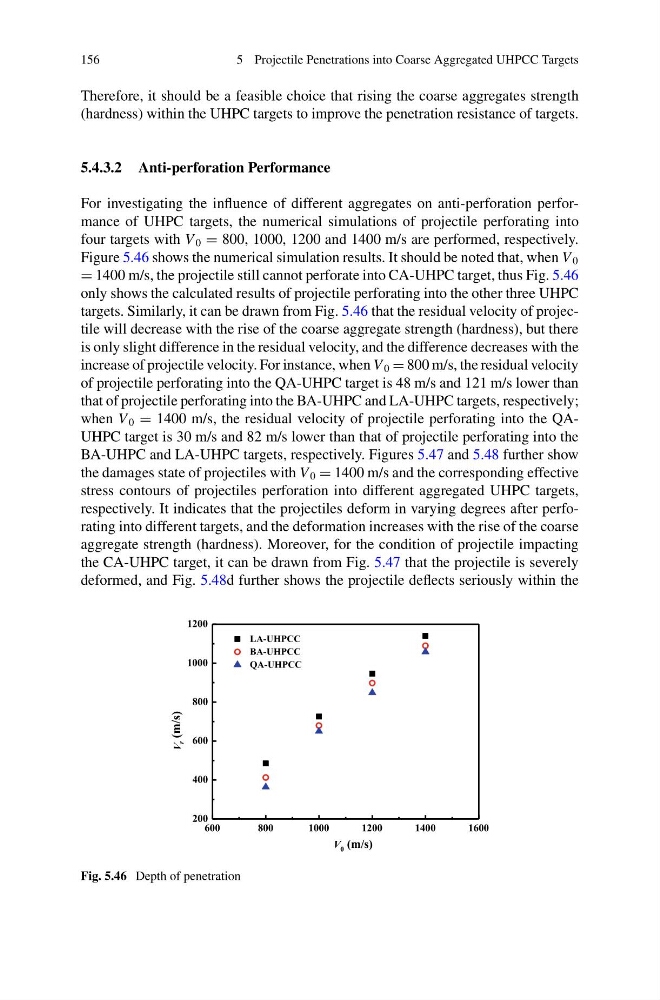
Figure 5.46 shows the numerical simulation results. It should be noted that, when V 0
= 1400 m/s, the projectile still cannot perforate into CA-UHPC target, thus Fig. 5.46
only shows the calculated results of projectile perforating into the other three UHPC
targets. Similarly, it can be drawn from Fig. 5.46 that the residual velocity of projectile will decrease with the rise of the coarse aggregate strength (hardness), but there
is only slight difference in the residual velocity, and the difference decreases with the
increase of projectile velocity. For instance, when V 0 = 800 m/s, the residual velocity
of projectile perforating into the QA-UHPC target is 48 m/s and 121 m/s lower than
that of projectile perforating into the BA-UHPC and LA-UHPC targets, respectively;
when V 0 = 1400 m/s, the residual velocity of projectile perforating into the QAUHPC target is 30 m/s and 82 m/s lower than that of projectile perforating into the
BA-UHPC and LA-UHPC targets, respectively. Figures 5.47 and 5.48 further show
the damages state of projectiles with V 0 = 1400 m/s and the corresponding effective
stress contours of projectiles perforation into different aggregated UHPC targets,
respectively. It indicates that the projectiles deform in varying degrees after perforating into different targets, and the deformation increases with the rise of the coarse
aggregate strength (hardness). Moreover, for the condition of projectile impacting
the CA-UHPC target, it can be drawn from Fig. 5.47 that the projectile is severely
deformed, and Fig. 5.48d further shows the projectile deflects seriously within the
600
800
1000
1200
1400
1600
200
400
600
800
1000
1200
LA-UHPCC
BA-UHPCC
QA-UHPCC
V
r (m/s)
V 0 (m/s)
Fig. 5.46 Depth of penetration
5 Projectile Penetrations into Coarse Aggregated UHPCC Targets
Therefore, it should be a feasible choice that rising the coarse aggregates strength
(hardness) within the UHPC targets to improve the penetration resistance of targets.
5.4.3.2 Anti-perforation Performance
For investigating the influence of different aggregates on anti-perforation performance of UHPC targets, the numerical simulations of projectile perforating into
four targets with V 0 = 800, 1000, 1200 and 1400 m/s are performed, respectively.
Figure 5.46 shows the numerical simulation results. It should be noted that, when V 0
= 1400 m/s, the projectile still cannot perforate into CA-UHPC target, thus Fig. 5.46
only shows the calculated results of projectile perforating into the other three UHPC
targets. Similarly, it can be drawn from Fig. 5.46 that the residual velocity of projectile will decrease with the rise of the coarse aggregate strength (hardness), but there
is only slight difference in the residual velocity, and the difference decreases with the
increase of projectile velocity. For instance, when V 0 = 800 m/s, the residual velocity
of projectile perforating into the QA-UHPC target is 48 m/s and 121 m/s lower than
that of projectile perforating into the BA-UHPC and LA-UHPC targets, respectively;
when V 0 = 1400 m/s, the residual velocity of projectile perforating into the QAUHPC target is 30 m/s and 82 m/s lower than that of projectile perforating into the
BA-UHPC and LA-UHPC targets, respectively. Figures 5.47 and 5.48 further show
the damages state of projectiles with V 0 = 1400 m/s and the corresponding effective
stress contours of projectiles perforation into different aggregated UHPC targets,
respectively. It indicates that the projectiles deform in varying degrees after perforating into different targets, and the deformation increases with the rise of the coarse
aggregate strength (hardness). Moreover, for the condition of projectile impacting
the CA-UHPC target, it can be drawn from Fig. 5.47 that the projectile is severely
deformed, and Fig. 5.48d further shows the projectile deflects seriously within the
600
800
1000
1200
1400
1600
200
400
600
800
1000
1200
LA-UHPCC
BA-UHPCC
QA-UHPCC
V
r (m/s)
V 0 (m/s)
Fig. 5.46 Depth of penetration