

9.7 Size-Dependent Euler-Bernoulli Beams with Topologically Optimized Microstructure 385
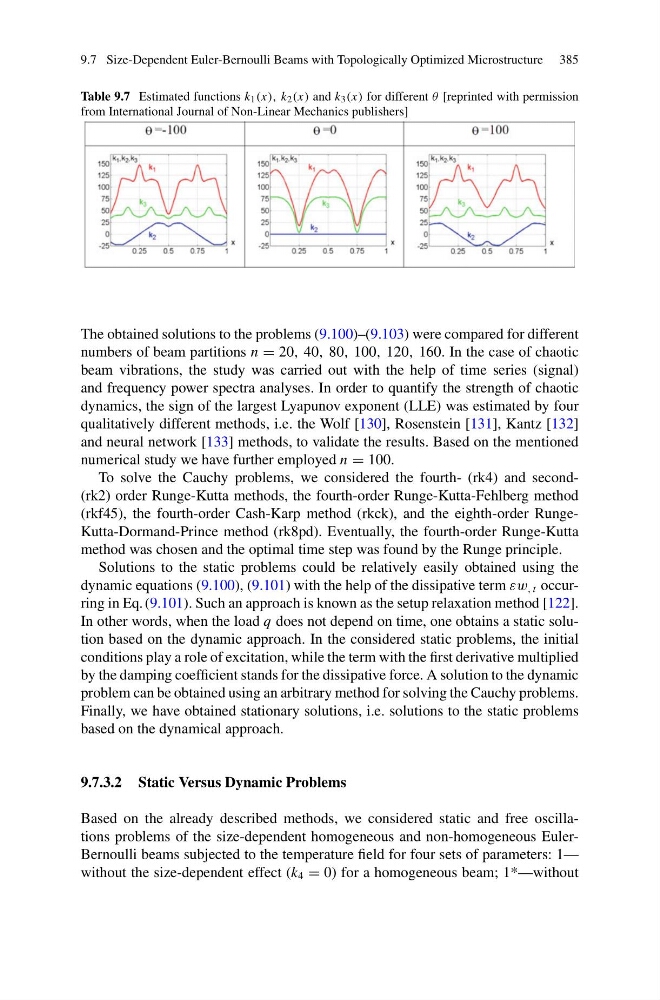
Table 9.7 Estimated functions k 1 (x), k 2 (x) and k 3 (x) for different θ [reprinted with permission
from International Journal of Non-Linear Mechanics publishers]
The obtained solutions to the problems (9.100)–(9.103) were compared for different
numbers of beam partitions n = 20, 40, 80, 100, 120, 160. In the case of chaotic
beam vibrations, the study was carried out with the help of time series (signal)
and frequency power spectra analyses. In order to quantify the strength of chaotic
dynamics, the sign of the largest Lyapunov exponent (LLE) was estimated by four
qualitatively different methods, i.e. the Wolf [130], Rosenstein [131], Kantz [132]
and neural network [133] methods, to validate the results. Based on the mentioned
numerical study we have further employed n = 100.
To solve the Cauchy problems, we considered the fourth- (rk4) and second(rk2) order Runge-Kutta methods, the fourth-order Runge-Kutta-Fehlberg method
(rkf45), the fourth-order Cash-Karp method (rkck), and the eighth-order RungeKutta-Dormand-Prince method (rk8pd). Eventually, the fourth-order Runge-Kutta
method was chosen and the optimal time step was found by the Runge principle.
Solutions to the static problems could be relatively easily obtained using the
dynamic equations (9.100), (9.101) with the help of the dissipative term εw , t occurring in Eq. (9.101). Such an approach is known as the setup relaxation method [122].
In other words, when the load q does not depend on time, one obtains a static solution based on the dynamic approach. In the considered static problems, the initial
conditions play a role of excitation, while the term with the first derivative multiplied
by the damping coefficient stands for the dissipative force. A solution to the dynamic
problem can be obtained using an arbitrary method for solving the Cauchy problems.
Finally, we have obtained stationary solutions, i.e. solutions to the static problems
based on the dynamical approach.
9.7.3.2 Static Versus Dynamic Problems
Based on the already described methods, we considered static and free oscillations problems of the size-dependent homogeneous and non-homogeneous EulerBernoulli beams subjected to the temperature field for four sets of parameters: 1—
without the size-dependent effect (k 4 = 0) for a homogeneous beam; 1*—without
Table 9.7 Estimated functions k 1 (x), k 2 (x) and k 3 (x) for different θ [reprinted with permission
from International Journal of Non-Linear Mechanics publishers]
The obtained solutions to the problems (9.100)–(9.103) were compared for different
numbers of beam partitions n = 20, 40, 80, 100, 120, 160. In the case of chaotic
beam vibrations, the study was carried out with the help of time series (signal)
and frequency power spectra analyses. In order to quantify the strength of chaotic
dynamics, the sign of the largest Lyapunov exponent (LLE) was estimated by four
qualitatively different methods, i.e. the Wolf [130], Rosenstein [131], Kantz [132]
and neural network [133] methods, to validate the results. Based on the mentioned
numerical study we have further employed n = 100.
To solve the Cauchy problems, we considered the fourth- (rk4) and second(rk2) order Runge-Kutta methods, the fourth-order Runge-Kutta-Fehlberg method
(rkf45), the fourth-order Cash-Karp method (rkck), and the eighth-order RungeKutta-Dormand-Prince method (rk8pd). Eventually, the fourth-order Runge-Kutta
method was chosen and the optimal time step was found by the Runge principle.
Solutions to the static problems could be relatively easily obtained using the
dynamic equations (9.100), (9.101) with the help of the dissipative term εw , t occurring in Eq. (9.101). Such an approach is known as the setup relaxation method [122].
In other words, when the load q does not depend on time, one obtains a static solution based on the dynamic approach. In the considered static problems, the initial
conditions play a role of excitation, while the term with the first derivative multiplied
by the damping coefficient stands for the dissipative force. A solution to the dynamic
problem can be obtained using an arbitrary method for solving the Cauchy problems.
Finally, we have obtained stationary solutions, i.e. solutions to the static problems
based on the dynamical approach.
9.7.3.2 Static Versus Dynamic Problems
Based on the already described methods, we considered static and free oscillations problems of the size-dependent homogeneous and non-homogeneous EulerBernoulli beams subjected to the temperature field for four sets of parameters: 1—
without the size-dependent effect (k 4 = 0) for a homogeneous beam; 1*—without