

A Study on the Comparison Between Activated TIG Variants …
71
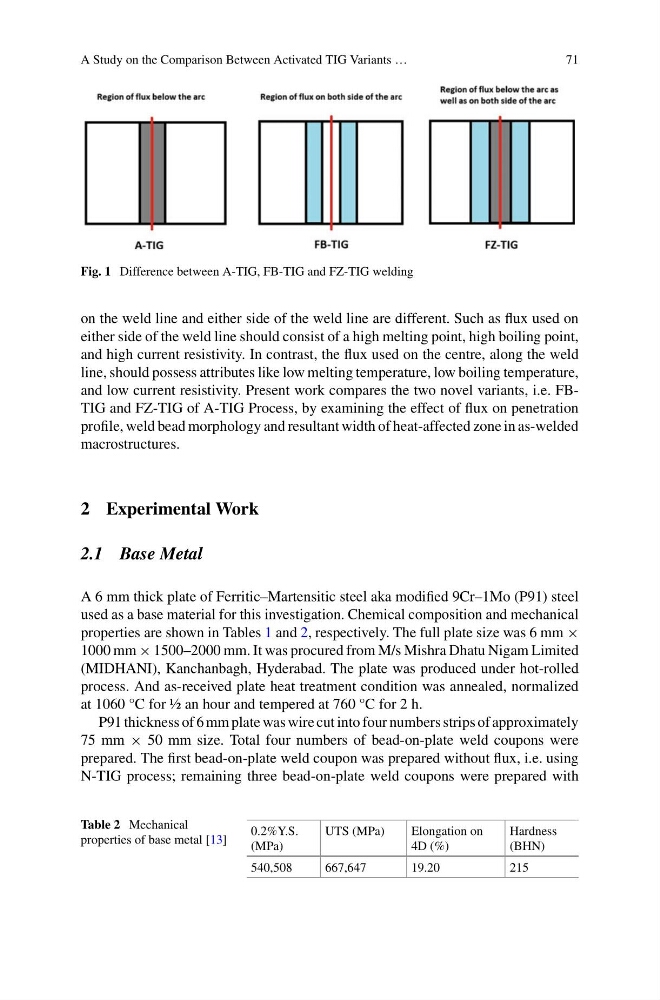
Fig. 1 Difference between A-TIG, FB-TIG and FZ-TIG welding
on the weld line and either side of the weld line are different. Such as flux used on
either side of the weld line should consist of a high melting point, high boiling point,
and high current resistivity. In contrast, the flux used on the centre, along the weld
line, should possess attributes like low melting temperature, low boiling temperature,
and low current resistivity. Present work compares the two novel variants, i.e. FBTIG and FZ-TIG of A-TIG Process, by examining the effect of flux on penetration
profile, weld bead morphology and resultant width of heat-affected zone in as-welded
macrostructures.
2 Experimental Work
2.1 Base Metal
A 6 mm thick plate of Ferritic–Martensitic steel aka modified 9Cr–1Mo (P91) steel
used as a base material for this investigation. Chemical composition and mechanical
properties are shown in Tables 1 and 2, respectively. The full plate size was 6 mm ×
1000 mm × 1500–2000 mm. It was procured from M/s Mishra Dhatu Nigam Limited
(MIDHANI), Kanchanbagh, Hyderabad. The plate was produced under hot-rolled
process. And as-received plate heat treatment condition was annealed, normalized
at 1060 °C for ½ an hour and tempered at 760 °C for 2 h.
P91 thickness of 6 mm plate was wire cut into four numbers strips of approximately
75 mm × 50 mm size. Total four numbers of bead-on-plate weld coupons were
prepared. The first bead-on-plate weld coupon was prepared without flux, i.e. using
N-TIG process; remaining three bead-on-plate weld coupons were prepared with
Table 2 Mechanical
properties of base metal [13]
0.2%Y.S.
(MPa)
UTS (MPa)
Elongation on
4D (%)
Hardness
(BHN)
540,508
667,647
19.20
215
71
Fig. 1 Difference between A-TIG, FB-TIG and FZ-TIG welding
on the weld line and either side of the weld line are different. Such as flux used on
either side of the weld line should consist of a high melting point, high boiling point,
and high current resistivity. In contrast, the flux used on the centre, along the weld
line, should possess attributes like low melting temperature, low boiling temperature,
and low current resistivity. Present work compares the two novel variants, i.e. FBTIG and FZ-TIG of A-TIG Process, by examining the effect of flux on penetration
profile, weld bead morphology and resultant width of heat-affected zone in as-welded
macrostructures.
2 Experimental Work
2.1 Base Metal
A 6 mm thick plate of Ferritic–Martensitic steel aka modified 9Cr–1Mo (P91) steel
used as a base material for this investigation. Chemical composition and mechanical
properties are shown in Tables 1 and 2, respectively. The full plate size was 6 mm ×
1000 mm × 1500–2000 mm. It was procured from M/s Mishra Dhatu Nigam Limited
(MIDHANI), Kanchanbagh, Hyderabad. The plate was produced under hot-rolled
process. And as-received plate heat treatment condition was annealed, normalized
at 1060 °C for ½ an hour and tempered at 760 °C for 2 h.
P91 thickness of 6 mm plate was wire cut into four numbers strips of approximately
75 mm × 50 mm size. Total four numbers of bead-on-plate weld coupons were
prepared. The first bead-on-plate weld coupon was prepared without flux, i.e. using
N-TIG process; remaining three bead-on-plate weld coupons were prepared with
Table 2 Mechanical
properties of base metal [13]
0.2%Y.S.
(MPa)
UTS (MPa)
Elongation on
4D (%)
Hardness
(BHN)
540,508
667,647
19.20
215