

64
K. Santhy and D. R. Rajkumar
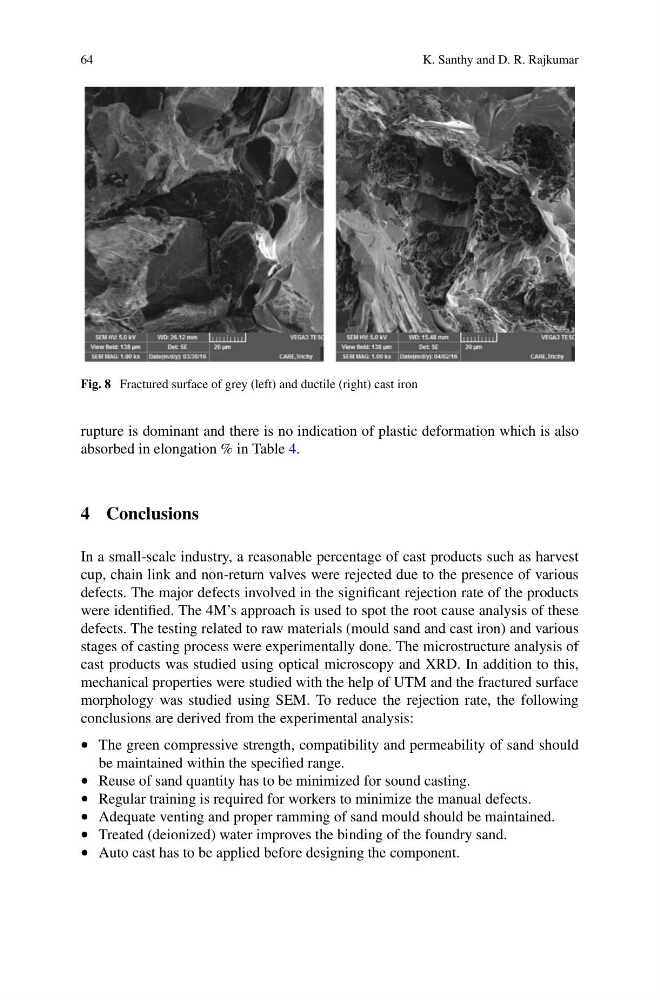
Fig. 8 Fractured surface of grey (left) and ductile (right) cast iron
rupture is dominant and there is no indication of plastic deformation which is also
absorbed in elongation % in Table 4.
4 Conclusions
In a small-scale industry, a reasonable percentage of cast products such as harvest
cup, chain link and non-return valves were rejected due to the presence of various
defects. The major defects involved in the significant rejection rate of the products
were identified. The 4M’s approach is used to spot the root cause analysis of these
defects. The testing related to raw materials (mould sand and cast iron) and various
stages of casting process were experimentally done. The microstructure analysis of
cast products was studied using optical microscopy and XRD. In addition to this,
mechanical properties were studied with the help of UTM and the fractured surface
morphology was studied using SEM. To reduce the rejection rate, the following
conclusions are derived from the experimental analysis:
• The green compressive strength, compatibility and permeability of sand should
be maintained within the specified range.
• Reuse of sand quantity has to be minimized for sound casting.
• Regular training is required for workers to minimize the manual defects.
• Adequate venting and proper ramming of sand mould should be maintained.
• Treated (deionized) water improves the binding of the foundry sand.
• Auto cast has to be applied before designing the component.
K. Santhy and D. R. Rajkumar
Fig. 8 Fractured surface of grey (left) and ductile (right) cast iron
rupture is dominant and there is no indication of plastic deformation which is also
absorbed in elongation % in Table 4.
4 Conclusions
In a small-scale industry, a reasonable percentage of cast products such as harvest
cup, chain link and non-return valves were rejected due to the presence of various
defects. The major defects involved in the significant rejection rate of the products
were identified. The 4M’s approach is used to spot the root cause analysis of these
defects. The testing related to raw materials (mould sand and cast iron) and various
stages of casting process were experimentally done. The microstructure analysis of
cast products was studied using optical microscopy and XRD. In addition to this,
mechanical properties were studied with the help of UTM and the fractured surface
morphology was studied using SEM. To reduce the rejection rate, the following
conclusions are derived from the experimental analysis:
• The green compressive strength, compatibility and permeability of sand should
be maintained within the specified range.
• Reuse of sand quantity has to be minimized for sound casting.
• Regular training is required for workers to minimize the manual defects.
• Adequate venting and proper ramming of sand mould should be maintained.
• Treated (deionized) water improves the binding of the foundry sand.
• Auto cast has to be applied before designing the component.