

60
K. Santhy and D. R. Rajkumar
The optimum grain size distribution of sand is required for sound casting. Coarse
grained sands allow metal penetration into the moulds which lead to poor surface
finish of the castings. Fine grain sand yield better surface finish but need higher
binder content and the low permeability which may cause gas defects in castings.
As per American Finesse Number (AFN), optimum grain size distribution of sand
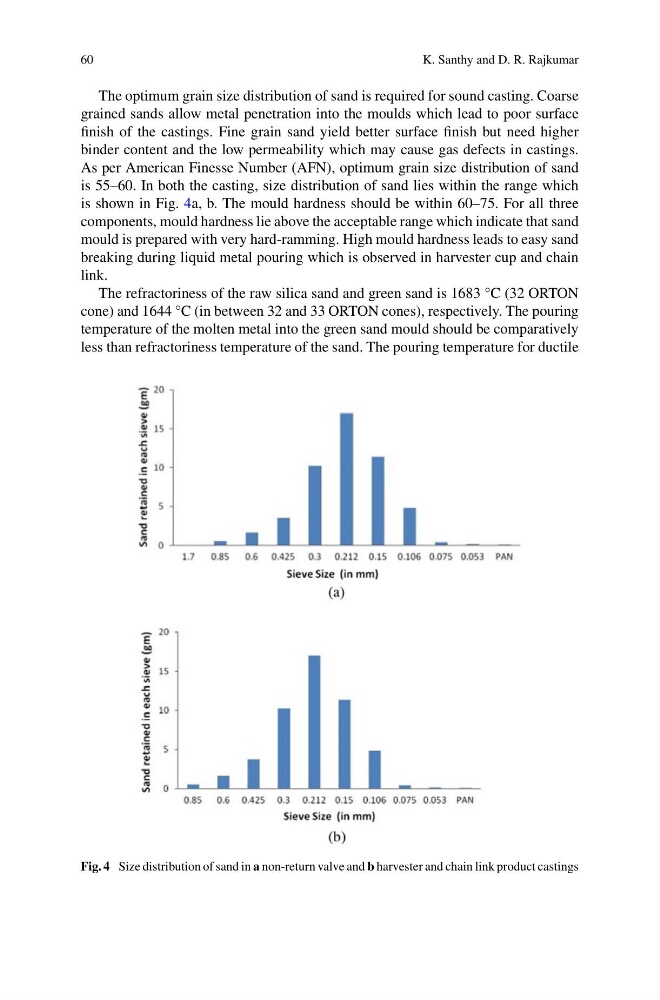
is 55–60. In both the casting, size distribution of sand lies within the range which
is shown in Fig. 4a, b. The mould hardness should be within 60–75. For all three
components, mould hardness lie above the acceptable range which indicate that sand
mould is prepared with very hard-ramming. High mould hardness leads to easy sand
breaking during liquid metal pouring which is observed in harvester cup and chain
link.
The refractoriness of the raw silica sand and green sand is 1683 °C (32 ORTON
cone) and 1644 °C (in between 32 and 33 ORTON cones), respectively. The pouring
temperature of the molten metal into the green sand mould should be comparatively
less than refractoriness temperature of the sand. The pouring temperature for ductile
Fig. 4 Size distribution of sand in a non-return valve and b harvester and chain link product castings
K. Santhy and D. R. Rajkumar
The optimum grain size distribution of sand is required for sound casting. Coarse
grained sands allow metal penetration into the moulds which lead to poor surface
finish of the castings. Fine grain sand yield better surface finish but need higher
binder content and the low permeability which may cause gas defects in castings.
As per American Finesse Number (AFN), optimum grain size distribution of sand
is 55–60. In both the casting, size distribution of sand lies within the range which
is shown in Fig. 4a, b. The mould hardness should be within 60–75. For all three
components, mould hardness lie above the acceptable range which indicate that sand
mould is prepared with very hard-ramming. High mould hardness leads to easy sand
breaking during liquid metal pouring which is observed in harvester cup and chain
link.
The refractoriness of the raw silica sand and green sand is 1683 °C (32 ORTON
cone) and 1644 °C (in between 32 and 33 ORTON cones), respectively. The pouring
temperature of the molten metal into the green sand mould should be comparatively
less than refractoriness temperature of the sand. The pouring temperature for ductile
Fig. 4 Size distribution of sand in a non-return valve and b harvester and chain link product castings