

A Simplified Method for Conversion …
491
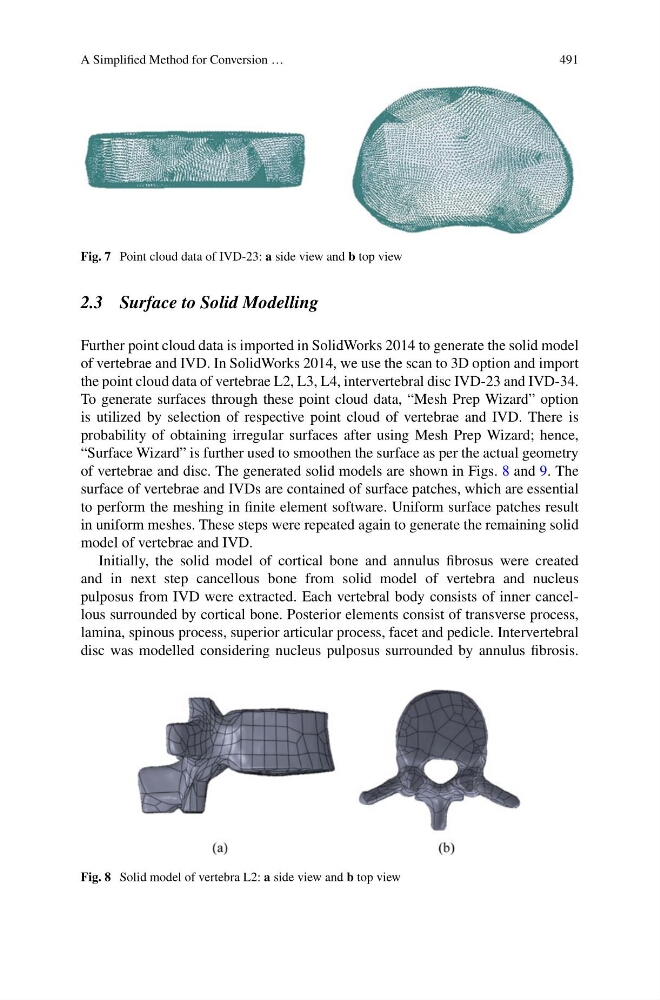
Fig. 7 Point cloud data of IVD-23: a side view and b top view
2.3 Surface to Solid Modelling
Further point cloud data is imported in SolidWorks 2014 to generate the solid model
of vertebrae and IVD. In SolidWorks 2014, we use the scan to 3D option and import
the point cloud data of vertebrae L2, L3, L4, intervertebral disc IVD-23 and IVD-34.
To generate surfaces through these point cloud data, “Mesh Prep Wizard” option
is utilized by selection of respective point cloud of vertebrae and IVD. There is
probability of obtaining irregular surfaces after using Mesh Prep Wizard; hence,
“Surface Wizard” is further used to smoothen the surface as per the actual geometry
of vertebrae and disc. The generated solid models are shown in Figs. 8 and 9. The
surface of vertebrae and IVDs are contained of surface patches, which are essential
to perform the meshing in finite element software. Uniform surface patches result
in uniform meshes. These steps were repeated again to generate the remaining solid
model of vertebrae and IVD.
Initially, the solid model of cortical bone and annulus fibrosus were created
and in next step cancellous bone from solid model of vertebra and nucleus
pulposus from IVD were extracted. Each vertebral body consists of inner cancellous surrounded by cortical bone. Posterior elements consist of transverse process,
lamina, spinous process, superior articular process, facet and pedicle. Intervertebral
disc was modelled considering nucleus pulposus surrounded by annulus fibrosis.
Fig. 8 Solid model of vertebra L2: a side view and b top view
491
Fig. 7 Point cloud data of IVD-23: a side view and b top view
2.3 Surface to Solid Modelling
Further point cloud data is imported in SolidWorks 2014 to generate the solid model
of vertebrae and IVD. In SolidWorks 2014, we use the scan to 3D option and import
the point cloud data of vertebrae L2, L3, L4, intervertebral disc IVD-23 and IVD-34.
To generate surfaces through these point cloud data, “Mesh Prep Wizard” option
is utilized by selection of respective point cloud of vertebrae and IVD. There is
probability of obtaining irregular surfaces after using Mesh Prep Wizard; hence,
“Surface Wizard” is further used to smoothen the surface as per the actual geometry
of vertebrae and disc. The generated solid models are shown in Figs. 8 and 9. The
surface of vertebrae and IVDs are contained of surface patches, which are essential
to perform the meshing in finite element software. Uniform surface patches result
in uniform meshes. These steps were repeated again to generate the remaining solid
model of vertebrae and IVD.
Initially, the solid model of cortical bone and annulus fibrosus were created
and in next step cancellous bone from solid model of vertebra and nucleus
pulposus from IVD were extracted. Each vertebral body consists of inner cancellous surrounded by cortical bone. Posterior elements consist of transverse process,
lamina, spinous process, superior articular process, facet and pedicle. Intervertebral
disc was modelled considering nucleus pulposus surrounded by annulus fibrosis.
Fig. 8 Solid model of vertebra L2: a side view and b top view