

326
M. Dalal et al.
0.00
10.00
20.00
30.00
40.00
50.00
0
2
4
6
8
1 0
BRAKE THARMAL EFFICIENCY
(%BTEFF)
BRAKE POWER (KW)
B0
B05
B10
B10(PLASTIC)
B20
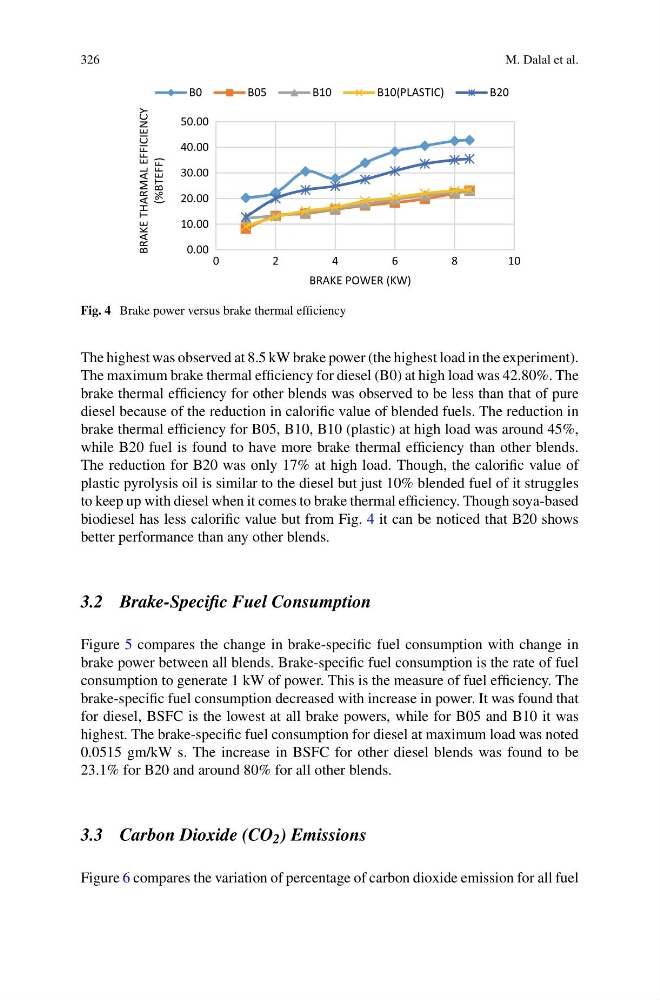
Fig. 4 Brake power versus brake thermal efficiency
The highest was observed at 8.5 kW brake power (the highest load in the experiment).
The maximum brake thermal efficiency for diesel (B0) at high load was 42.80%. The
brake thermal efficiency for other blends was observed to be less than that of pure
diesel because of the reduction in calorific value of blended fuels. The reduction in
brake thermal efficiency for B05, B10, B10 (plastic) at high load was around 45%,
while B20 fuel is found to have more brake thermal efficiency than other blends.
The reduction for B20 was only 17% at high load. Though, the calorific value of
plastic pyrolysis oil is similar to the diesel but just 10% blended fuel of it struggles
to keep up with diesel when it comes to brake thermal efficiency. Though soya-based
biodiesel has less calorific value but from Fig. 4 it can be noticed that B20 shows
better performance than any other blends.
3.2 Brake-Specific Fuel Consumption
Figure 5 compares the change in brake-specific fuel consumption with change in
brake power between all blends. Brake-specific fuel consumption is the rate of fuel
consumption to generate 1 kW of power. This is the measure of fuel efficiency. The
brake-specific fuel consumption decreased with increase in power. It was found that
for diesel, BSFC is the lowest at all brake powers, while for B05 and B10 it was
highest. The brake-specific fuel consumption for diesel at maximum load was noted
0.0515 gm/kW s. The increase in BSFC for other diesel blends was found to be
23.1% for B20 and around 80% for all other blends.
3.3 Carbon Dioxide (CO 2 ) Emissions
Figure 6 compares the variation of percentage of carbon dioxide emission for all fuel
M. Dalal et al.
0.00
10.00
20.00
30.00
40.00
50.00
0
2
4
6
8
1 0
BRAKE THARMAL EFFICIENCY
(%BTEFF)
BRAKE POWER (KW)
B0
B05
B10
B10(PLASTIC)
B20
Fig. 4 Brake power versus brake thermal efficiency
The highest was observed at 8.5 kW brake power (the highest load in the experiment).
The maximum brake thermal efficiency for diesel (B0) at high load was 42.80%. The
brake thermal efficiency for other blends was observed to be less than that of pure
diesel because of the reduction in calorific value of blended fuels. The reduction in
brake thermal efficiency for B05, B10, B10 (plastic) at high load was around 45%,
while B20 fuel is found to have more brake thermal efficiency than other blends.
The reduction for B20 was only 17% at high load. Though, the calorific value of
plastic pyrolysis oil is similar to the diesel but just 10% blended fuel of it struggles
to keep up with diesel when it comes to brake thermal efficiency. Though soya-based
biodiesel has less calorific value but from Fig. 4 it can be noticed that B20 shows
better performance than any other blends.
3.2 Brake-Specific Fuel Consumption
Figure 5 compares the change in brake-specific fuel consumption with change in
brake power between all blends. Brake-specific fuel consumption is the rate of fuel
consumption to generate 1 kW of power. This is the measure of fuel efficiency. The
brake-specific fuel consumption decreased with increase in power. It was found that
for diesel, BSFC is the lowest at all brake powers, while for B05 and B10 it was
highest. The brake-specific fuel consumption for diesel at maximum load was noted
0.0515 gm/kW s. The increase in BSFC for other diesel blends was found to be
23.1% for B20 and around 80% for all other blends.
3.3 Carbon Dioxide (CO 2 ) Emissions
Figure 6 compares the variation of percentage of carbon dioxide emission for all fuel