

Selection of Optimum Castor–Rapeseed Emulsified Fuel …
295
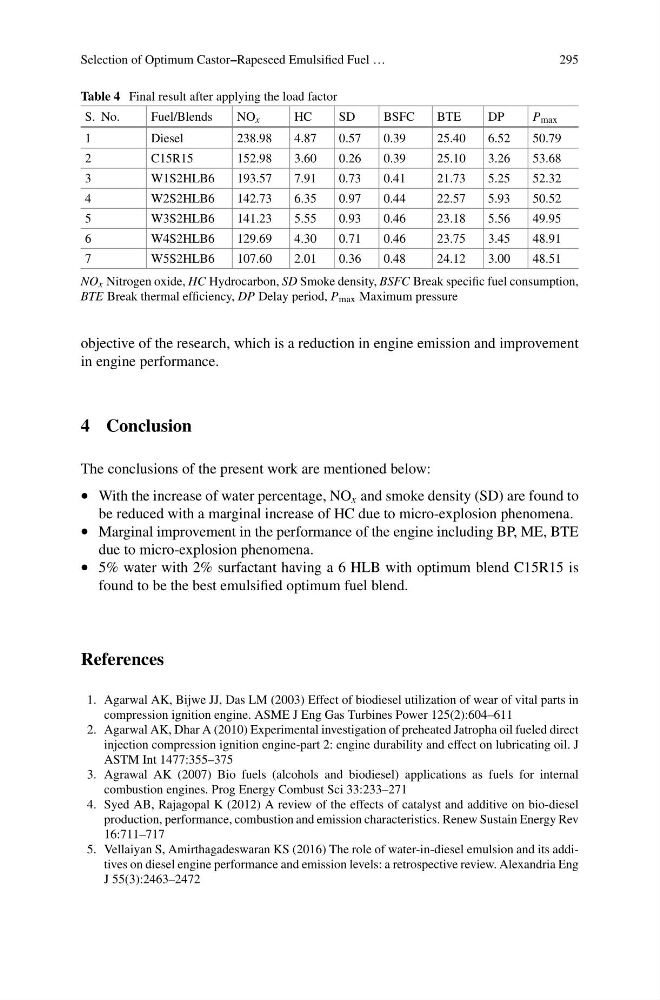
Table 4 Final result after applying the load factor
S. No.
Fuel/Blends
NO x
HC
SD
BSFC
BTE
DP
P max
1
Diesel
238.98
4.87
0.57
0.39
25.40
6.52
50.79
2
C15R15
152.98
3.60
0.26
0.39
25.10
3.26
53.68
3
W1S2HLB6
193.57
7.91
0.73
0.41
21.73
5.25
52.32
4
W2S2HLB6
142.73
6.35
0.97
0.44
22.57
5.93
50.52
5
W3S2HLB6
141.23
5.55
0.93
0.46
23.18
5.56
49.95
6
W4S2HLB6
129.69
4.30
0.71
0.46
23.75
3.45
48.91
7
W5S2HLB6
107.60
2.01
0.36
0.48
24.12
3.00
48.51
NO x Nitrogen oxide, HC Hydrocarbon, SD Smoke density, BSFC Break specific fuel consumption,
BTE Break thermal efficiency, DP Delay period, P max Maximum pressure
objective of the research, which is a reduction in engine emission and improvement
in engine performance.
4 Conclusion
The conclusions of the present work are mentioned below:
• With the increase of water percentage, NO x and smoke density (SD) are found to
be reduced with a marginal increase of HC due to micro-explosion phenomena.
• Marginal improvement in the performance of the engine including BP, ME, BTE
due to micro-explosion phenomena.
• 5% water with 2% surfactant having a 6 HLB with optimum blend C15R15 is
found to be the best emulsified optimum fuel blend.
References
1. Agarwal AK, Bijwe JJ, Das LM (2003) Effect of biodiesel utilization of wear of vital parts in
compression ignition engine. ASME J Eng Gas Turbines Power 125(2):604–611
2. Agarwal AK, Dhar A (2010) Experimental investigation of preheated Jatropha oil fueled direct
injection compression ignition engine-part 2: engine durability and effect on lubricating oil. J
ASTM Int 1477:355–375
3. Agrawal AK (2007) Bio fuels (alcohols and biodiesel) applications as fuels for internal
combustion engines. Prog Energy Combust Sci 33:233–271
4. Syed AB, Rajagopal K (2012) A review of the effects of catalyst and additive on bio-diesel
production, performance, combustion and emission characteristics. Renew Sustain Energy Rev
16:711–717
5. Vellaiyan S, Amirthagadeswaran KS (2016) The role of water-in-diesel emulsion and its additives on diesel engine performance and emission levels: a retrospective review. Alexandria Eng
J 55(3):2463–2472
295
Table 4 Final result after applying the load factor
S. No.
Fuel/Blends
NO x
HC
SD
BSFC
BTE
DP
P max
1
Diesel
238.98
4.87
0.57
0.39
25.40
6.52
50.79
2
C15R15
152.98
3.60
0.26
0.39
25.10
3.26
53.68
3
W1S2HLB6
193.57
7.91
0.73
0.41
21.73
5.25
52.32
4
W2S2HLB6
142.73
6.35
0.97
0.44
22.57
5.93
50.52
5
W3S2HLB6
141.23
5.55
0.93
0.46
23.18
5.56
49.95
6
W4S2HLB6
129.69
4.30
0.71
0.46
23.75
3.45
48.91
7
W5S2HLB6
107.60
2.01
0.36
0.48
24.12
3.00
48.51
NO x Nitrogen oxide, HC Hydrocarbon, SD Smoke density, BSFC Break specific fuel consumption,
BTE Break thermal efficiency, DP Delay period, P max Maximum pressure
objective of the research, which is a reduction in engine emission and improvement
in engine performance.
4 Conclusion
The conclusions of the present work are mentioned below:
• With the increase of water percentage, NO x and smoke density (SD) are found to
be reduced with a marginal increase of HC due to micro-explosion phenomena.
• Marginal improvement in the performance of the engine including BP, ME, BTE
due to micro-explosion phenomena.
• 5% water with 2% surfactant having a 6 HLB with optimum blend C15R15 is
found to be the best emulsified optimum fuel blend.
References
1. Agarwal AK, Bijwe JJ, Das LM (2003) Effect of biodiesel utilization of wear of vital parts in
compression ignition engine. ASME J Eng Gas Turbines Power 125(2):604–611
2. Agarwal AK, Dhar A (2010) Experimental investigation of preheated Jatropha oil fueled direct
injection compression ignition engine-part 2: engine durability and effect on lubricating oil. J
ASTM Int 1477:355–375
3. Agrawal AK (2007) Bio fuels (alcohols and biodiesel) applications as fuels for internal
combustion engines. Prog Energy Combust Sci 33:233–271
4. Syed AB, Rajagopal K (2012) A review of the effects of catalyst and additive on bio-diesel
production, performance, combustion and emission characteristics. Renew Sustain Energy Rev
16:711–717
5. Vellaiyan S, Amirthagadeswaran KS (2016) The role of water-in-diesel emulsion and its additives on diesel engine performance and emission levels: a retrospective review. Alexandria Eng
J 55(3):2463–2472