

282
R. V. Unni and M. Sreedhar Babu
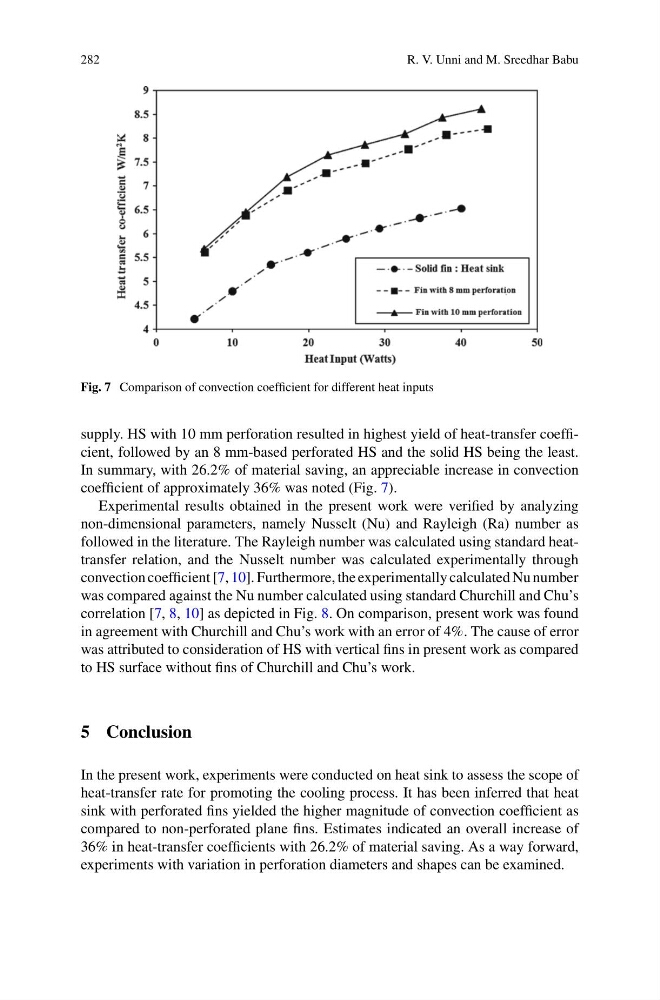
Fig. 7 Comparison of convection coefficient for different heat inputs
supply. HS with 10 mm perforation resulted in highest yield of heat-transfer coefficient, followed by an 8 mm-based perforated HS and the solid HS being the least.
In summary, with 26.2% of material saving, an appreciable increase in convection
coefficient of approximately 36% was noted (Fig. 7).
Experimental results obtained in the present work were verified by analyzing
non-dimensional parameters, namely Nusselt (Nu) and Rayleigh (Ra) number as
followed in the literature. The Rayleigh number was calculated using standard heattransfer relation, and the Nusselt number was calculated experimentally through
convection coefficient [7, 10]. Furthermore, the experimentally calculated Nu number
was compared against the Nu number calculated using standard Churchill and Chu’s
correlation [7, 8, 10] as depicted in Fig. 8. On comparison, present work was found
in agreement with Churchill and Chu’s work with an error of 4%. The cause of error
was attributed to consideration of HS with vertical fins in present work as compared
to HS surface without fins of Churchill and Chu’s work.
5 Conclusion
In the present work, experiments were conducted on heat sink to assess the scope of
heat-transfer rate for promoting the cooling process. It has been inferred that heat
sink with perforated fins yielded the higher magnitude of convection coefficient as
compared to non-perforated plane fins. Estimates indicated an overall increase of
36% in heat-transfer coefficients with 26.2% of material saving. As a way forward,
experiments with variation in perforation diameters and shapes can be examined.
R. V. Unni and M. Sreedhar Babu
Fig. 7 Comparison of convection coefficient for different heat inputs
supply. HS with 10 mm perforation resulted in highest yield of heat-transfer coefficient, followed by an 8 mm-based perforated HS and the solid HS being the least.
In summary, with 26.2% of material saving, an appreciable increase in convection
coefficient of approximately 36% was noted (Fig. 7).
Experimental results obtained in the present work were verified by analyzing
non-dimensional parameters, namely Nusselt (Nu) and Rayleigh (Ra) number as
followed in the literature. The Rayleigh number was calculated using standard heattransfer relation, and the Nusselt number was calculated experimentally through
convection coefficient [7, 10]. Furthermore, the experimentally calculated Nu number
was compared against the Nu number calculated using standard Churchill and Chu’s
correlation [7, 8, 10] as depicted in Fig. 8. On comparison, present work was found
in agreement with Churchill and Chu’s work with an error of 4%. The cause of error
was attributed to consideration of HS with vertical fins in present work as compared
to HS surface without fins of Churchill and Chu’s work.
5 Conclusion
In the present work, experiments were conducted on heat sink to assess the scope of
heat-transfer rate for promoting the cooling process. It has been inferred that heat
sink with perforated fins yielded the higher magnitude of convection coefficient as
compared to non-perforated plane fins. Estimates indicated an overall increase of
36% in heat-transfer coefficients with 26.2% of material saving. As a way forward,
experiments with variation in perforation diameters and shapes can be examined.