

180
M. V. Mansaram et al.
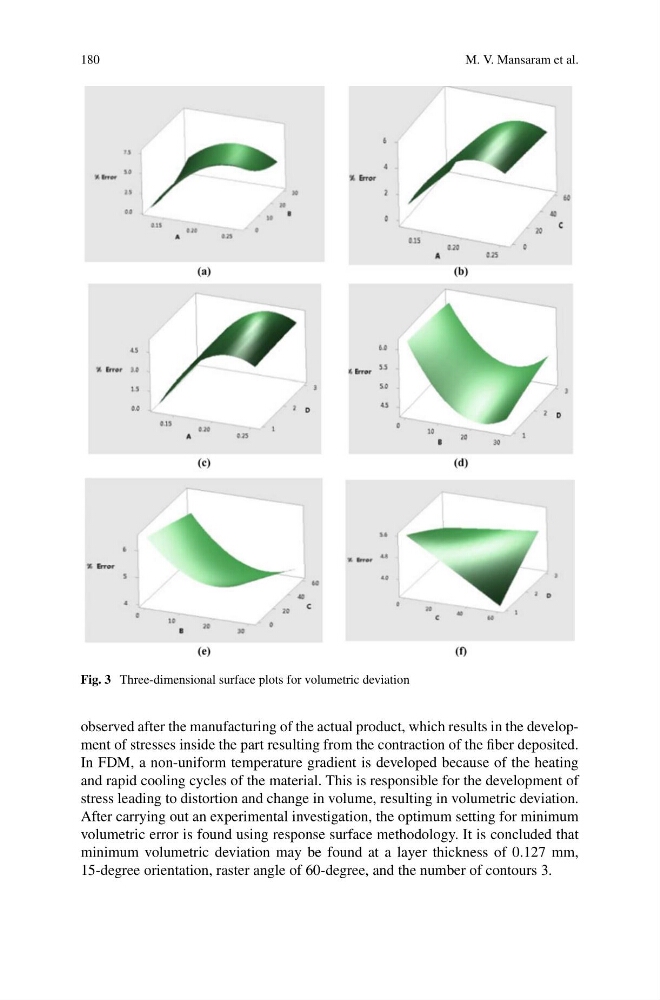
Fig. 3 Three-dimensional surface plots for volumetric deviation
observed after the manufacturing of the actual product, which results in the development of stresses inside the part resulting from the contraction of the fiber deposited.
In FDM, a non-uniform temperature gradient is developed because of the heating
and rapid cooling cycles of the material. This is responsible for the development of
stress leading to distortion and change in volume, resulting in volumetric deviation.
After carrying out an experimental investigation, the optimum setting for minimum
volumetric error is found using response surface methodology. It is concluded that
minimum volumetric deviation may be found at a layer thickness of 0.127 mm,
15-degree orientation, raster angle of 60-degree, and the number of contours 3.
M. V. Mansaram et al.
Fig. 3 Three-dimensional surface plots for volumetric deviation
observed after the manufacturing of the actual product, which results in the development of stresses inside the part resulting from the contraction of the fiber deposited.
In FDM, a non-uniform temperature gradient is developed because of the heating
and rapid cooling cycles of the material. This is responsible for the development of
stress leading to distortion and change in volume, resulting in volumetric deviation.
After carrying out an experimental investigation, the optimum setting for minimum
volumetric error is found using response surface methodology. It is concluded that
minimum volumetric deviation may be found at a layer thickness of 0.127 mm,
15-degree orientation, raster angle of 60-degree, and the number of contours 3.