

166
M. V. Mehta et al.
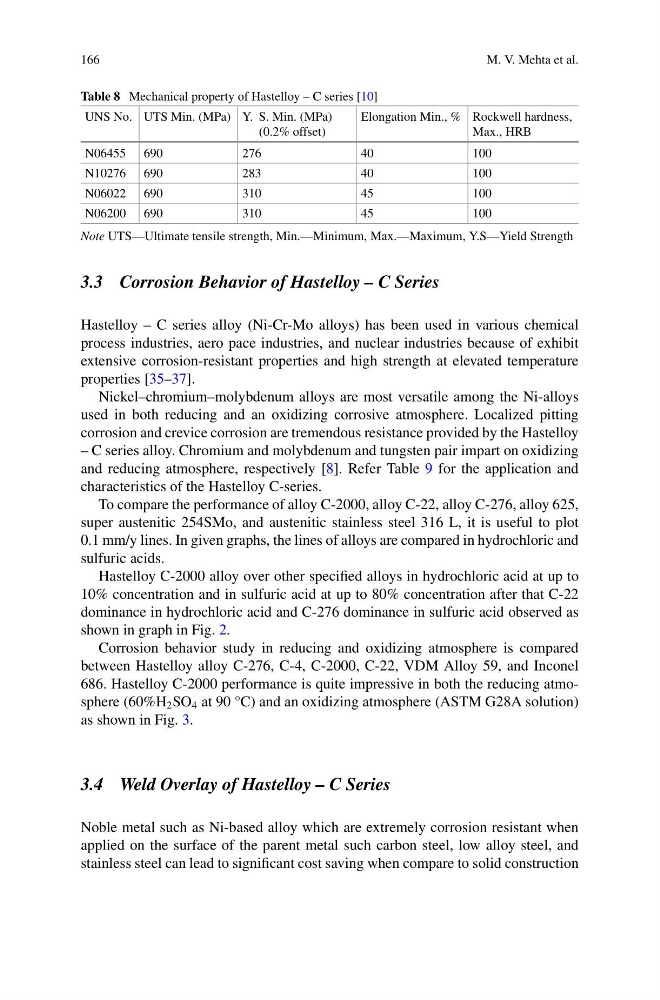
Table 8 Mechanical property of Hastelloy – C series [10]
UNS No. UTS Min. (MPa) Y. S. Min. (MPa)
(0.2% offset)
Elongation Min., % Rockwell hardness,
Max., HRB
N06455 690
276
40
100
N10276 690
283
40
100
N06022 690
310
45
100
N06200 690
310
45
100
Note UTS—Ultimate tensile strength, Min.—Minimum, Max.—Maximum, Y.S—Yield Strength
3.3 Corrosion Behavior of Hastelloy – C Series
Hastelloy – C series alloy (Ni-Cr-Mo alloys) has been used in various chemical
process industries, aero pace industries, and nuclear industries because of exhibit
extensive corrosion-resistant properties and high strength at elevated temperature
properties [35–37].
Nickel–chromium–molybdenum alloys are most versatile among the Ni-alloys
used in both reducing and an oxidizing corrosive atmosphere. Localized pitting
corrosion and crevice corrosion are tremendous resistance provided by the Hastelloy
– C series alloy. Chromium and molybdenum and tungsten pair impart on oxidizing
and reducing atmosphere, respectively [8]. Refer Table 9 for the application and
characteristics of the Hastelloy C-series.
To compare the performance of alloy C-2000, alloy C-22, alloy C-276, alloy 625,
super austenitic 254SMo, and austenitic stainless steel 316 L, it is useful to plot
0.1 mm/y lines. In given graphs, the lines of alloys are compared in hydrochloric and
sulfuric acids.
Hastelloy C-2000 alloy over other specified alloys in hydrochloric acid at up to
10% concentration and in sulfuric acid at up to 80% concentration after that C-22
dominance in hydrochloric acid and C-276 dominance in sulfuric acid observed as
shown in graph in Fig. 2.
Corrosion behavior study in reducing and oxidizing atmosphere is compared
between Hastelloy alloy C-276, C-4, C-2000, C-22, VDM Alloy 59, and Inconel
686. Hastelloy C-2000 performance is quite impressive in both the reducing atmosphere (60%H 2 SO 4 at 90 °C) and an oxidizing atmosphere (ASTM G28A solution)
as shown in Fig. 3.
3.4 Weld Overlay of Hastelloy – C Series
Noble metal such as Ni-based alloy which are extremely corrosion resistant when
applied on the surface of the parent metal such carbon steel, low alloy steel, and
stainless steel can lead to significant cost saving when compare to solid construction
M. V. Mehta et al.
Table 8 Mechanical property of Hastelloy – C series [10]
UNS No. UTS Min. (MPa) Y. S. Min. (MPa)
(0.2% offset)
Elongation Min., % Rockwell hardness,
Max., HRB
N06455 690
276
40
100
N10276 690
283
40
100
N06022 690
310
45
100
N06200 690
310
45
100
Note UTS—Ultimate tensile strength, Min.—Minimum, Max.—Maximum, Y.S—Yield Strength
3.3 Corrosion Behavior of Hastelloy – C Series
Hastelloy – C series alloy (Ni-Cr-Mo alloys) has been used in various chemical
process industries, aero pace industries, and nuclear industries because of exhibit
extensive corrosion-resistant properties and high strength at elevated temperature
properties [35–37].
Nickel–chromium–molybdenum alloys are most versatile among the Ni-alloys
used in both reducing and an oxidizing corrosive atmosphere. Localized pitting
corrosion and crevice corrosion are tremendous resistance provided by the Hastelloy
– C series alloy. Chromium and molybdenum and tungsten pair impart on oxidizing
and reducing atmosphere, respectively [8]. Refer Table 9 for the application and
characteristics of the Hastelloy C-series.
To compare the performance of alloy C-2000, alloy C-22, alloy C-276, alloy 625,
super austenitic 254SMo, and austenitic stainless steel 316 L, it is useful to plot
0.1 mm/y lines. In given graphs, the lines of alloys are compared in hydrochloric and
sulfuric acids.
Hastelloy C-2000 alloy over other specified alloys in hydrochloric acid at up to
10% concentration and in sulfuric acid at up to 80% concentration after that C-22
dominance in hydrochloric acid and C-276 dominance in sulfuric acid observed as
shown in graph in Fig. 2.
Corrosion behavior study in reducing and oxidizing atmosphere is compared
between Hastelloy alloy C-276, C-4, C-2000, C-22, VDM Alloy 59, and Inconel
686. Hastelloy C-2000 performance is quite impressive in both the reducing atmosphere (60%H 2 SO 4 at 90 °C) and an oxidizing atmosphere (ASTM G28A solution)
as shown in Fig. 3.
3.4 Weld Overlay of Hastelloy – C Series
Noble metal such as Ni-based alloy which are extremely corrosion resistant when
applied on the surface of the parent metal such carbon steel, low alloy steel, and
stainless steel can lead to significant cost saving when compare to solid construction