

118
K. Badheka and V. J. Badheka
0
3
6
9
12
15
18
21
24
27
30
Avg.
Thick
Avg.
Width
2000
2200
2400
0
3
6
9
12
15
18
21
24
27
30
33
Avg.
Thick
Avg.
Width
40
50
60
0
3
6
9
12
15
18
21
24
27
30
Avg.
Thick
Avg.
Width
10-50
10-60
10-70
Travel speed in mm/min
Tilting of Head in degree
Rotation speed in RPM
a
b
c
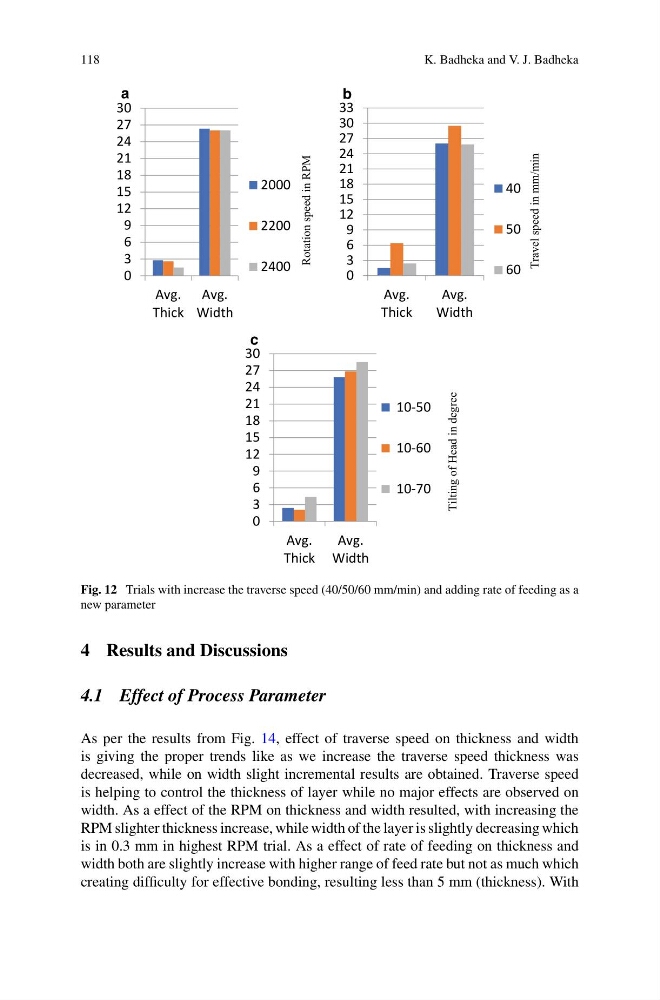
Fig. 12 Trials with increase the traverse speed (40/50/60 mm/min) and adding rate of feeding as a
new parameter
4 Results and Discussions
4.1 Effect of Process Parameter
As per the results from Fig. 14, effect of traverse speed on thickness and width
is giving the proper trends like as we increase the traverse speed thickness was
decreased, while on width slight incremental results are obtained. Traverse speed
is helping to control the thickness of layer while no major effects are observed on
width. As a effect of the RPM on thickness and width resulted, with increasing the
RPM slighter thickness increase, while width of the layer is slightly decreasing which
is in 0.3 mm in highest RPM trial. As a effect of rate of feeding on thickness and
width both are slightly increase with higher range of feed rate but not as much which
creating difficulty for effective bonding, resulting less than 5 mm (thickness). With
K. Badheka and V. J. Badheka
0
3
6
9
12
15
18
21
24
27
30
Avg.
Thick
Avg.
Width
2000
2200
2400
0
3
6
9
12
15
18
21
24
27
30
33
Avg.
Thick
Avg.
Width
40
50
60
0
3
6
9
12
15
18
21
24
27
30
Avg.
Thick
Avg.
Width
10-50
10-60
10-70
Travel speed in mm/min
Tilting of Head in degree
Rotation speed in RPM
a
b
c
Fig. 12 Trials with increase the traverse speed (40/50/60 mm/min) and adding rate of feeding as a
new parameter
4 Results and Discussions
4.1 Effect of Process Parameter
As per the results from Fig. 14, effect of traverse speed on thickness and width
is giving the proper trends like as we increase the traverse speed thickness was
decreased, while on width slight incremental results are obtained. Traverse speed
is helping to control the thickness of layer while no major effects are observed on
width. As a effect of the RPM on thickness and width resulted, with increasing the
RPM slighter thickness increase, while width of the layer is slightly decreasing which
is in 0.3 mm in highest RPM trial. As a effect of rate of feeding on thickness and
width both are slightly increase with higher range of feed rate but not as much which
creating difficulty for effective bonding, resulting less than 5 mm (thickness). With