

92
S. Kumari et al.
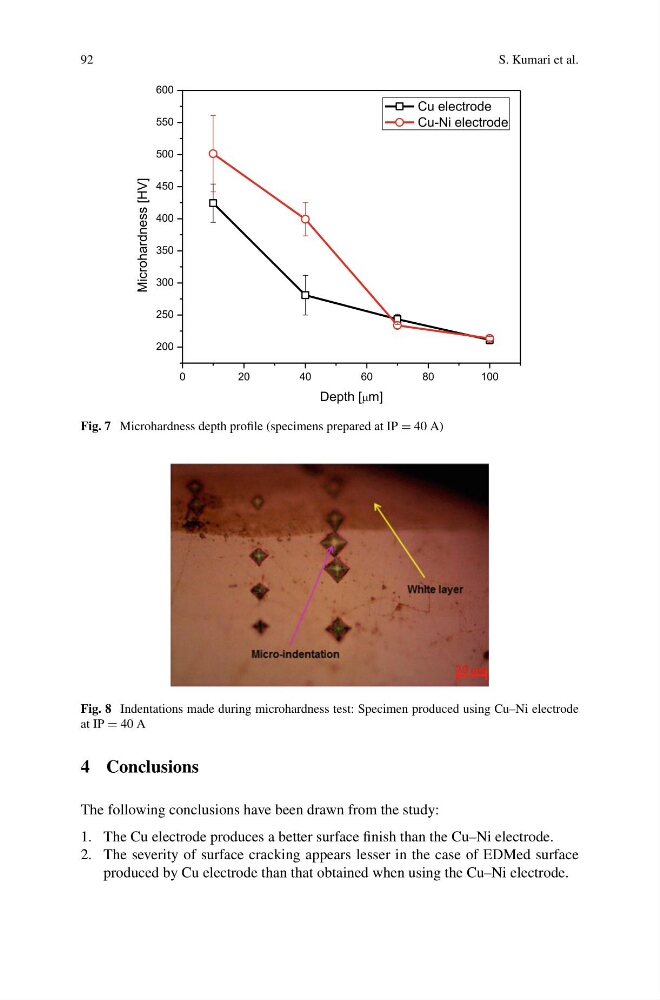
Fig. 7 Microhardness depth profile (specimens prepared at IP = 40 A)
Fig. 8 Indentations made during microhardness test: Specimen produced using Cu–Ni electrode
at IP = 40 A
4 Conclusions
The following conclusions have been drawn from the study:
1. The Cu electrode produces a better surface finish than the Cu–Ni electrode.
2. The severity of surface cracking appears lesser in the case of EDMed surface
produced by Cu electrode than that obtained when using the Cu–Ni electrode.
S. Kumari et al.
Fig. 7 Microhardness depth profile (specimens prepared at IP = 40 A)
Fig. 8 Indentations made during microhardness test: Specimen produced using Cu–Ni electrode
at IP = 40 A
4 Conclusions
The following conclusions have been drawn from the study:
1. The Cu electrode produces a better surface finish than the Cu–Ni electrode.
2. The severity of surface cracking appears lesser in the case of EDMed surface
produced by Cu electrode than that obtained when using the Cu–Ni electrode.