

increasing its volume from V 1 to 2V 1 , and if the walls of the composite system
are rigid and adiabatic,
(2a) What is the ratio of the initial and final pressures? What is the ratio of the
initial and final temperatures? What is the difference of the initial and final
entropies?
(2b) Note that “quasi-static” work and heat expressions
dW ¼ PdV
dQ ¼ TdS;
are not applicable in this case of quasi-static expansion. Give the precise
reason why they are not applicable.
(2c) What is the entropy change of the system and surroundings?
6:3 An example of infinitely slow process: (see Fig. 6.2: note, though, that both it
and Fig. 6.1 incorrectly show compartments of different volumes) Consider the
composite system of Problem 6.2 again: the piston is now connected to a
mechanism that balances the force exerted by the gas on the piston and is
equipped with work storage capacity—and the whole composite system is
submerged in a heat reservoir/bath at T 1 . Repeat the consideration of gaseous
A
thermodynamic
system
T 0 & p 0 reservoir
Work reservoir
Idealized
machine
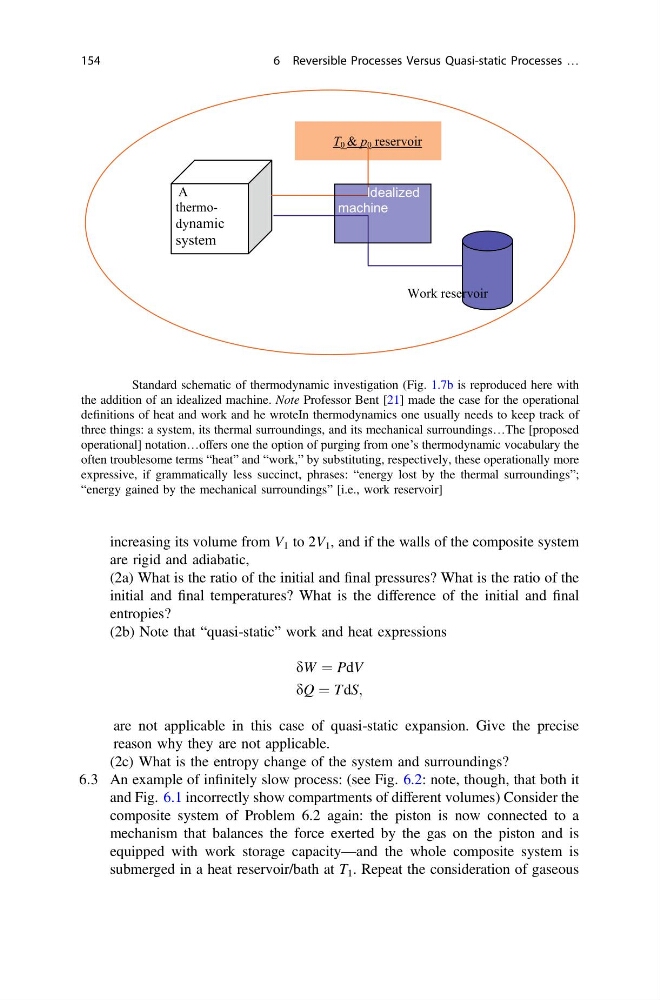
Fig. 6.6 Standard schematic of thermodynamic investigation (Fig. 1.7b is reproduced here with
the addition of an idealized machine. Note Professor Bent [21] made the case for the operational
definitions of heat and work and he wroteIn thermodynamics one usually needs to keep track of
three things: a system, its thermal surroundings, and its mechanical surroundings…The [proposed
operational] notation…offers one the option of purging from one’s thermodynamic vocabulary the
often troublesome terms “heat” and “work,” by substituting, respectively, these operationally more
expressive, if grammatically less succinct, phrases: “energy lost by the thermal surroundings”;
“energy gained by the mechanical surroundings” [i.e., work reservoir]
154
6 Reversible Processes Versus Quasi-static Processes …
are rigid and adiabatic,
(2a) What is the ratio of the initial and final pressures? What is the ratio of the
initial and final temperatures? What is the difference of the initial and final
entropies?
(2b) Note that “quasi-static” work and heat expressions
dW ¼ PdV
dQ ¼ TdS;
are not applicable in this case of quasi-static expansion. Give the precise
reason why they are not applicable.
(2c) What is the entropy change of the system and surroundings?
6:3 An example of infinitely slow process: (see Fig. 6.2: note, though, that both it
and Fig. 6.1 incorrectly show compartments of different volumes) Consider the
composite system of Problem 6.2 again: the piston is now connected to a
mechanism that balances the force exerted by the gas on the piston and is
equipped with work storage capacity—and the whole composite system is
submerged in a heat reservoir/bath at T 1 . Repeat the consideration of gaseous
A
thermodynamic
system
T 0 & p 0 reservoir
Work reservoir
Idealized
machine
Fig. 6.6 Standard schematic of thermodynamic investigation (Fig. 1.7b is reproduced here with
the addition of an idealized machine. Note Professor Bent [21] made the case for the operational
definitions of heat and work and he wroteIn thermodynamics one usually needs to keep track of
three things: a system, its thermal surroundings, and its mechanical surroundings…The [proposed
operational] notation…offers one the option of purging from one’s thermodynamic vocabulary the
often troublesome terms “heat” and “work,” by substituting, respectively, these operationally more
expressive, if grammatically less succinct, phrases: “energy lost by the thermal surroundings”;
“energy gained by the mechanical surroundings” [i.e., work reservoir]
154
6 Reversible Processes Versus Quasi-static Processes …