

5.10.5 Kelvin’s Energy Principle
What about the self-evident truth of the universal dissipation of mechanical energy.
There is no doubt that mechanical energy dissipates spontaneously. The key claim
of universal dissipation is Kelvin’s second general conclusion
Any restoration of mechanical energy [of a given amount], without [the expenditure of]
more than an equivalent [amount] of [mechanical energy resulting in its] dissipation, is
impossible in inanimate material processes…
That is, restoration or creation of mechanical energy (or, energy of certain “grade”)
of a given amount requires the expenditure of mechanical energy (or, the energy of
the same grade or higher grade) of a greater amount. Since energy is conserved and
no energy is ever lost or spent, the expenditure of a given amount of energy can
only be understood in terms of occurrence in the form-change of the given amount
of energy.
The above example of reversible mixing involves no change in forms of oxygen
and nitrogen, both of which remain at the same temperature; there is, thus, no
energy expended in the creation (or, restoration) of mechanical energy. Kelvin’s
second general conclusion is false: mechanical energy dissipates spontaneously, not
universally.
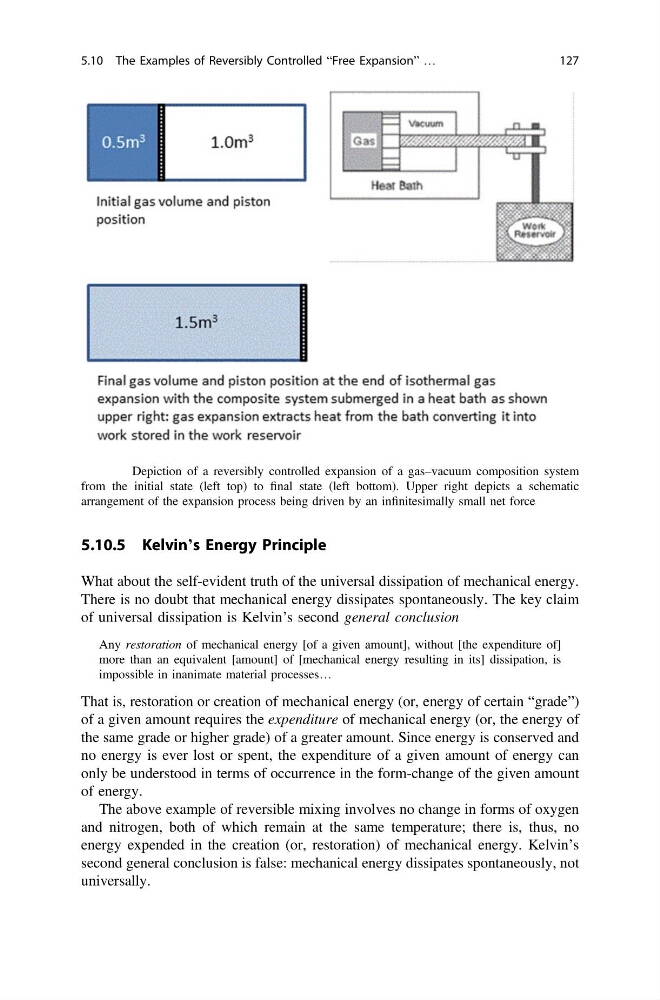
Fig. 5.8 Depiction of a reversibly controlled expansion of a gas–vacuum composition system
from the initial state (left top) to final state (left bottom). Upper right depicts a schematic
arrangement of the expansion process being driven by an infinitesimally small net force
5.10 The Examples of Reversibly Controlled “Free Expansion” …
127
What about the self-evident truth of the universal dissipation of mechanical energy.
There is no doubt that mechanical energy dissipates spontaneously. The key claim
of universal dissipation is Kelvin’s second general conclusion
Any restoration of mechanical energy [of a given amount], without [the expenditure of]
more than an equivalent [amount] of [mechanical energy resulting in its] dissipation, is
impossible in inanimate material processes…
That is, restoration or creation of mechanical energy (or, energy of certain “grade”)
of a given amount requires the expenditure of mechanical energy (or, the energy of
the same grade or higher grade) of a greater amount. Since energy is conserved and
no energy is ever lost or spent, the expenditure of a given amount of energy can
only be understood in terms of occurrence in the form-change of the given amount
of energy.
The above example of reversible mixing involves no change in forms of oxygen
and nitrogen, both of which remain at the same temperature; there is, thus, no
energy expended in the creation (or, restoration) of mechanical energy. Kelvin’s
second general conclusion is false: mechanical energy dissipates spontaneously, not
universally.
Fig. 5.8 Depiction of a reversibly controlled expansion of a gas–vacuum composition system
from the initial state (left top) to final state (left bottom). Upper right depicts a schematic
arrangement of the expansion process being driven by an infinitesimally small net force
5.10 The Examples of Reversibly Controlled “Free Expansion” …
127