

14
1 Introduction
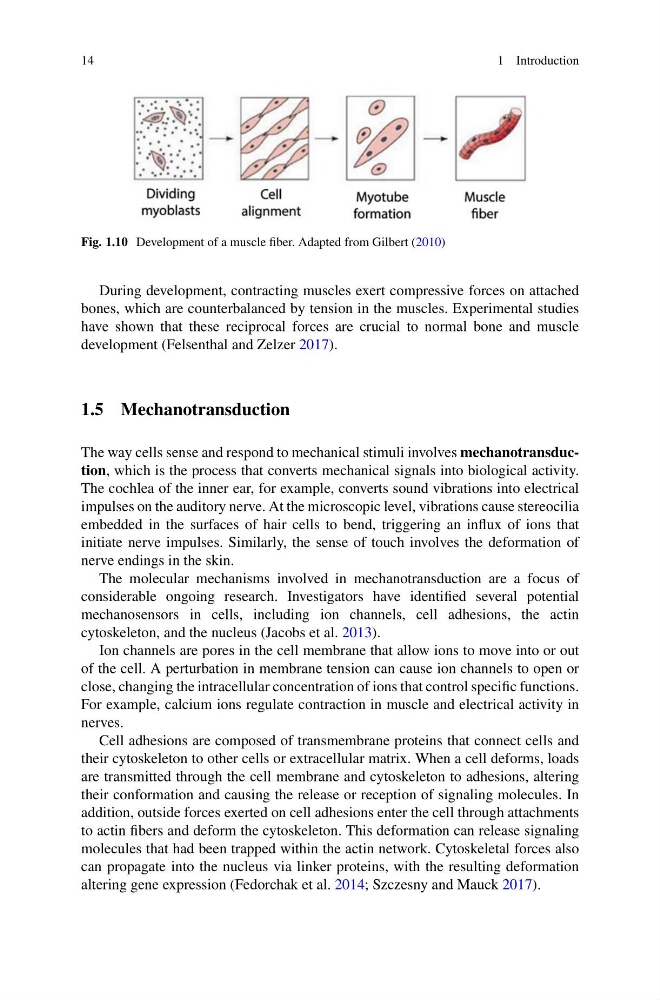
Fig. 1.10 Development of a muscle fiber. Adapted from Gilbert (2010)
During development, contracting muscles exert compressive forces on attached
bones, which are counterbalanced by tension in the muscles. Experimental studies
have shown that these reciprocal forces are crucial to normal bone and muscle
development (Felsenthal and Zelzer 2017).
1.5 Mechanotransduction
The way cells sense and respond to mechanical stimuli involves mechanotransduction, which is the process that converts mechanical signals into biological activity.
The cochlea of the inner ear, for example, converts sound vibrations into electrical
impulses on the auditory nerve. At the microscopic level, vibrations cause stereocilia
embedded in the surfaces of hair cells to bend, triggering an influx of ions that
initiate nerve impulses. Similarly, the sense of touch involves the deformation of
nerve endings in the skin.
The molecular mechanisms involved in mechanotransduction are a focus of
considerable ongoing research. Investigators have identified several potential
mechanosensors in cells, including ion channels, cell adhesions, the actin
cytoskeleton, and the nucleus (Jacobs et al. 2013).
Ion channels are pores in the cell membrane that allow ions to move into or out
of the cell. A perturbation in membrane tension can cause ion channels to open or
close, changing the intracellular concentration of ions that control specific functions.
For example, calcium ions regulate contraction in muscle and electrical activity in
nerves.
Cell adhesions are composed of transmembrane proteins that connect cells and
their cytoskeleton to other cells or extracellular matrix. When a cell deforms, loads
are transmitted through the cell membrane and cytoskeleton to adhesions, altering
their conformation and causing the release or reception of signaling molecules. In
addition, outside forces exerted on cell adhesions enter the cell through attachments
to actin fibers and deform the cytoskeleton. This deformation can release signaling
molecules that had been trapped within the actin network. Cytoskeletal forces also
can propagate into the nucleus via linker proteins, with the resulting deformation
altering gene expression (Fedorchak et al. 2014; Szczesny and Mauck 2017).
1 Introduction
Fig. 1.10 Development of a muscle fiber. Adapted from Gilbert (2010)
During development, contracting muscles exert compressive forces on attached
bones, which are counterbalanced by tension in the muscles. Experimental studies
have shown that these reciprocal forces are crucial to normal bone and muscle
development (Felsenthal and Zelzer 2017).
1.5 Mechanotransduction
The way cells sense and respond to mechanical stimuli involves mechanotransduction, which is the process that converts mechanical signals into biological activity.
The cochlea of the inner ear, for example, converts sound vibrations into electrical
impulses on the auditory nerve. At the microscopic level, vibrations cause stereocilia
embedded in the surfaces of hair cells to bend, triggering an influx of ions that
initiate nerve impulses. Similarly, the sense of touch involves the deformation of
nerve endings in the skin.
The molecular mechanisms involved in mechanotransduction are a focus of
considerable ongoing research. Investigators have identified several potential
mechanosensors in cells, including ion channels, cell adhesions, the actin
cytoskeleton, and the nucleus (Jacobs et al. 2013).
Ion channels are pores in the cell membrane that allow ions to move into or out
of the cell. A perturbation in membrane tension can cause ion channels to open or
close, changing the intracellular concentration of ions that control specific functions.
For example, calcium ions regulate contraction in muscle and electrical activity in
nerves.
Cell adhesions are composed of transmembrane proteins that connect cells and
their cytoskeleton to other cells or extracellular matrix. When a cell deforms, loads
are transmitted through the cell membrane and cytoskeleton to adhesions, altering
their conformation and causing the release or reception of signaling molecules. In
addition, outside forces exerted on cell adhesions enter the cell through attachments
to actin fibers and deform the cytoskeleton. This deformation can release signaling
molecules that had been trapped within the actin network. Cytoskeletal forces also
can propagate into the nucleus via linker proteins, with the resulting deformation
altering gene expression (Fedorchak et al. 2014; Szczesny and Mauck 2017).