

1 Foundation of Fluid Mechanics
53
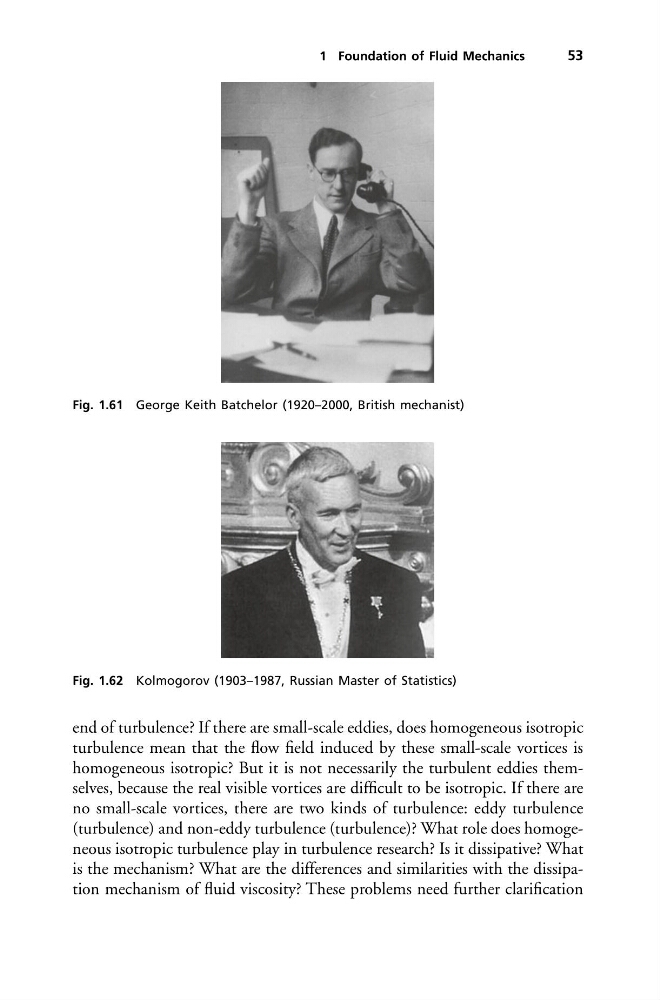
Fig. 1.61 George Keith Batchelor (1920–2000, British mechanist)
Fig. 1.62 Kolmogorov (1903–1987, Russian Master of Statistics)
end of turbulence? If there are small-scale eddies, does homogeneous isotropic
turbulence mean that the flow field induced by these small-scale vortices is
homogeneous isotropic? But it is not necessarily the turbulent eddies themselves, because the real visible vortices are difficult to be isotropic. If there are
no small-scale vortices, there are two kinds of turbulence: eddy turbulence
(turbulence) and non-eddy turbulence (turbulence)? What role does homogeneous isotropic turbulence play in turbulence research? Is it dissipative? What
is the mechanism? What are the differences and similarities with the dissipation mechanism of fluid viscosity? These problems need further clarification
53
Fig. 1.61 George Keith Batchelor (1920–2000, British mechanist)
Fig. 1.62 Kolmogorov (1903–1987, Russian Master of Statistics)
end of turbulence? If there are small-scale eddies, does homogeneous isotropic
turbulence mean that the flow field induced by these small-scale vortices is
homogeneous isotropic? But it is not necessarily the turbulent eddies themselves, because the real visible vortices are difficult to be isotropic. If there are
no small-scale vortices, there are two kinds of turbulence: eddy turbulence
(turbulence) and non-eddy turbulence (turbulence)? What role does homogeneous isotropic turbulence play in turbulence research? Is it dissipative? What
is the mechanism? What are the differences and similarities with the dissipation mechanism of fluid viscosity? These problems need further clarification