

7 Flight Mystery and Aerodynamic Principles
571
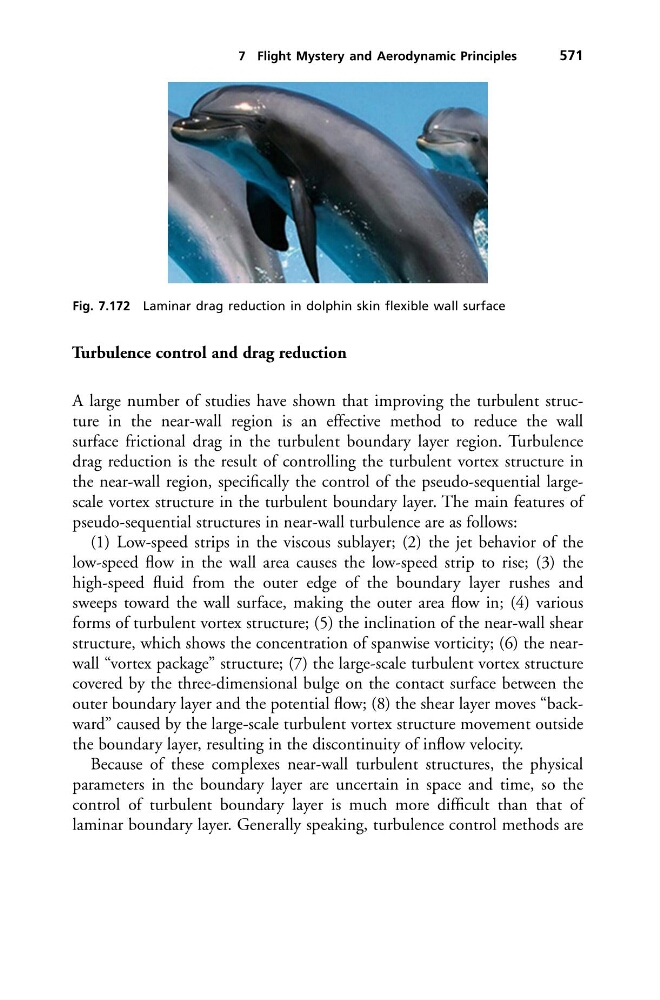
Fig. 7.172 Laminar drag reduction in dolphin skin flexible wall surface
Turbulence control and drag reduction
A large number of studies have shown that improving the turbulent structure in the near-wall region is an effective method to reduce the wall
surface frictional drag in the turbulent boundary layer region. Turbulence
drag reduction is the result of controlling the turbulent vortex structure in
the near-wall region, specifically the control of the pseudo-sequential largescale vortex structure in the turbulent boundary layer. The main features of
pseudo-sequential structures in near-wall turbulence are as follows:
(1) Low-speed strips in the viscous sublayer; (2) the jet behavior of the
low-speed flow in the wall area causes the low-speed strip to rise; (3) the
high-speed fluid from the outer edge of the boundary layer rushes and
sweeps toward the wall surface, making the outer area flow in; (4) various
forms of turbulent vortex structure; (5) the inclination of the near-wall shear
structure, which shows the concentration of spanwise vorticity; (6) the nearwall “vortex package” structure; (7) the large-scale turbulent vortex structure
covered by the three-dimensional bulge on the contact surface between the
outer boundary layer and the potential flow; (8) the shear layer moves “backward” caused by the large-scale turbulent vortex structure movement outside
the boundary layer, resulting in the discontinuity of inflow velocity.
Because of these complexes near-wall turbulent structures, the physical
parameters in the boundary layer are uncertain in space and time, so the
control of turbulent boundary layer is much more difficult than that of
laminar boundary layer. Generally speaking, turbulence control methods are
571
Fig. 7.172 Laminar drag reduction in dolphin skin flexible wall surface
Turbulence control and drag reduction
A large number of studies have shown that improving the turbulent structure in the near-wall region is an effective method to reduce the wall
surface frictional drag in the turbulent boundary layer region. Turbulence
drag reduction is the result of controlling the turbulent vortex structure in
the near-wall region, specifically the control of the pseudo-sequential largescale vortex structure in the turbulent boundary layer. The main features of
pseudo-sequential structures in near-wall turbulence are as follows:
(1) Low-speed strips in the viscous sublayer; (2) the jet behavior of the
low-speed flow in the wall area causes the low-speed strip to rise; (3) the
high-speed fluid from the outer edge of the boundary layer rushes and
sweeps toward the wall surface, making the outer area flow in; (4) various
forms of turbulent vortex structure; (5) the inclination of the near-wall shear
structure, which shows the concentration of spanwise vorticity; (6) the nearwall “vortex package” structure; (7) the large-scale turbulent vortex structure
covered by the three-dimensional bulge on the contact surface between the
outer boundary layer and the potential flow; (8) the shear layer moves “backward” caused by the large-scale turbulent vortex structure movement outside
the boundary layer, resulting in the discontinuity of inflow velocity.
Because of these complexes near-wall turbulent structures, the physical
parameters in the boundary layer are uncertain in space and time, so the
control of turbulent boundary layer is much more difficult than that of
laminar boundary layer. Generally speaking, turbulence control methods are