

464
P. Liu
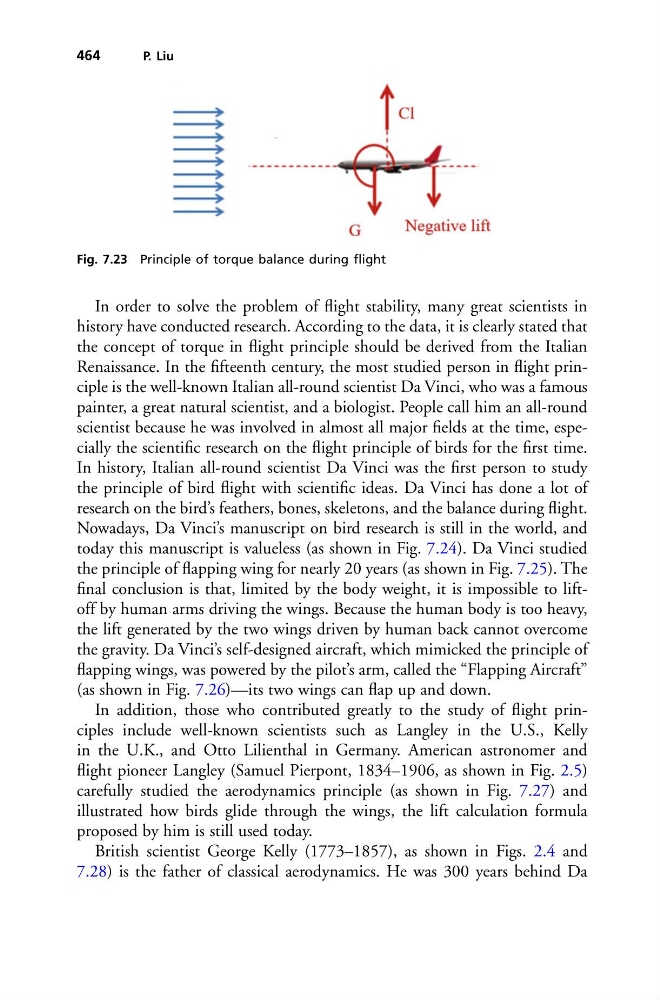
Fig. 7.23 Principle of torque balance during flight
In order to solve the problem of flight stability, many great scientists in
history have conducted research. According to the data, it is clearly stated that
the concept of torque in flight principle should be derived from the Italian
Renaissance. In the fifteenth century, the most studied person in flight principle is the well-known Italian all-round scientist Da Vinci, who was a famous
painter, a great natural scientist, and a biologist. People call him an all-round
scientist because he was involved in almost all major fields at the time, especially the scientific research on the flight principle of birds for the first time.
In history, Italian all-round scientist Da Vinci was the first person to study
the principle of bird flight with scientific ideas. Da Vinci has done a lot of
research on the bird’s feathers, bones, skeletons, and the balance during flight.
Nowadays, Da Vinci’s manuscript on bird research is still in the world, and
today this manuscript is valueless (as shown in Fig. 7.24). Da Vinci studied
the principle of flapping wing for nearly 20 years (as shown in Fig. 7.25). The
final conclusion is that, limited by the body weight, it is impossible to liftoff by human arms driving the wings. Because the human body is too heavy,
the lift generated by the two wings driven by human back cannot overcome
the gravity. Da Vinci’s self-designed aircraft, which mimicked the principle of
flapping wings, was powered by the pilot’s arm, called the “Flapping Aircraft”
(as shown in Fig. 7.26)—its two wings can flap up and down.
In addition, those who contributed greatly to the study of flight principles include well-known scientists such as Langley in the U.S., Kelly
in the U.K., and Otto Lilienthal in Germany. American astronomer and
flight pioneer Langley (Samuel Pierpont, 1834–1906, as shown in Fig. 2.5)
carefully studied the aerodynamics principle (as shown in Fig. 7.27) and
illustrated how birds glide through the wings, the lift calculation formula
proposed by him is still used today.
British scientist George Kelly (1773–1857), as shown in Figs. 2.4 and
7.28) is the father of classical aerodynamics. He was 300 years behind Da
P. Liu
Fig. 7.23 Principle of torque balance during flight
In order to solve the problem of flight stability, many great scientists in
history have conducted research. According to the data, it is clearly stated that
the concept of torque in flight principle should be derived from the Italian
Renaissance. In the fifteenth century, the most studied person in flight principle is the well-known Italian all-round scientist Da Vinci, who was a famous
painter, a great natural scientist, and a biologist. People call him an all-round
scientist because he was involved in almost all major fields at the time, especially the scientific research on the flight principle of birds for the first time.
In history, Italian all-round scientist Da Vinci was the first person to study
the principle of bird flight with scientific ideas. Da Vinci has done a lot of
research on the bird’s feathers, bones, skeletons, and the balance during flight.
Nowadays, Da Vinci’s manuscript on bird research is still in the world, and
today this manuscript is valueless (as shown in Fig. 7.24). Da Vinci studied
the principle of flapping wing for nearly 20 years (as shown in Fig. 7.25). The
final conclusion is that, limited by the body weight, it is impossible to liftoff by human arms driving the wings. Because the human body is too heavy,
the lift generated by the two wings driven by human back cannot overcome
the gravity. Da Vinci’s self-designed aircraft, which mimicked the principle of
flapping wings, was powered by the pilot’s arm, called the “Flapping Aircraft”
(as shown in Fig. 7.26)—its two wings can flap up and down.
In addition, those who contributed greatly to the study of flight principles include well-known scientists such as Langley in the U.S., Kelly
in the U.K., and Otto Lilienthal in Germany. American astronomer and
flight pioneer Langley (Samuel Pierpont, 1834–1906, as shown in Fig. 2.5)
carefully studied the aerodynamics principle (as shown in Fig. 7.27) and
illustrated how birds glide through the wings, the lift calculation formula
proposed by him is still used today.
British scientist George Kelly (1773–1857), as shown in Figs. 2.4 and
7.28) is the father of classical aerodynamics. He was 300 years behind Da