

7 Flight Mystery and Aerodynamic Principles
459
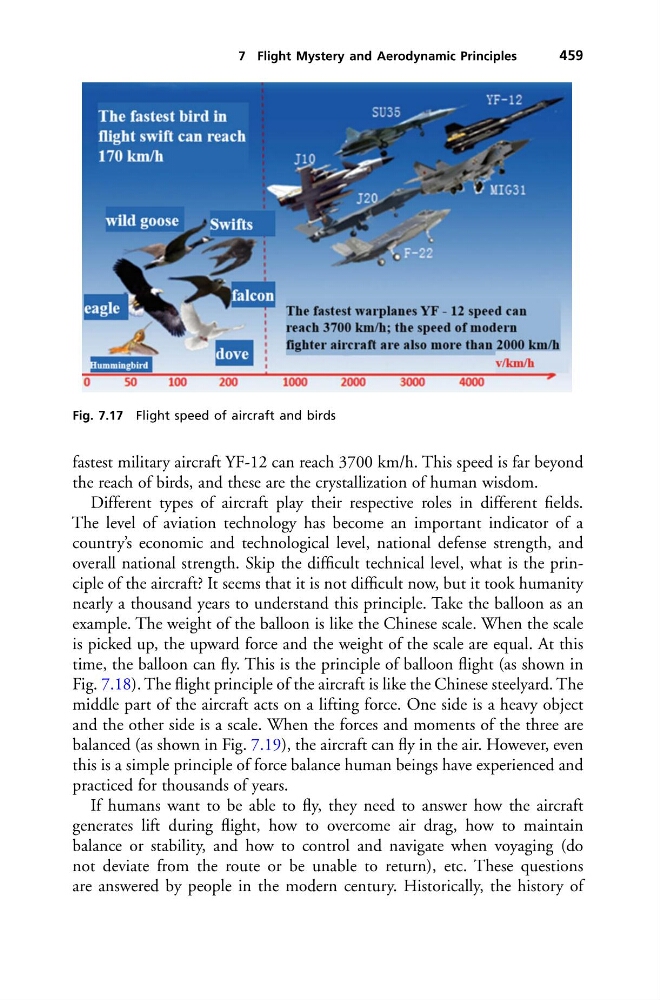
Fig. 7.17 Flight speed of aircraft and birds
fastest military aircraft YF-12 can reach 3700 km/h. This speed is far beyond
the reach of birds, and these are the crystallization of human wisdom.
Different types of aircraft play their respective roles in different fields.
The level of aviation technology has become an important indicator of a
country’s economic and technological level, national defense strength, and
overall national strength. Skip the difficult technical level, what is the principle of the aircraft? It seems that it is not difficult now, but it took humanity
nearly a thousand years to understand this principle. Take the balloon as an
example. The weight of the balloon is like the Chinese scale. When the scale
is picked up, the upward force and the weight of the scale are equal. At this
time, the balloon can fly. This is the principle of balloon flight (as shown in
Fig. 7.18). The flight principle of the aircraft is like the Chinese steelyard. The
middle part of the aircraft acts on a lifting force. One side is a heavy object
and the other side is a scale. When the forces and moments of the three are
balanced (as shown in Fig. 7.19), the aircraft can fly in the air. However, even
this is a simple principle of force balance human beings have experienced and
practiced for thousands of years.
If humans want to be able to fly, they need to answer how the aircraft
generates lift during flight, how to overcome air drag, how to maintain
balance or stability, and how to control and navigate when voyaging (do
not deviate from the route or be unable to return), etc. These questions
are answered by people in the modern century. Historically, the history of
459
Fig. 7.17 Flight speed of aircraft and birds
fastest military aircraft YF-12 can reach 3700 km/h. This speed is far beyond
the reach of birds, and these are the crystallization of human wisdom.
Different types of aircraft play their respective roles in different fields.
The level of aviation technology has become an important indicator of a
country’s economic and technological level, national defense strength, and
overall national strength. Skip the difficult technical level, what is the principle of the aircraft? It seems that it is not difficult now, but it took humanity
nearly a thousand years to understand this principle. Take the balloon as an
example. The weight of the balloon is like the Chinese scale. When the scale
is picked up, the upward force and the weight of the scale are equal. At this
time, the balloon can fly. This is the principle of balloon flight (as shown in
Fig. 7.18). The flight principle of the aircraft is like the Chinese steelyard. The
middle part of the aircraft acts on a lifting force. One side is a heavy object
and the other side is a scale. When the forces and moments of the three are
balanced (as shown in Fig. 7.19), the aircraft can fly in the air. However, even
this is a simple principle of force balance human beings have experienced and
practiced for thousands of years.
If humans want to be able to fly, they need to answer how the aircraft
generates lift during flight, how to overcome air drag, how to maintain
balance or stability, and how to control and navigate when voyaging (do
not deviate from the route or be unable to return), etc. These questions
are answered by people in the modern century. Historically, the history of