

5 Experimental Fluid Mechanics
379
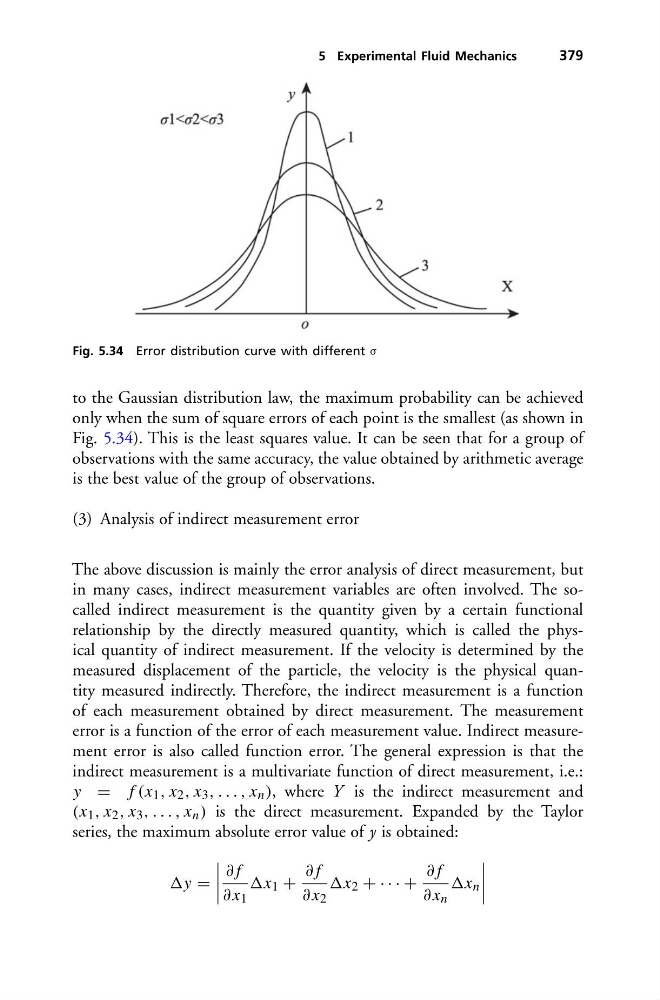
Fig. 5.34 Error distribution curve with different σ
to the Gaussian distribution law, the maximum probability can be achieved
only when the sum of square errors of each point is the smallest (as shown in
Fig. 5.34). This is the least squares value. It can be seen that for a group of
observations with the same accuracy, the value obtained by arithmetic average
is the best value of the group of observations.
(3) Analysis of indirect measurement error
The above discussion is mainly the error analysis of direct measurement, but
in many cases, indirect measurement variables are often involved. The socalled indirect measurement is the quantity given by a certain functional
relationship by the directly measured quantity, which is called the physical quantity of indirect measurement. If the velocity is determined by the
measured displacement of the particle, the velocity is the physical quantity measured indirectly. Therefore, the indirect measurement is a function
of each measurement obtained by direct measurement. The measurement
error is a function of the error of each measurement value. Indirect measurement error is also called function error. The general expression is that the
indirect measurement is a multivariate function of direct measurement, i.e.:
y = f (x 1 , x 2 , x 3 , . . . , x n ), where Y is the indirect measurement and
(x 1 , x 2 , x 3 , . . . , x n ) is the direct measurement. Expanded by the Taylor
series, the maximum absolute error value of y is obtained:
y =
∂ f
∂ x 1
x 1 +
∂ f
∂ x 2
x 2 + · · · +
∂ f
∂ x n
x n
379
Fig. 5.34 Error distribution curve with different σ
to the Gaussian distribution law, the maximum probability can be achieved
only when the sum of square errors of each point is the smallest (as shown in
Fig. 5.34). This is the least squares value. It can be seen that for a group of
observations with the same accuracy, the value obtained by arithmetic average
is the best value of the group of observations.
(3) Analysis of indirect measurement error
The above discussion is mainly the error analysis of direct measurement, but
in many cases, indirect measurement variables are often involved. The socalled indirect measurement is the quantity given by a certain functional
relationship by the directly measured quantity, which is called the physical quantity of indirect measurement. If the velocity is determined by the
measured displacement of the particle, the velocity is the physical quantity measured indirectly. Therefore, the indirect measurement is a function
of each measurement obtained by direct measurement. The measurement
error is a function of the error of each measurement value. Indirect measurement error is also called function error. The general expression is that the
indirect measurement is a multivariate function of direct measurement, i.e.:
y = f (x 1 , x 2 , x 3 , . . . , x n ), where Y is the indirect measurement and
(x 1 , x 2 , x 3 , . . . , x n ) is the direct measurement. Expanded by the Taylor
series, the maximum absolute error value of y is obtained:
y =
∂ f
∂ x 1
x 1 +
∂ f
∂ x 2
x 2 + · · · +
∂ f
∂ x n
x n