

5 Experimental Fluid Mechanics
365
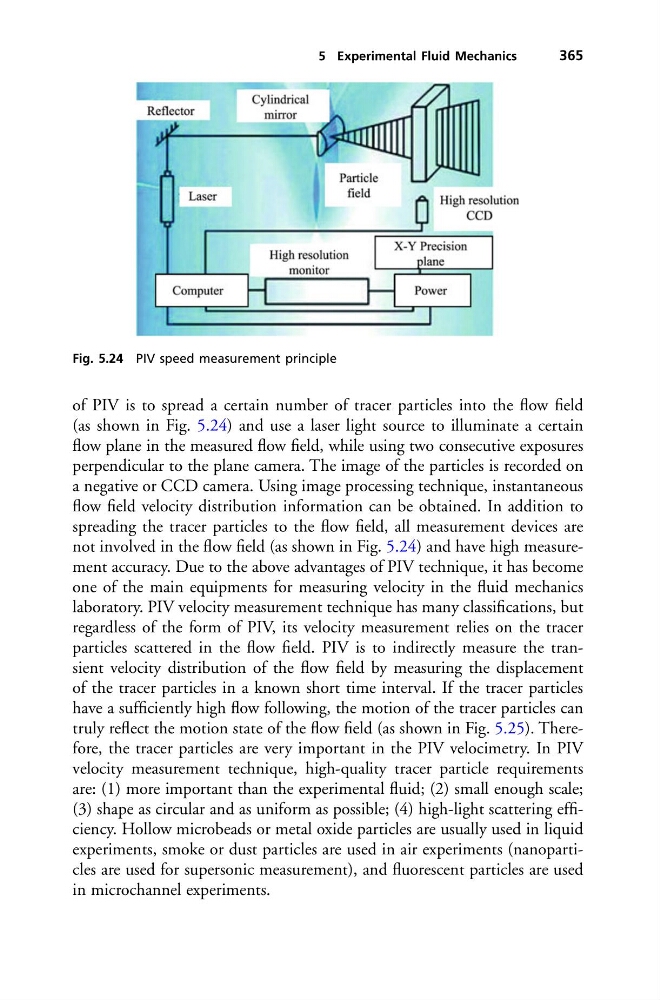
Fig. 5.24 PIV speed measurement principle
of PIV is to spread a certain number of tracer particles into the flow field
(as shown in Fig. 5.24) and use a laser light source to illuminate a certain
flow plane in the measured flow field, while using two consecutive exposures
perpendicular to the plane camera. The image of the particles is recorded on
a negative or CCD camera. Using image processing technique, instantaneous
flow field velocity distribution information can be obtained. In addition to
spreading the tracer particles to the flow field, all measurement devices are
not involved in the flow field (as shown in Fig. 5.24) and have high measurement accuracy. Due to the above advantages of PIV technique, it has become
one of the main equipments for measuring velocity in the fluid mechanics
laboratory. PIV velocity measurement technique has many classifications, but
regardless of the form of PIV, its velocity measurement relies on the tracer
particles scattered in the flow field. PIV is to indirectly measure the transient velocity distribution of the flow field by measuring the displacement
of the tracer particles in a known short time interval. If the tracer particles
have a sufficiently high flow following, the motion of the tracer particles can
truly reflect the motion state of the flow field (as shown in Fig. 5.25). Therefore, the tracer particles are very important in the PIV velocimetry. In PIV
velocity measurement technique, high-quality tracer particle requirements
are: (1) more important than the experimental fluid; (2) small enough scale;
(3) shape as circular and as uniform as possible; (4) high-light scattering efficiency. Hollow microbeads or metal oxide particles are usually used in liquid
experiments, smoke or dust particles are used in air experiments (nanoparticles are used for supersonic measurement), and fluorescent particles are used
in microchannel experiments.
365
Fig. 5.24 PIV speed measurement principle
of PIV is to spread a certain number of tracer particles into the flow field
(as shown in Fig. 5.24) and use a laser light source to illuminate a certain
flow plane in the measured flow field, while using two consecutive exposures
perpendicular to the plane camera. The image of the particles is recorded on
a negative or CCD camera. Using image processing technique, instantaneous
flow field velocity distribution information can be obtained. In addition to
spreading the tracer particles to the flow field, all measurement devices are
not involved in the flow field (as shown in Fig. 5.24) and have high measurement accuracy. Due to the above advantages of PIV technique, it has become
one of the main equipments for measuring velocity in the fluid mechanics
laboratory. PIV velocity measurement technique has many classifications, but
regardless of the form of PIV, its velocity measurement relies on the tracer
particles scattered in the flow field. PIV is to indirectly measure the transient velocity distribution of the flow field by measuring the displacement
of the tracer particles in a known short time interval. If the tracer particles
have a sufficiently high flow following, the motion of the tracer particles can
truly reflect the motion state of the flow field (as shown in Fig. 5.25). Therefore, the tracer particles are very important in the PIV velocimetry. In PIV
velocity measurement technique, high-quality tracer particle requirements
are: (1) more important than the experimental fluid; (2) small enough scale;
(3) shape as circular and as uniform as possible; (4) high-light scattering efficiency. Hollow microbeads or metal oxide particles are usually used in liquid
experiments, smoke or dust particles are used in air experiments (nanoparticles are used for supersonic measurement), and fluorescent particles are used
in microchannel experiments.