

216
P. Liu
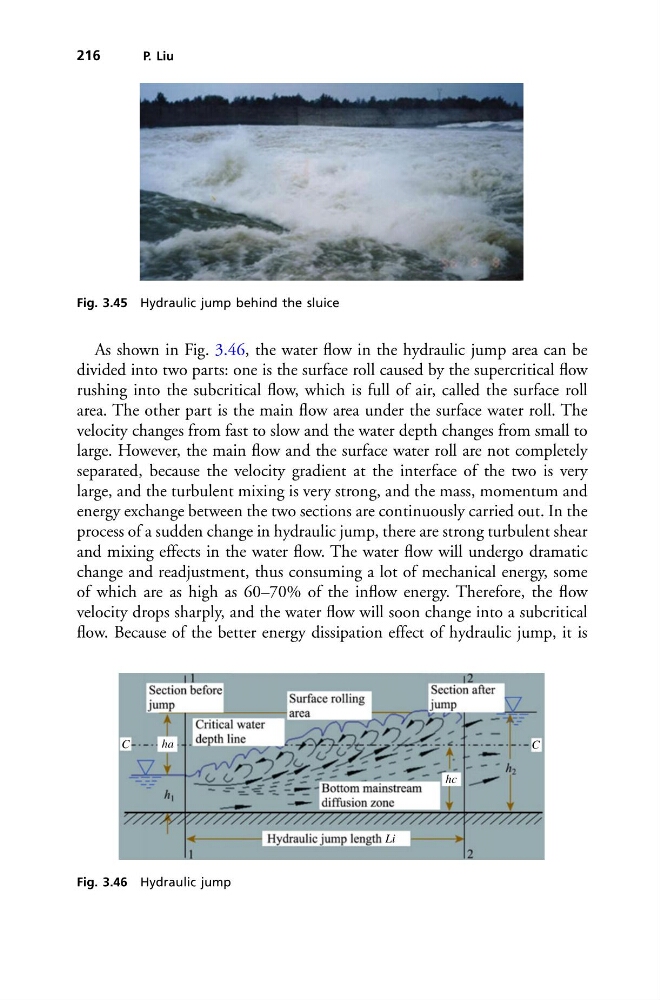
Fig. 3.45 Hydraulic jump behind the sluice
As shown in Fig. 3.46, the water flow in the hydraulic jump area can be
divided into two parts: one is the surface roll caused by the supercritical flow
rushing into the subcritical flow, which is full of air, called the surface roll
area. The other part is the main flow area under the surface water roll. The
velocity changes from fast to slow and the water depth changes from small to
large. However, the main flow and the surface water roll are not completely
separated, because the velocity gradient at the interface of the two is very
large, and the turbulent mixing is very strong, and the mass, momentum and
energy exchange between the two sections are continuously carried out. In the
process of a sudden change in hydraulic jump, there are strong turbulent shear
and mixing effects in the water flow. The water flow will undergo dramatic
change and readjustment, thus consuming a lot of mechanical energy, some
of which are as high as 60–70% of the inflow energy. Therefore, the flow
velocity drops sharply, and the water flow will soon change into a subcritical
flow. Because of the better energy dissipation effect of hydraulic jump, it is
C
ha
Li
hc
C
Fig. 3.46 Hydraulic jump
P. Liu
Fig. 3.45 Hydraulic jump behind the sluice
As shown in Fig. 3.46, the water flow in the hydraulic jump area can be
divided into two parts: one is the surface roll caused by the supercritical flow
rushing into the subcritical flow, which is full of air, called the surface roll
area. The other part is the main flow area under the surface water roll. The
velocity changes from fast to slow and the water depth changes from small to
large. However, the main flow and the surface water roll are not completely
separated, because the velocity gradient at the interface of the two is very
large, and the turbulent mixing is very strong, and the mass, momentum and
energy exchange between the two sections are continuously carried out. In the
process of a sudden change in hydraulic jump, there are strong turbulent shear
and mixing effects in the water flow. The water flow will undergo dramatic
change and readjustment, thus consuming a lot of mechanical energy, some
of which are as high as 60–70% of the inflow energy. Therefore, the flow
velocity drops sharply, and the water flow will soon change into a subcritical
flow. Because of the better energy dissipation effect of hydraulic jump, it is
C
ha
Li
hc
C
Fig. 3.46 Hydraulic jump