

212
P. Liu
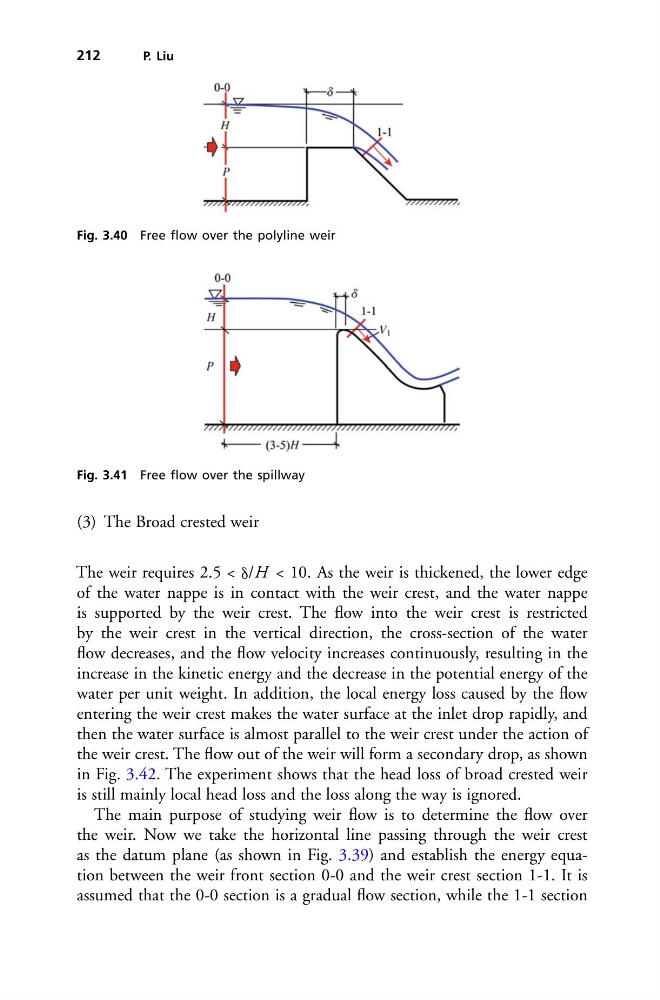
Fig. 3.40 Free flow over the polyline weir
Fig. 3.41 Free flow over the spillway
(3) The Broad crested weir
The weir requires 2.5 < δ/H < 10. As the weir is thickened, the lower edge
of the water nappe is in contact with the weir crest, and the water nappe
is supported by the weir crest. The flow into the weir crest is restricted
by the weir crest in the vertical direction, the cross-section of the water
flow decreases, and the flow velocity increases continuously, resulting in the
increase in the kinetic energy and the decrease in the potential energy of the
water per unit weight. In addition, the local energy loss caused by the flow
entering the weir crest makes the water surface at the inlet drop rapidly, and
then the water surface is almost parallel to the weir crest under the action of
the weir crest. The flow out of the weir will form a secondary drop, as shown
in Fig. 3.42. The experiment shows that the head loss of broad crested weir
is still mainly local head loss and the loss along the way is ignored.
The main purpose of studying weir flow is to determine the flow over
the weir. Now we take the horizontal line passing through the weir crest
as the datum plane (as shown in Fig. 3.39) and establish the energy equation between the weir front section 0-0 and the weir crest section 1-1. It is
assumed that the 0-0 section is a gradual flow section, while the 1-1 section
P. Liu
Fig. 3.40 Free flow over the polyline weir
Fig. 3.41 Free flow over the spillway
(3) The Broad crested weir
The weir requires 2.5 < δ/H < 10. As the weir is thickened, the lower edge
of the water nappe is in contact with the weir crest, and the water nappe
is supported by the weir crest. The flow into the weir crest is restricted
by the weir crest in the vertical direction, the cross-section of the water
flow decreases, and the flow velocity increases continuously, resulting in the
increase in the kinetic energy and the decrease in the potential energy of the
water per unit weight. In addition, the local energy loss caused by the flow
entering the weir crest makes the water surface at the inlet drop rapidly, and
then the water surface is almost parallel to the weir crest under the action of
the weir crest. The flow out of the weir will form a secondary drop, as shown
in Fig. 3.42. The experiment shows that the head loss of broad crested weir
is still mainly local head loss and the loss along the way is ignored.
The main purpose of studying weir flow is to determine the flow over
the weir. Now we take the horizontal line passing through the weir crest
as the datum plane (as shown in Fig. 3.39) and establish the energy equation between the weir front section 0-0 and the weir crest section 1-1. It is
assumed that the 0-0 section is a gradual flow section, while the 1-1 section