

2 Aerodynamics
117
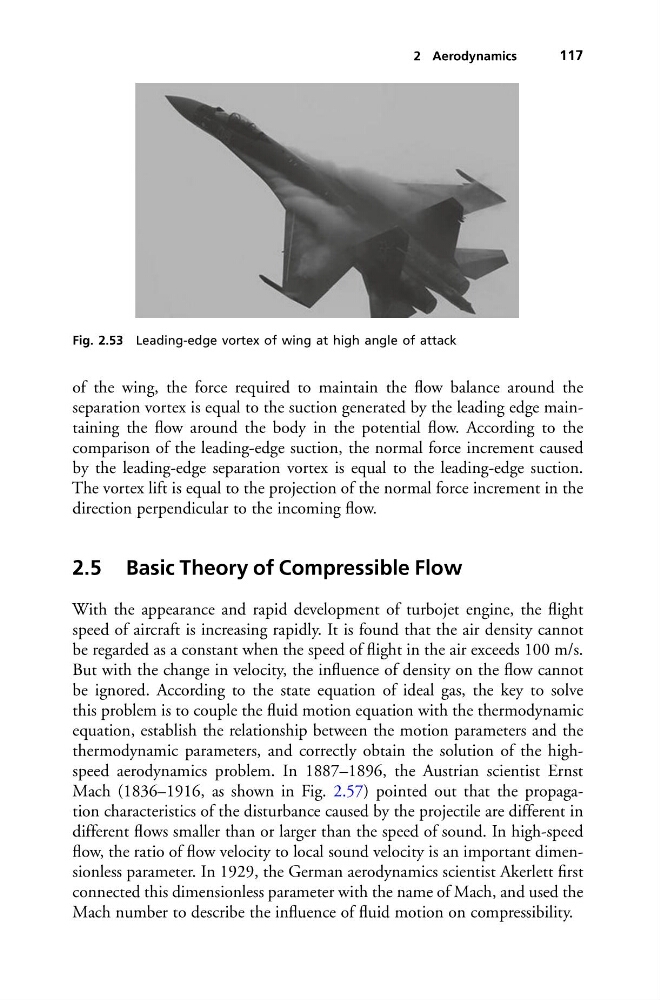
Fig. 2.53 Leading-edge vortex of wing at high angle of attack
of the wing, the force required to maintain the flow balance around the
separation vortex is equal to the suction generated by the leading edge maintaining the flow around the body in the potential flow. According to the
comparison of the leading-edge suction, the normal force increment caused
by the leading-edge separation vortex is equal to the leading-edge suction.
The vortex lift is equal to the projection of the normal force increment in the
direction perpendicular to the incoming flow.
2.5 Basic Theory of Compressible Flow
With the appearance and rapid development of turbojet engine, the flight
speed of aircraft is increasing rapidly. It is found that the air density cannot
be regarded as a constant when the speed of flight in the air exceeds 100 m/s.
But with the change in velocity, the influence of density on the flow cannot
be ignored. According to the state equation of ideal gas, the key to solve
this problem is to couple the fluid motion equation with the thermodynamic
equation, establish the relationship between the motion parameters and the
thermodynamic parameters, and correctly obtain the solution of the highspeed aerodynamics problem. In 1887–1896, the Austrian scientist Ernst
Mach (1836–1916, as shown in Fig. 2.57) pointed out that the propagation characteristics of the disturbance caused by the projectile are different in
different flows smaller than or larger than the speed of sound. In high-speed
flow, the ratio of flow velocity to local sound velocity is an important dimensionless parameter. In 1929, the German aerodynamics scientist Akerlett first
connected this dimensionless parameter with the name of Mach, and used the
Mach number to describe the influence of fluid motion on compressibility.
117
Fig. 2.53 Leading-edge vortex of wing at high angle of attack
of the wing, the force required to maintain the flow balance around the
separation vortex is equal to the suction generated by the leading edge maintaining the flow around the body in the potential flow. According to the
comparison of the leading-edge suction, the normal force increment caused
by the leading-edge separation vortex is equal to the leading-edge suction.
The vortex lift is equal to the projection of the normal force increment in the
direction perpendicular to the incoming flow.
2.5 Basic Theory of Compressible Flow
With the appearance and rapid development of turbojet engine, the flight
speed of aircraft is increasing rapidly. It is found that the air density cannot
be regarded as a constant when the speed of flight in the air exceeds 100 m/s.
But with the change in velocity, the influence of density on the flow cannot
be ignored. According to the state equation of ideal gas, the key to solve
this problem is to couple the fluid motion equation with the thermodynamic
equation, establish the relationship between the motion parameters and the
thermodynamic parameters, and correctly obtain the solution of the highspeed aerodynamics problem. In 1887–1896, the Austrian scientist Ernst
Mach (1836–1916, as shown in Fig. 2.57) pointed out that the propagation characteristics of the disturbance caused by the projectile are different in
different flows smaller than or larger than the speed of sound. In high-speed
flow, the ratio of flow velocity to local sound velocity is an important dimensionless parameter. In 1929, the German aerodynamics scientist Akerlett first
connected this dimensionless parameter with the name of Mach, and used the
Mach number to describe the influence of fluid motion on compressibility.